
-
by sayum
28 August 2026 2:11 PM







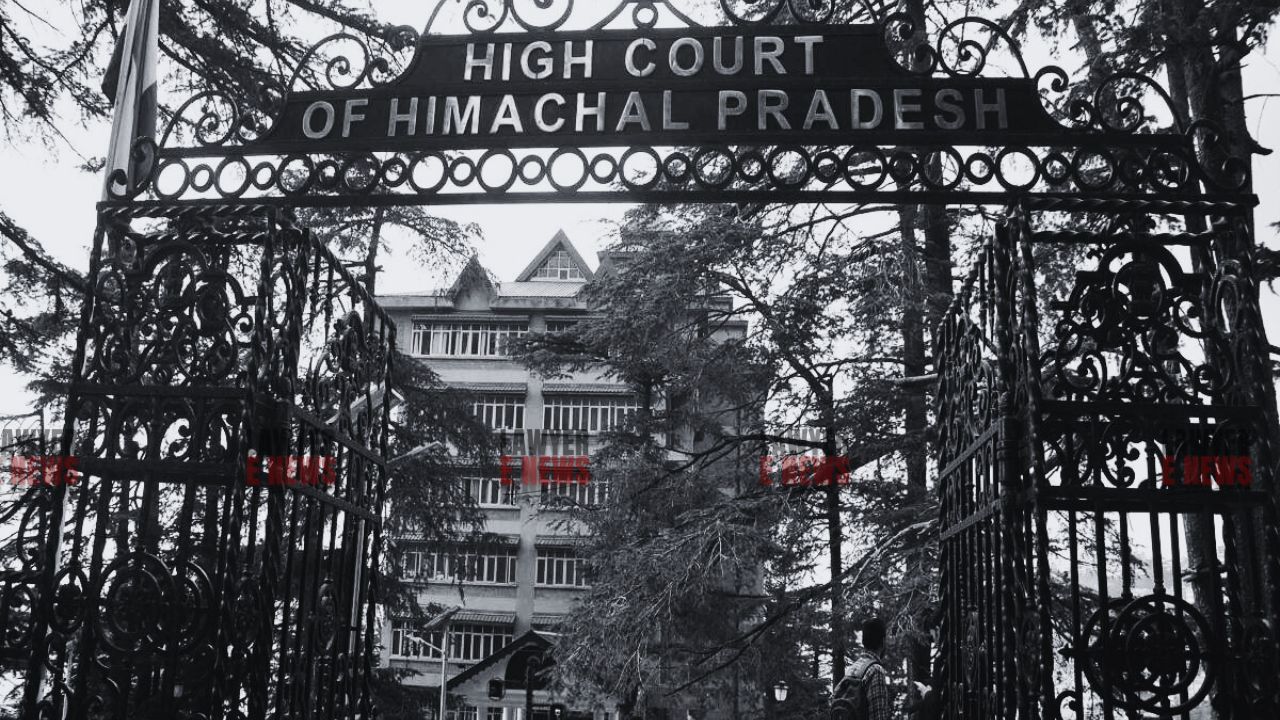
In a decisive ruling clarifying the rights of sub-tenants and the limits of revisional interference, the Himachal Pradesh High Court upheld the eviction of a sub-tenant from a commercial premises, ruling that concurrent findings of subletting are binding where no perversity or illegality is found, and that the sub-tenant cannot escape eviction merely by claiming to be a tenant without proving it in evidence.
Justice Satyen Vaidya dismissed a civil revision petition filed under Section 24(5) of the Himachal Pradesh Urban Rent Control Act, 1987, confirming the concurrent findings of the Rent Controller and the Appellate Authority that the petitioner had been unlawfully subletted the premises and was not a lawful tenant under either the current or the previous landlord.
“The sub-tenant had failed to establish his tenancy directly under the landlord. The eviction against the tenant will bind him.” [Para 30]
“Sub-Tenant Can Challenge Eviction Only if He Was Made a Party and the Decree Is Joint”: Supreme Court Precedent Applies
The Court rejected the landlord’s argument that a sub-tenant could not maintain a revision petition once the original tenant had accepted the eviction order. Referring to the Supreme Court's landmark ruling in Karam Singh Sobti v. Pratap Chand, AIR 1964 SC 1305, the Court held that the sub-tenant was a proper and necessary party, having been impleaded in the eviction proceedings from the outset.
“The suit had been filed both against the tenant and the sub-tenant... The appellant had his own right to appeal from that decree... The lower appellate Court was, therefore, quite competent in the appeal by the appellant from the joint decree in ejectment.” [Para 18 quoting SC]
The Court thus concluded: “Since the sub-tenant was impleaded as a party respondent and the decree was joint, he had the right to challenge it independently.” [Para 19]
“Concurrent Findings of Subletting Cannot Be Disturbed in Revision Without Illegality or Perversity”: Revisional Scope Limited
Reiterating settled jurisprudence on the limited revisional scope, the High Court held that where both the Rent Controller and the Appellate Authority have arrived at a conclusion based on sound appreciation of evidence, the revisional court cannot substitute its own view unless the findings are shown to be perverse or contrary to law.
“The revisional power would become co-extensive with that of the trial Court or the subordinate Tribunal, which is never the case.” – Supreme Court in Hindustan Petroleum Corporation Ltd. v. Dilbahar Singh, (2014) 9 SCC 78, quoted in [Para 21]
“The mere fact that a different view is possible on reappreciation of evidence cannot be a ground for exercise of the revisional jurisdiction.” – Patel Valmik Himatlal v. Patel Mohanlal Muljibhai, AIR 1998 SC 3325, endorsed in [Para 22]
Justice Vaidya emphasized that neither tenant nor sub-tenant was able to rebut the landlord's case that the demised premises had been sublet without written consent.
“Subletting Was Sufficiently Pleaded and Clearly Established by Evidence”: Insufficiency of Pleadings Not Fatal
Rejecting the sub-tenant's argument that the eviction petition was defective for not pleading the statutory language that subletting had occurred “after commencement of the Act and without written consent”, the Court cited the Supreme Court’s ruling in Virendra Kashinath Ravat v. Vinayak Joshi, AIR 1999 SC 162, to stress that pleadings need only disclose material facts in concise form, not the statutory language verbatim.
“Though the pleadings were not in precise statutory language, subletting was clearly averred and contested... Insufficiency of pleadings is not always a ground to dismiss the claim.” [Paras 29, 31]
The Court noted that the sub-tenant never objected to the pleadings during trial or appeal, nor showed any prejudice from the alleged deficiency. Instead, both sides contested the core issue of subletting extensively on merits.
“Rent Receipts Were Dubious, Originals Not Produced, and Signatures Not Proven”: Sub-Tenant Failed to Establish Independent Tenancy
The sub-tenant’s principal defence was that he had been inducted as a tenant by the previous landlord, Dev Raj, and therefore was in legal possession. However, this version was rejected by both courts below as unproven.
The High Court observed that the original rent receipts were not produced, and the ones relied upon were suspicious due to repetitive dates, and mere proof of signatures without proof of contents could not establish tenancy.
“The similarity of dates on the alleged receipts, though for different years, was taken as a suspicious circumstance... Mere proof of signatures without proof of contents was another reason that weighed with the Rent Controller.” [Para 23]
Further, even the son of the previous landlord did not confirm that the sub-tenant was a tenant under his father.
Civil Revision Dismissed, Eviction Upheld – Revisional Interference Not Warranted
Holding that no illegality or perversity had been shown in the concurrent findings of the Rent Controller and Appellate Authority, the High Court dismissed the revision petition and affirmed the eviction of the sub-tenant, who had failed to prove lawful induction or independent tenancy.
“I do not find any material to interfere with the impugned order. Accordingly, the same is affirmed.” [Para 32]
The judgment underscores important principles of rent control jurisprudence, including:
The binding nature of eviction on sub-tenants who fail to prove independent tenancy
The right of sub-tenants to challenge a decree if made party and decree is joint
The limited scope of revisional jurisdiction under rent control statutes
The adequacy of pleadings being judged on whether the material facts were disclosed and contested
Date of Decision: 17 September 2025





