-
by sayum
28 August 2026 2:09 PM







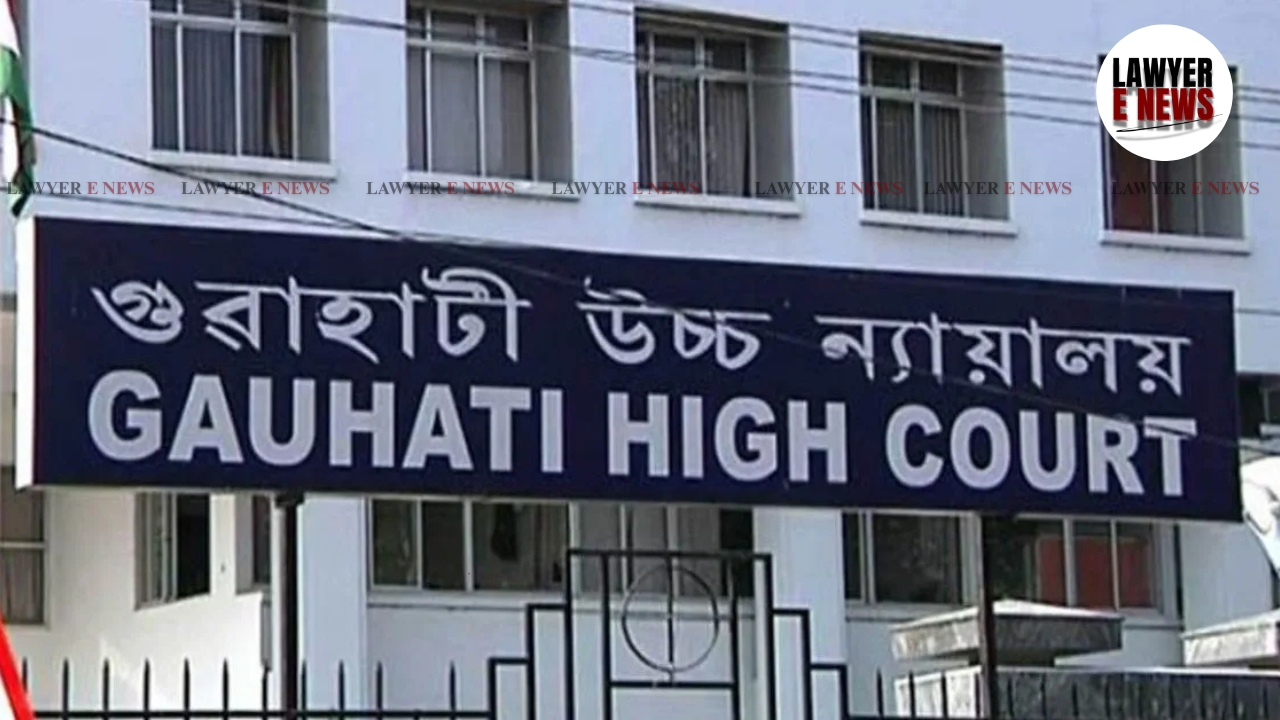
"The Constitutional Mandate Is Furnishing Grounds Of Arrest In Writing — Not The Heading Or Format Of The Memo" — Gauhati High Court dismissing a bail plea filed under Section 483 of the Bharatiya Nagarik Suraksha Sanhita, 2023 (BNSS). The accused, arrested with 8 kilograms of methamphetamine and a 9 mm Sig Sauer pistol with magazines and 30 live rounds, had sought bail citing alleged procedural violations under the BNSS and constitutional safeguards under Article 22(1). The Court, however, found no procedural or constitutional violation and held that the bar under Section 37 of the NDPS Act, 1985 clearly applied in the case.
"Once The Grounds Are Furnished In Writing, Labeling Under Section 36 Or 47 BNSS Makes No Difference" — Gauhati High Court Affirms Substantial Compliance With Article 22(1)
At the core of the accused's argument was that the Arrest Memo issued upon his apprehension was not styled under Section 47 BNSS, which mandates written communication of grounds of arrest, but instead under Section 36, and that his family was not properly informed under Section 48 BNSS. The Court rejected this technical argument, holding that the substance of compliance with constitutional and statutory safeguards is what matters.
The Court referred to the landmark Supreme Court judgments in Prabir Purkayastha v. State (NCT of Delhi), (2024) 8 SCC 254 and Vihaan Kumar v. State of Haryana, (2025) SCC Online SC 269, both of which emphasized that written communication of arrest grounds is mandatory under Article 22(1). However, it distinguished these cases by noting that in the present matter, the grounds of arrest were indeed furnished in writing, even if the memo was not labeled under Section 47 BNSS.
“A bare perusal of the arrest memo furnished to the accused petitioner would go to show that more than sufficient grounds of arrest has been communicated to the accused person,” the Court observed, adding that “merely because the arrest memo is issued under Section 36 of BNSS and not under Section 47/48 of BNSS does not obviate the fact that the grounds of arrest have been furnished… as required by law.”
NDPS Act — Section 37 Bar Applies: “No Reasonable Grounds To Believe Accused Is Not Guilty”
On the merits of the bail application, the Court decisively invoked Section 37 of the NDPS Act, which imposes stringent conditions for granting bail in cases involving commercial quantities of narcotic drugs. The recovery of 8 kg of methamphetamine, coupled with a loaded 9 mm pistol, sealed the Court's conclusion that a prima facie case exists, and no exception to the Section 37 bar could be applied.
“It does appear from the material on record that a huge quantity of contraband drugs as well as arms and ammunitions were recovered from the conscious possession of the accused petitioner,” the Court held. “This Court sees no reasonable ground to believe that the accused person may not be guilty… the bar imposed by Section 37 of the NDPS Act squarely applies.”
The Court noted that the seizure was supported by videographic evidence, the presence of independent witnesses, and the accused’s confessional statement, thereby establishing a strong prima facie case against the petitioner.
“Family Intimation Proven Through Telephonic Communication And Letter To SP” — Court Rejects Claim Of BNSS Section 48 Violation
With respect to the Section 48 BNSS requirement of informing family or nominated persons of the arrest, the Court meticulously examined the evidence, which included:
A certificate from the arresting officer recording that the accused called his wife from a specific mobile number at the time of arrest.
A copy of the arrest memo sent to Smt. Nengpi Vaiphei, the wife of the accused.
A letter addressed to the Superintendent of Police, Senapati, Manipur, requesting official intimation to the family.
Most notably, the accused admitted before the Chief Judicial Magistrate, Cachar, that “his family members are aware of his arrest.”
“What is therefore required to be looked into is whether there is any other indication that the nominated person/relative/family member… has been intimated,” the Court remarked. “From the above, it appears that the arresting authorities have done everything within their powers to inform the family members… although there is no acknowledgment… which is quite understandable given the situation obtaining in Manipur at that time.”
In light of these facts, the Court concluded that there had been substantial compliance with Section 48 BNSS, and therefore, no procedural or constitutional infirmity could be said to have vitiated the arrest or custody.
Distinguishing ‘Darshan’ (2025) On Prejudice Test, Gauhati HC Relies On Vihaan Kumar And Prabir Purkayastha
The Court addressed the legal contention surrounding the recent split in precedent post-Pankaj Bansal, with the respondent relying on State of Karnataka v. Darshan, 2025 SCC Online SC 1702, which applies a "test of prejudice" for procedural lapses. However, the Gauhati High Court chose to follow the earlier binding decision in Vihaan Kumar, in line with the principle set out in National Insurance Co. Ltd. v. Pranay Sethi (2017) 16 SCC 680, which holds that in cases of conflicting co-equal benches, the earlier judgment prevails.
“There appears to be a dichotomy of views in the decision of the Hon’ble Supreme Court… the earlier decision of Vihaan Kumar would have to be followed,” the Court clarified.
No Violation Of Article 22(1) Or BNSS — Bail Rightly Denied Under NDPS Act
In conclusion, the Gauhati High Court found that the grounds of arrest were duly communicated in writing, the family was reasonably informed, and the statutory requirements under Sections 47 and 48 BNSS were substantially fulfilled. Coupled with the seriousness of the offence and the incriminating recovery, the statutory embargo under Section 37 NDPS Act left no room for bail.
“In view of the above discussion, the prayer for bail stands rejected and the petition stands dismissed. Return the Case Diary,” the Court ordered.
Date of Decision: September 26, 2025