
-
by sayum
26 August 2026 1:49 PM







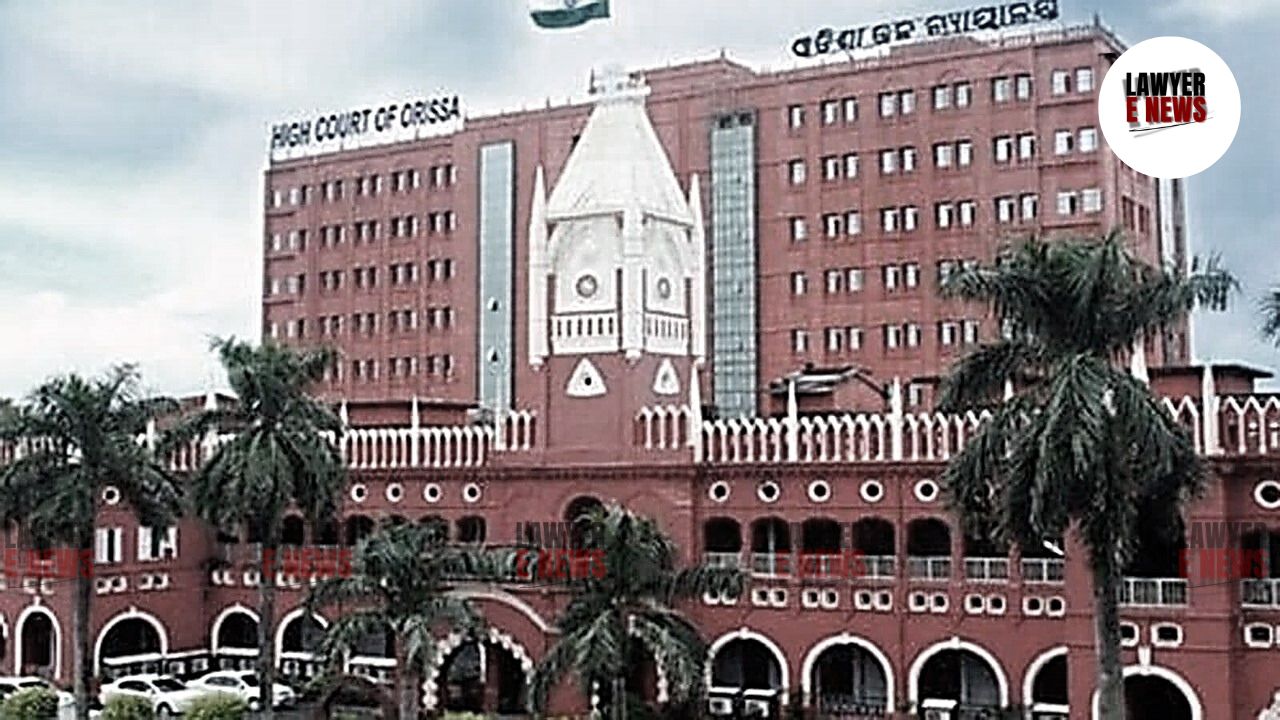
“Procedural Lapses and Clerical Errors Cannot Defeat Statutory Compensation Under a Beneficial Welfare Statute” — In a significant ruling reasserting the doctrine of strict liability under Section 124-A of the Railways Act, 1989, the Orissa High Court set aside the Railway Claims Tribunal’s order that had dismissed a compensation claim for a railway accident death, citing alleged ticket fabrication and absence of bona fide passengership. The Court held that once it is shown that a person died in an “untoward incident” while holding a valid ticket, the Railways is strictly liable, regardless of fault or negligence.
Justice Dr. Sanjeeb K. Panigrahi, delivering the judgment, found that the Tribunal had misappreciated the legal standard by rejecting the claim on hyper-technical and speculative grounds, despite the presence of clear documentary evidence showing the deceased’s accidental fall from a running train.
“The Absence of Fault or Negligence Is Irrelevant — Section 124-A Embodies a No-Fault Liability for Untoward Incidents”
The Court emphatically declared:
“Section 124-A lays down strict liability or no-fault liability in case of railway accidents. Hence, if a case comes within the purview of Section 124-A, it is wholly irrelevant as to who was at fault.” [Para 12]
The deceased, Bharat Sahoo, had fallen from an overcrowded train due to a sudden jerk and succumbed to injuries sustained during the fall. While the Railway Claims Tribunal doubted the authenticity of the journey ticket, and further speculated that the injuries might have been self-inflicted, the High Court overruled those findings, holding that such speculative reasoning cannot override contemporaneous documentary evidence, including the:
Inquest Report
Post-Mortem Report
Final Police Investigation Report
All of which, the Court held, “unequivocally attribute the cause of death to a fall from the train”, thereby qualifying it as an “untoward incident” under Section 123(c)(2). [Para 13]
“Ticket Recovery and Witness Evidence Sufficient to Prove Bona Fide Passengership — Burden Shifts to Railways to Disprove”
While the Tribunal had rejected the claim due to discrepancies between the train named in the Original Application (Puri–Rourkela Passenger) and the actual train (Konark Express), the High Court took a liberal view, noting:
“The inadvertent error in mentioning the name of the train was occasioned due to the illiteracy and emotional distress of the appellants.” [Para 18]
Relying on Union of India v. Rina Devi, (2019) 3 SCC 572, and Kamukayi v. Union of India, (2023) 19 SCC 116, the Court emphasized that:
“Mere absence of a ticket with the deceased will not negative the claim... The initial burden can be discharged by filing an affidavit of relevant facts, and then the burden shifts to the Railways.” [Para 15]
In this case, the journey ticket was recovered from the deceased’s pocket, and the affidavits, inquest, and medical reports consistently supported an accidental fall. The Railways failed to rebut this evidence with any credible material, instead relying on a speculative DRM’s inquiry report, which the Court found to be insufficient to override primary facts.
“Hyper-Technical Rejection of Amendment on Train Name Is Procedurally Unfair” — Liberal Interpretation Warranted in Beneficial Legislation
A notable aspect of the appeal was the Tribunal’s refusal to permit the amendment of the claim petition to correct the name of the train. The High Court found this approach unjustified:
“Such inadvertent clerical error caused by appellants’ illiteracy and distress on their son’s death cannot defeat substantive rights under a beneficial statute.” [Para 18]
The Court reaffirmed that beneficial statutes like the Railways Act must be interpreted liberally, not pedantically, and procedural lapses should not thwart substantive justice, particularly where no prejudice is caused to the opposite party.
“Strict Liability Imposes Automatic Obligation — No Need to Prove Negligence or Mens Rea”
The Court also clarified the legal nature of Section 124-A:
“Once the primary facts, namely, the death of a passenger in an ‘untoward incident’ and that such passenger was a bona fide passenger, stood established, the liability of the Railway Administration became absolute and unconditional.” [Para 14]
Referring to Doli Rani Saha v. Union of India, 2023 SCC OnLine SC 498, the Court reiterated that compensation is due even in the absence of negligence — as long as the death arises from an untoward incident during rail travel.
Tribunal’s Finding Based on Conjecture and Technicality Set Aside — Compensation Awarded with Interest
In conclusion, the Court held:
“The impugned judgment suffers from legal infirmities and a misapplication of statutory principles. It warrants being set aside and remanded for fresh adjudication.” [Para 19]
However, invoking its inherent powers under Section 23 of the Railway Claims Tribunal Act, and in the interest of justice, the High Court directly awarded compensation of:
₹8,00,000
6% interest per annum from the date of filing of the claim
To be deposited within three months before the Tribunal for disbursal
The matter was also remanded for fresh adjudication on the amended pleadings, and the Tribunal was directed to consider any further evidence in accordance with law.
“Speculative Inference Cannot Override Statutory Compensation — Courts Must Protect Vulnerable Litigants from Procedural Injustice”
This ruling is a reaffirmation of the social welfare objective of the Railways Act, and a warning against hyper-technical dismissals of claims made by grieving families, often of modest means and limited legal awareness. The Orissa High Court’s judgment ensures that strict liability is not rendered illusory by procedural rigidity or suspicion not supported by fact.
Date of Decision: 17 October 2025





