
-
by sayum
28 August 2026 2:11 PM







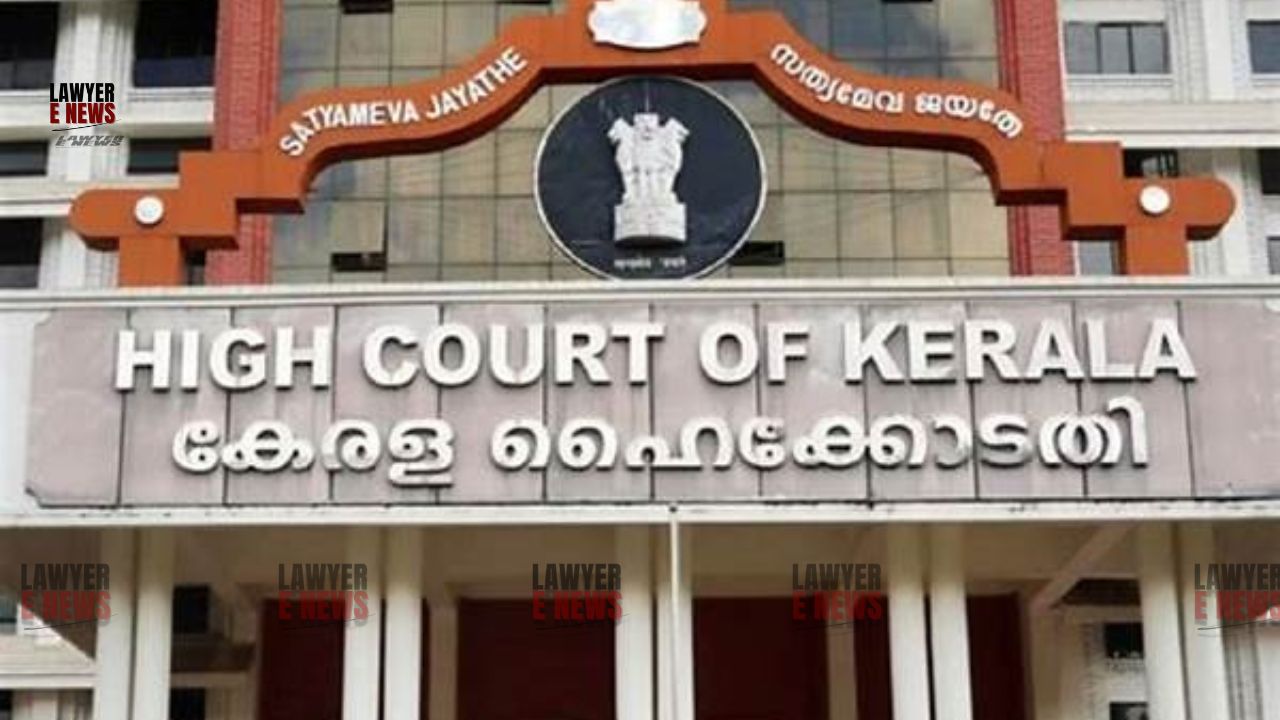
"Filing a Second Power of Attorney to Avoid Stamp Duty Is an Abuse of Court Process" - In a significant ruling on 29 September 2025, the Kerala High Court, delivered by Justice K. Natarajan, dealt with serious procedural irregularities in a partition suit filed through a non-registered and inadequately stamped Power of Attorney. The Court upheld the Trial Court’s decision to impound the unregistered Power of Attorney under Section 33 of the Kerala Stamp Act, 1959, and imposed liability to pay duty and penalty under Sections 37(2) and 39(b). Simultaneously, the High Court quashed the Trial Court's order allowing amendment of the plaint under Order VI Rule 17 CPC, finding it premature and procedurally unsound, as the application for allowing the plaintiff to appear in person was still pending.
This judgment is a crucial reminder that civil procedure cannot be manipulated to bypass statutory obligations, especially concerning stamp duty and representation through Power of Attorney.
"Mere Filing of Fresh Power of Attorney Cannot Override Validly Impounded Document": Court Denies Substitution Without Formal Acceptance
The partition suit in O.S. No. 41/2019 was filed by the plaintiff through his friend and Power of Attorney holder, Mr. Jayaprakash, under a Power of Attorney document marked as Ext. P2. However, the defendant challenged the document, asserting that Ext. P2 was neither registered nor sufficiently stamped, and hence, should be impounded under Section 33 of the Kerala Stamp Act.
Accepting this contention, the Trial Court directed the impounding of Ext. P2 and referred it to the District Collector for determination and collection of duty and penalty.
Attempting to avoid this consequence, the plaintiff later filed an application to introduce a second Power of Attorney (Ext. P5) and delete the previous one, seeking to argue that the old Power of Attorney was no longer relevant.
Rejecting this manoeuvre, the High Court made a key finding: "A mere production of another document along with an application does not itself amount to acceptance of the document by the trial court."
Justice K. Natarajan ruled that without a specific judicial order accepting Ext. P5 and replacing Ext. P2, the second Power of Attorney cannot override the first, which had already formed the basis of suit admission.
"Suit Once Filed Through a Document Cannot Later Deny Its Existence to Escape Legal Consequences": Court Slams Contradictory Pleadings
The plaintiff, in his application for substitution, attempted to argue that the suit was originally filed based on oral authority, and the Power of Attorney document was introduced later. This claim, according to the Court, was patently misleading and contradictory.
Referring to the affidavit filed in I.A. No. 1697/2019, Justice Natarajan noted: "On perusal of the statement... which is nothing but misleading the court, stating that there is no Power of Attorney produced earlier, and the suit was filed solely based on an oral Power of Attorney."
The Court held that such contradictory claims undermine the integrity of the pleadings and confirmed that Ext. P2 was the operative document on the basis of which the plaint was signed and suit admitted.
The Court concluded that: "The filing of the second Power of Attorney was only an attempt to evade the payment of stamp duty and penalty, which would cause loss to the State exchequer."
"Amendment Application Cannot Supersede Pending Application to Discharge Power of Attorney Holder" — Court Calls It Procedural Misstep
In a parallel proceeding, the Trial Court had allowed the plaintiff’s application under Order VI Rule 17 CPC (I.A. No. 950/2021) to amend the plaint and substitute his own name in place of the Power of Attorney holder.
This order was challenged by the defendant in O.P.(C) No. 1589/2025, on the ground that the plaintiff had not yet obtained the Court’s permission to discharge the Power of Attorney holder and appear in person, making such amendment premature.
The High Court found merit in the objection, holding: "Without passing the order allowing the plaintiff to contest the case by himself... allowing the amendment, deleting the name of the Power of Attorney holder is nothing but putting the cart before the horse."
Justice Natarajan emphasized that the two applications must be heard and disposed of together, and that no amendment altering party representation can be entertained until proper discharge is allowed under law.
"No Plaintiff Can Withdraw Power of Attorney Post Admission to Avoid Stamp Duty Liability": Court Reiterates Binding Nature of Documents Once Suit Is Admitted
One of the core legal principles emphasized by the Court was the irreversibility of admitted documents, especially once they form the basis for institution of a suit.
The judgment underscores: "Once the suit is admitted and numbered based upon the Power of Attorney... the plaintiff is required to pay the duty and penalty."
The Court firmly held that replacement of a Power of Attorney cannot be used as a device to defeat statutory obligations, especially where the earlier document has already been impounded.
Citing the decision in State of Karnataka v. M. Muniraju [2002 KHC 3513], the High Court reiterated that a suit filed through an unauthorized or improperly executed Power of Attorney is not maintainable.
Final Directions and Outcome
The High Court, after hearing both sides at length and perusing the records, delivered the following verdict:
O.P.(C) No. 1066 of 2024, filed by the plaintiff challenging the impounding of the first Power of Attorney (Ext. P2), was dismissed. The impounding order stands affirmed, and the plaintiff is directed to pay requisite stamp duty and penalty.
O.P.(C) No. 1589 of 2025, filed by the defendant challenging the amendment order under Order VI Rule 17 CPC, was allowed. The order allowing I.A. No. 950/2021 was set aside, as it was passed without deciding the pending application for permission to appear personally.
The Court also granted liberty to the plaintiff to file an application seeking permission to contest the matter in person, and directed that such application must be decided by the Trial Court in accordance with law.
Statutory Obligations Under Stamp Act Cannot Be Circumvented Through Procedural Backdoors
This judgment sends a clear message that stamp duty obligations under the Kerala Stamp Act must be complied with once a document is relied upon for institution of a suit. Procedural mechanisms like filing fresh Power of Attorneys, or amending party representations cannot be misused to avoid such liabilities.
Equally, the ruling highlights that applications to amend pleadings which fundamentally alter the mode of representation must follow due process, and cannot supersede pending matters regarding discharge or appearance of parties.
Date of Decision: 29 September 2025





