
-
by sayum
25 August 2026 9:55 AM







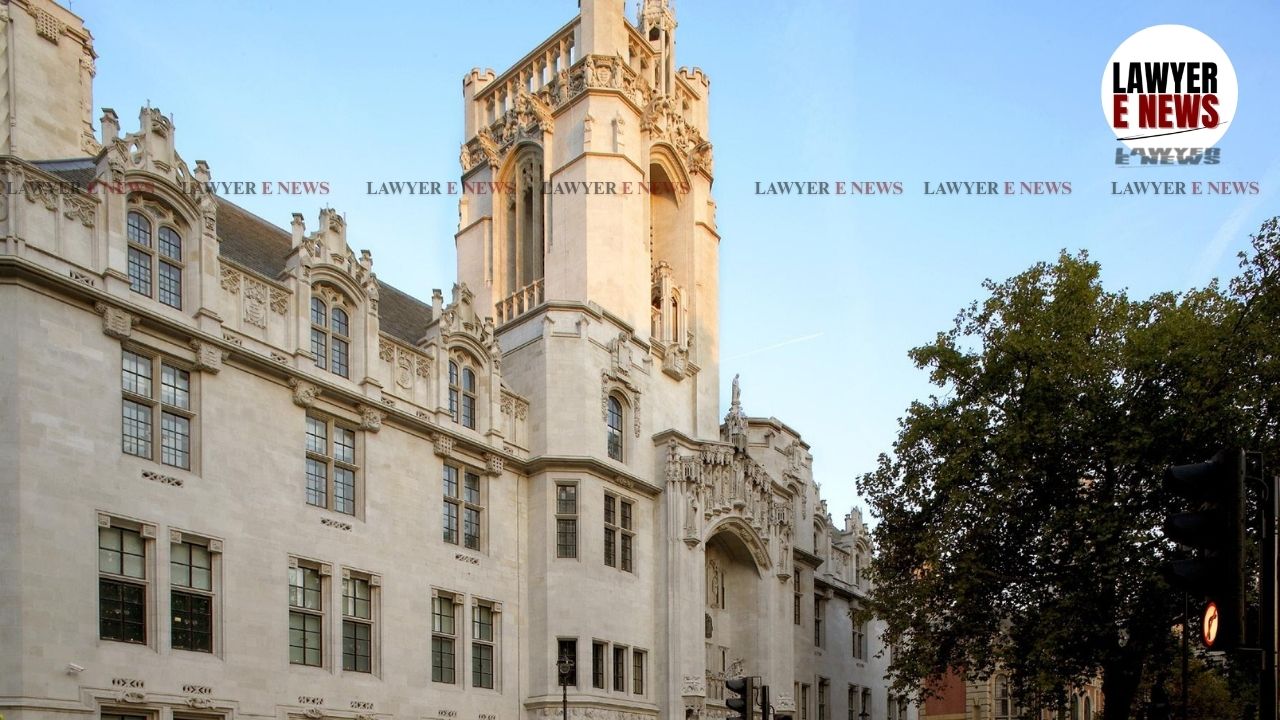
“The Right to a Fair Trial Cannot Be Trumped by the Desire to Shield the Complainant from Legitimate Scrutiny” — United Kingdom Supreme Court delivered a landmark verdict in Keir v Her Majesty’s Advocate and Daly v Her Majesty’s Advocate, sounding a constitutional alarm about the increasingly rigid approach of Scottish courts towards evidence in sexual offences trials. While upholding the convictions in both cases, the apex court held that the overly restrictive interpretation of admissibility rules under Sections 274 and 275 of the Criminal Procedure (Scotland) Act 1995, especially following CJM v HM Advocate, was legally flawed and posed a serious risk of violating the accused’s right to a fair trial under Article 6 of the European Convention on Human Rights.
The judgment marks a turning point in how credibility-related evidence is treated in sexual offence prosecutions in Scotland. The Supreme Court held that Scottish courts, by treating virtually all such material as irrelevant or inadmissible under the banner of “collateral evidence,” have not only misinterpreted their own statutory framework but also departed from the demands of the Convention.
The Court observed, “A refusal in principle to accept the relevance of evidence going to credibility is liable to breach the accused’s rights under Article 6.” It emphasised that the "right to a fair trial is not a moral abstraction, but a practical guarantee to test the reliability and credibility of the evidence presented."
“Protection of the Complainer Cannot Justify a Trial That is Fundamentally Unfair” — Supreme Court Reinterprets Sections 274 and 275
The decision arose from two appeals brought by individuals convicted of sexual offences in Scotland. In both cases, the appellants had sought to introduce evidence which, in their view, was critical to testing the credibility of the complainers. However, that evidence had been ruled inadmissible under Section 274 of the 1995 Act, following the jurisprudence laid down in CJM v HMA and other cases.
The 2002 amendments to the Criminal Procedure (Scotland) Act were intended to restrict unwarranted intrusion into the sexual history or character of the complainer, but the Court firmly held that these provisions must be applied in a way that allows for relevant evidence to be heard when the fairness of the trial demands it.
“The provisions in sections 274 and 275 must be interpreted and applied in a way which secures the Convention rights of the accused,” the Court ruled, reaffirming the obligation under section 6(1) of the Human Rights Act 1998.
In its interpretation, the Supreme Court insisted that the legislative framework was designed as a balanced two-stage mechanism: while Section 274 prohibits leading certain types of evidence, Section 275 provides a structured gateway to admit such evidence when it is demonstrably relevant, specific, and more probative than prejudicial. The Court rejected the prevailing Scottish judicial trend which had effectively neutered Section 275.
“The Doctrine of Collateral Evidence Has Been Weaponised Against Fairness” — Supreme Court Rejects Over-Extension of Scottish Precedents
The Court identified a deeper jurisprudential error: the transformation of the collateral evidence doctrine into a tool for exclusion of relevant evidence. It found that Scottish courts had begun to treat relevant credibility evidence as inadmissible simply because it required factual inquiry or was not instantly verifiable, thereby abandoning the principle of fairness in favour of procedural expediency.
Citing the judgment in Poropat v Slovenia, the Court observed that “a refusal to allow the admission of defence evidence simply because it challenges the credibility of the complainer, or because it concerns alleged prior false complaints, may render the trial unfair.” It noted that credibility is often the sole issue in sexual offence trials, particularly when the allegation turns on private acts with no corroboration.
The Court was critical of the interpretation in CJM v HM Advocate, where the Scottish courts had held that “credibility and reliability are collateral matters” and that therefore evidence going to such issues could not be admitted. Describing this as doctrinally unsound, the Supreme Court held, “In sexual cases where the disputed issue is a sexual one between two persons in private, the difference between questions going to credit and questions going to the issue is reduced to vanishing point.”
The judgment clarified that evidence going to credibility is not automatically irrelevant, even if it is collateral. “Collateral evidence is not synonymous with irrelevant evidence,” the Court stressed, urging a return to first principles in evidentiary interpretation.
“The Problem Is Not the Law, but Its Judicial Misapplication” — Court Urges Rethink Without Legislative Amendment
In a critical part of the ruling, the Court held that it was not the statutory scheme that was inherently incompatible with the ECHR, but the manner in which it had been interpreted and applied by Scottish courts over time. While rejecting the need for legislative intervention, it held that a Convention-compliant reading of Sections 274 and 275 was possible and necessary.
“The issue lies not in the wording of the legislation, but in its interpretation and application in practice,” the Court stated, urging Scottish courts to recalibrate their approach.
It underscored that protection of the complainer from humiliation or distress is a legitimate aim, but cannot override the accused’s ability to present a defence or challenge credibility. Any exclusion of relevant defence evidence must be a “last resort,” and only justified where its admission would genuinely impair the interests of justice.
The Facts in Keir and Daly: Why the Court Still Upheld the Convictions
In Keir v HMA, the accused had sought to introduce evidence of consensual sexual activity with the complainer earlier on the same evening, arguing that it cast doubt on the later claim of sexual assault. The Supreme Court noted that the Crown's case rested on an allegation of assault committed while the complainer was asleep, and thus the earlier activity had little to no bearing on the issue of consent or capacity at the relevant time. The evidence, though sexual in nature, was found to lack probative value for the specific charge.
In Daly v HMA, the accused attempted to adduce evidence that the complainer had made a false allegation of rape at a later age. However, the Court held that this would have necessitated a “mini-trial” within the main trial, involving significant evidentiary disputes and risks of confusion. Since the defence had been able to challenge the complainer’s credibility through other means, the exclusion of that single piece of evidence did not render the trial unfair.
However, the Court made clear that its decision to uphold the convictions did not detract from the systemic problem of over-exclusion. The legitimacy of each exclusion depended on its individual context, not the general rules that had been misapplied.
“Fair Trial Is the Core of Criminal Justice — Not a Disposable Technicality” — Final Warning to Scottish Courts
The ruling ends with a stark reminder that justice must not only protect victims, but must also protect the process by which guilt is established. The Court insisted that evidentiary rules cannot be used to blunt the defence’s ability to test the case against the accused.
“The risk of miscarriages of justice is heightened when relevant material is excluded based on misapplied doctrines or categorical exclusions,” the judgment cautioned.
The Court’s final message is clear: Scottish courts must now apply Sections 274 and 275 in a manner that respects the constitutional and Convention rights of the accused. The time has come to move beyond rigid formulas and engage in case-specific, balanced judicial reasoning that upholds both dignity and fairness.
Date of Decision: 12 November 2023
Case Titles: Keir v Her Majesty’s Advocate and Daly v Her Majesty’s Advocate