-
by sayum
15 August 2026 2:23 PM







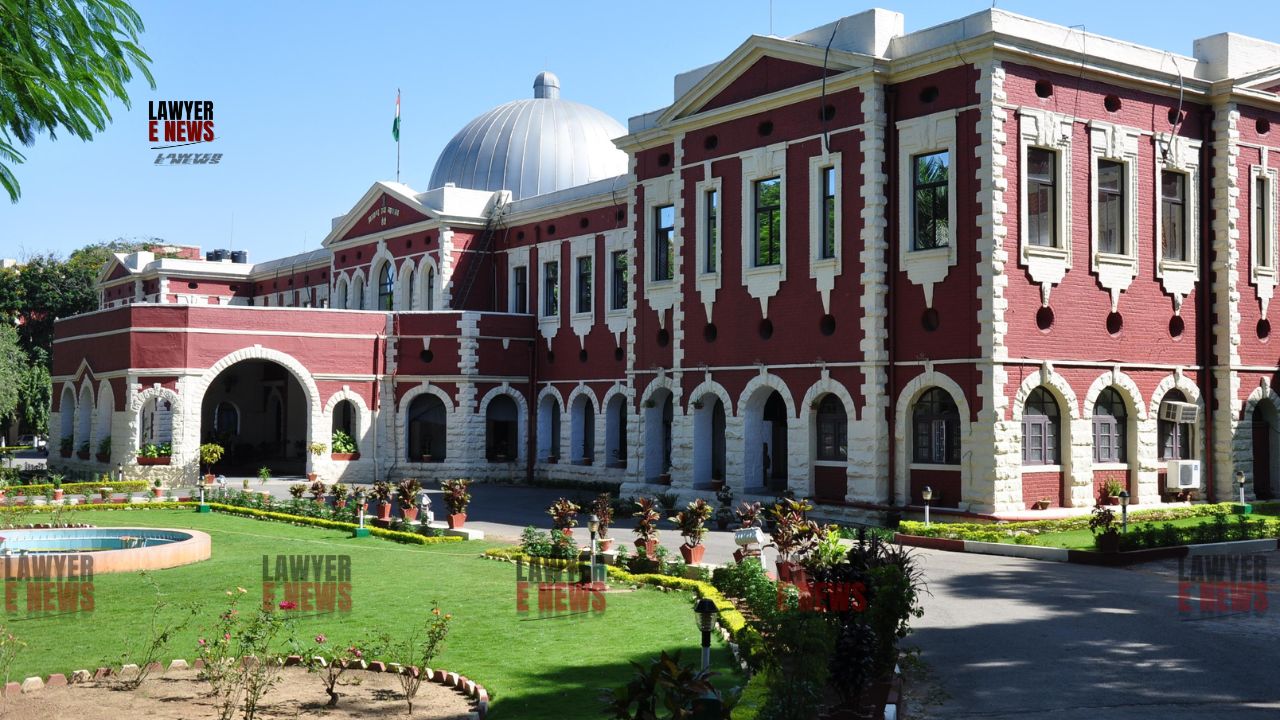
"The purpose of furnishing a copy of the inquiry report to the delinquent employee is not a mere formality, it is rather aimed to provide him an opportunity to meet the reasoning given in the said report and to controvert the conclusion reached by the inquiry officer." Jharkhand High Court, in a significant ruling, held that the non-examination of a complainant during a departmental proceeding constitutes an "inexcusable lapse" that causes serious prejudice to the delinquent employee, even if they failed to attend the inquiry.
A bench of Chief Justice M.S. Sonak and Justice Rajesh Shankar observed that the disciplinary authority is duty-bound to prove charges through evidence rather than mere reliance on documents, especially when a major penalty is contemplated.
The respondent, a Sub-Inspector who served as the Officer-in-Charge of Muffasil Police Station, Chaibasa, was subjected to departmental proceedings following allegations that he demanded a bribe of ₹10,000 for the release of seized trucks. Although the respondent did not participate in the inquiry, the inquiry officer found him guilty based on documents, leading to a punishment of withholding one annual increment, equivalent to two "black marks." After his appeals and revisions were dismissed, a Single Judge quashed the punishment order because the mandatory second show cause notice and inquiry report were not served upon him.
The primary question before the court was whether the non-service of the second show cause notice and the inquiry report vitiates a disciplinary proceeding when the employee has failed to participate in the inquiry. The court was also called upon to determine if a finding of guilt in a departmental inquiry can be sustained solely on the basis of documents without the examination of any witnesses or the complainant.
Non-Supply Of Inquiry Report Amounts To Denial Of Natural Justice
The Court began by addressing the State’s contention that no prejudice was caused to the respondent by the non-service of the inquiry report since he had boycotted the proceedings. Referring to the landmark Supreme Court judgment in Managing Director, ECIL & Others Vs. B. Karunakar & Others (1993) 4 SCC 727, the bench reiterated that the non-supply of an inquiry report to an employee facing disciplinary action generally amounts to a denial of natural justice.
The bench noted that while the factual issue of "prejudice" must be considered in the specific context of each case, the right to respond to the inquiry officer's findings is fundamental. Without the report, a delinquent employee is deprived of the chance to point out logical fallacies or evidentiary gaps to the disciplinary authority before a final penalty is imposed.
Inquiry Officer Performs Quasi-Judicial Function; Charges Must Be Proved Through Evidence
Regarding the conduct of the inquiry itself, the Court observed that not a single witness was examined or cross-examined to prove the charges against the Sub-Inspector. The bench emphasized that even the complainant, whose allegations triggered the entire proceeding, was never brought before the inquiry officer. The inquiry officer had reached a conclusion of guilt by relying exclusively on the documents produced during the investigation.
"The purported evidence collected during investigation of a criminal case by the investigating officer against all the accused by itself cannot be treated to be evidence in the disciplinary proceeding."
Non-Examination Of Complainant Inexcusable Despite Employee’s Absence
The Court rejected the appellant State's argument that the respondent's absence from the inquiry absolved the department of its duty to produce evidence. The bench held that even if a delinquent employee fails to attend, the inquiry officer remains duty-bound to examine the complainant to verify the truth of the allegations. This lapse was characterized by the court as "inexcusable" and "serious prejudice."
Citing the precedent in Roop Singh Negi Vs. Punjab National Bank (2009) 2 SCC 570, the Court reminded the authorities that a departmental proceeding is a quasi-judicial process. The inquiry officer has a legal duty to arrive at findings based on materials brought on record through a valid evidentiary process, rather than acting on mere assumptions or investigative reports from related criminal cases.
"The denial of supply of the copy of inquiry report, therefore, has caused a grave prejudice to the writ petitioner."
No Remand For Fresh Inquiry As Employee Already Retired
The bench finally addressed whether the matter should be remanded to the disciplinary authority to start the process afresh from the stage of serving the inquiry report. The Court noted that the respondent had already retired from service in the year 2022. Under such circumstances, the bench held that the Single Judge was correct in not remanding the matter, as it would be inequitable to subject a retired employee to fresh proceedings for an old lapse.
The Court concluded that the disciplinary proceeding was conducted in violation of the principles of natural justice. Finding the Letters Patent Appeal to be devoid of merit, the bench dismissed the State's challenge and upheld the quashment of the punishment order and the grant of consequential benefits to the retired officer.
The judgment reinforces the doctrine that an ex-parte inquiry does not grant the disciplinary authority a "free pass" to bypass standard evidentiary requirements. It establishes that the examination of the complainant is a non-negotiable component of a fair inquiry, and the service of the inquiry report remains a mandatory procedural safeguard regardless of the employee's prior conduct during the investigation.
Date of Decision: 30 June 2026