-
by sayum
04 August 2026 1:39 PM







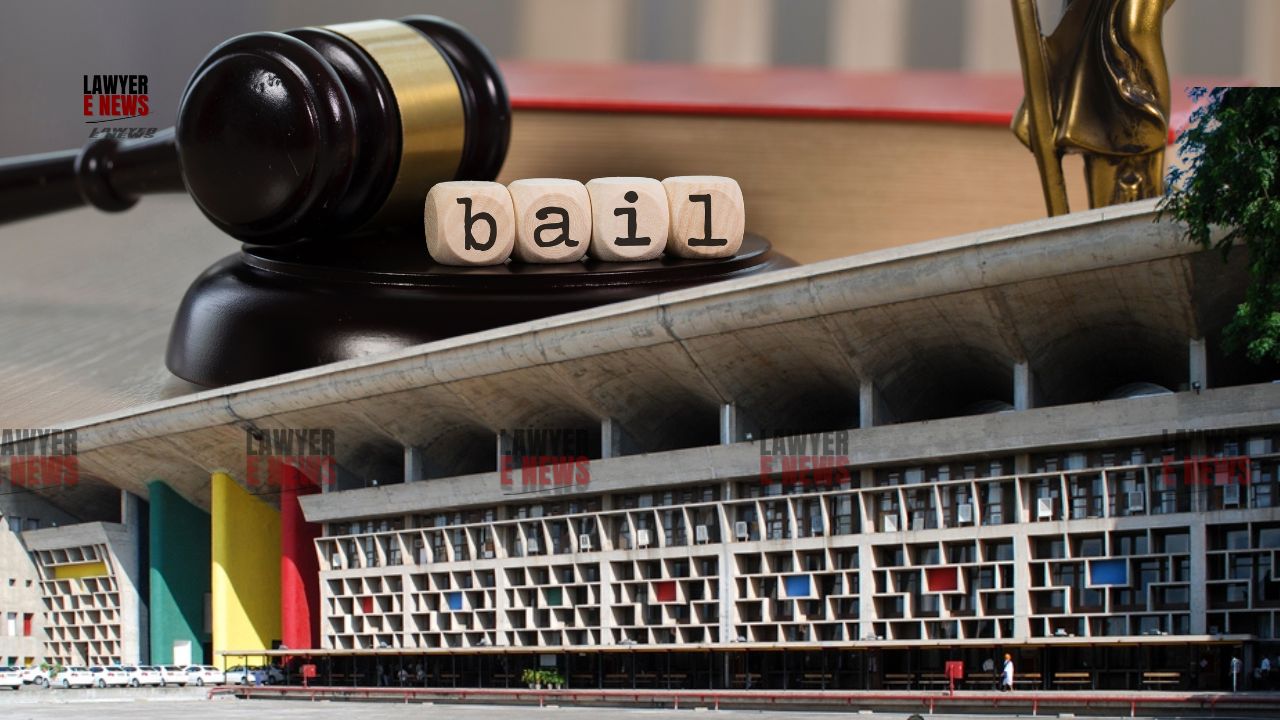
"Even Brutal Allegations Cannot Override Right to Liberty in Face of Trial Delay" – Punjab and Haryana High Court granted regular bail to an accused charged with murder and related offences, including under the SC/ST (Prevention of Atrocities) Act, citing prolonged custody and no progress in trial.
Justice N.S. Shekhawat ruled that continued incarceration of the appellant, who has been in custody for over 1 year and 7 months, without examination of a single witness, was not legally justified and granted bail with strict conditions.
The appellant, Rachit alias Situ, was arrested on 05 October 2023 in connection with FIR No. 375 dated 02.10.2023, registered at Police Station Sector 13-17, District Panipat. He was charged under Sections 302, 201, 365, and 34 of the Indian Penal Code, along with Section 3(2)(v-a) of the Scheduled Castes and Scheduled Tribes (Prevention of Atrocities) Act, 1989, for allegedly participating in the brutal murder of one Saurabh Nagpal.
It was alleged that the deceased had a prior dispute with the accused, and due to this enmity, he was kidnapped and killed. The FIR initially named no one, and the appellant was later implicated based on a supplementary statement made by the complainant on 05.10.2023, along with call detail records (CDRs) indicating contact between the appellant and co-accused Sahil.
Counsel for the appellant argued that there was no direct evidence against the accused. It was contended that: “The appellant was not seen in the CCTV footage with the deceased, unlike co-accused Sahil. His implication rests solely on a supplementary statement and call exchanges with a co-villager, which is insufficient to establish involvement in the murder.”
It was further submitted that the appellant had been in custody for over 1 year and 7 months, the challan had been presented, and not even a single prosecution witness had been examined, indicating a significant delay in trial. There was also no evidence to suggest that the appellant was in a position to influence witnesses or interfere with the judicial process.
The State, assisted by counsel for the complainant, opposed the bail plea, alleging that: “The appellant and co-accused Sahil had brutally murdered the victim and dismembered his body. The exchange of calls between them and the nature of the crime suggest active participation by the appellant.”
However, the prosecution did not dispute the delay in the trial or the fact that the appellant was not captured in CCTV footage with the deceased before the incident.
Justice Shekhawat noted that the appellant had remained in custody for more than 1 year and 7 months and that no witness had been examined by the prosecution despite the presentation of the charge sheet. The Court underscored that: “The prosecution is yet to lead evidence before the trial court to prove the involvement of the appellant in the crime.”
Without commenting on the merits of the case, the Court held that in such circumstances, continued pre-trial incarceration would be unjustified and violative of the appellant’s right to personal liberty.
Further, the Court drew a distinction between the direct evidence against co-accused Sahil—who was visible in the CCTV footage—and the appellant, who was only alleged to have spoken to Sahil on phone as a co-villager, with no forensic or visual evidence connecting him to the scene of crime.
Justice Shekhawat cautioned: “In case the appellant violates any of the conditions mentioned above, the concession of bail granted to him shall be liable to be cancelled.”
This judgment reflects the High Court’s consistent approach in upholding the principle that delay in trial and absence of direct evidence cannot justify indefinite pre-trial detention, even in grave offences like murder, especially where the accused’s role remains disputed and unproven.
The ruling reiterates that Article 21 of the Constitution guarantees not only a fair trial but also a speedy trial, and that bail, not jail, remains the norm unless compelling circumstances dictate otherwise.
Date of Decision: 22 May 2025