-
by sayum
04 August 2026 1:39 PM







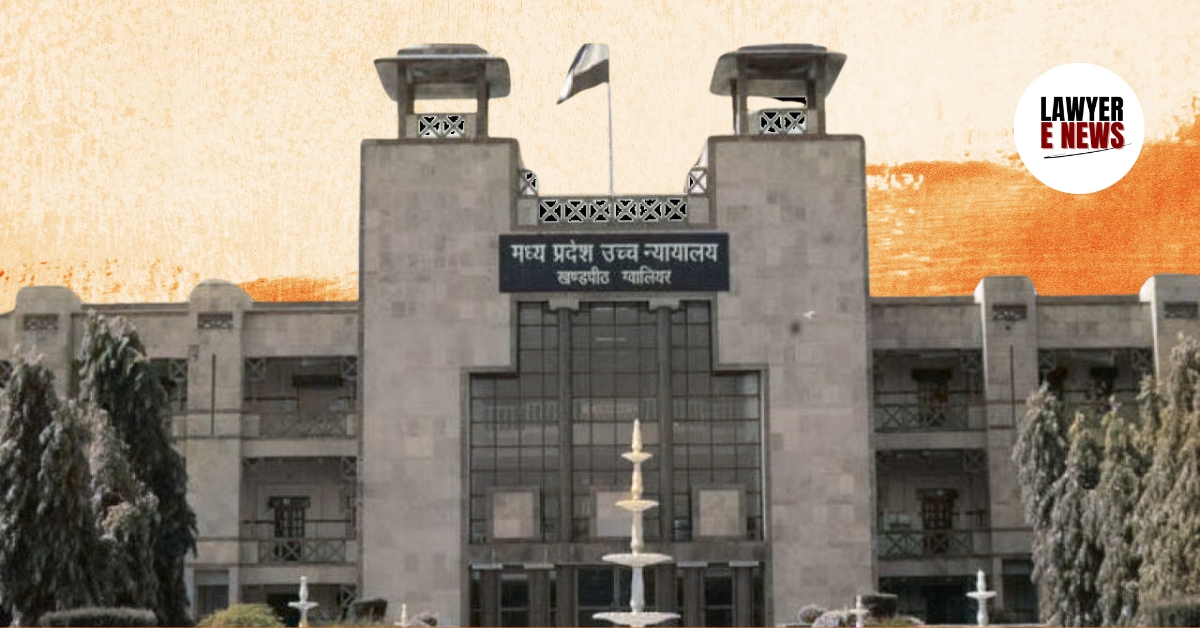
“Once Withdrawn Without Liberty, Fresh Suit on Identical Grounds Is Impermissible”: In a notable judgment reinforcing the bar against successive litigation without leave, the Madhya Pradesh High Court set aside the Family Court’s order refusing to reject a divorce petition that was filed after an earlier nullity suit had been withdrawn without permission to file fresh proceedings. The Division Bench comprising Justices Anand Pathak and Hirdesh held that the second suit—though seeking divorce rather than annulment—was founded on the same set of facts and hence barred under Order XXIII Rule 1(4) of the CPC.
“The respondent had sought withdrawal of her earlier suit without any liberty and filed a fresh suit on the same set of facts, therefore, she is precluded from instituting any fresh suit,” the Court ruled.
Aparna Tomar had initially filed a case under Section 12 of the Hindu Marriage Act, 1955, seeking a declaration that her marriage with Abhishek Sharma was null and void on grounds of fraud and lack of free consent. However, she later withdrew the case on May 4, 2022, during a National Lok Adalat, without reserving the right to file a fresh suit.
Subsequently, on March 29, 2022, she filed a new suit under Section 13(1) of the HM Act seeking divorce on grounds of cruelty and desertion, while repeating allegations about deception in the marriage.
Abhishek Sharma challenged this second petition by filing an application under Order 7 Rule 11 read with Section 151 CPC, arguing that it was barred as per the provisions of CPC and principles of res judicata. When the Family Court rejected his plea, he appealed.
The High Court meticulously compared both suits and found that they shared the same factual foundation. It emphasized that under Order XXIII Rule 1(4), a plaintiff who withdraws a suit without obtaining the court’s permission to file a fresh suit is barred from instituting another suit on the same subject matter.
“The consequence of not obtaining permission to bring a fresh suit at the time of withdrawal of the suit is that it takes away the right of the plaintiff to bring a fresh suit,” the Court explained.
It cited precedents including Jonnala Sura Reddy v. Tityyagura Srinivasa Reddy (AIR 2004 AP 222) and Shoes East Ltd. v. Jainender Jain (2002 AIHC 4890), holding that such bars go to the root of the jurisdiction and may be raised at any stage.
Further, the Bench rejected the Family Court’s reasoning that the issue could be decided at trial: “The Family Court has committed an error in rejecting the application filed under Order 7 Rule 11 CPC, holding that the subsequent suit was maintainable. This is a question of law that affects the very maintainability of the suit.”
It also noted that the wife’s own pleadings did not make out a distinct case of cruelty or desertion independent of the earlier claims of fraudulent marriage.
The High Court allowed the appeal, set aside the Family Court’s order, and dismissed the subsequent divorce suit filed by the wife, stating:
“The subsequent suit filed by the respondent under Section 13(1) of the HM Act stands dismissed, as the same is barred by law.”
This ruling serves as a stern reminder that litigants cannot seek a second bite at the cherry by re-packaging the same facts into different legal claims without first obtaining the Court’s leave to withdraw and re-file.
Date of Decision: May 17, 2025