-
by sayum
28 August 2026 2:11 PM







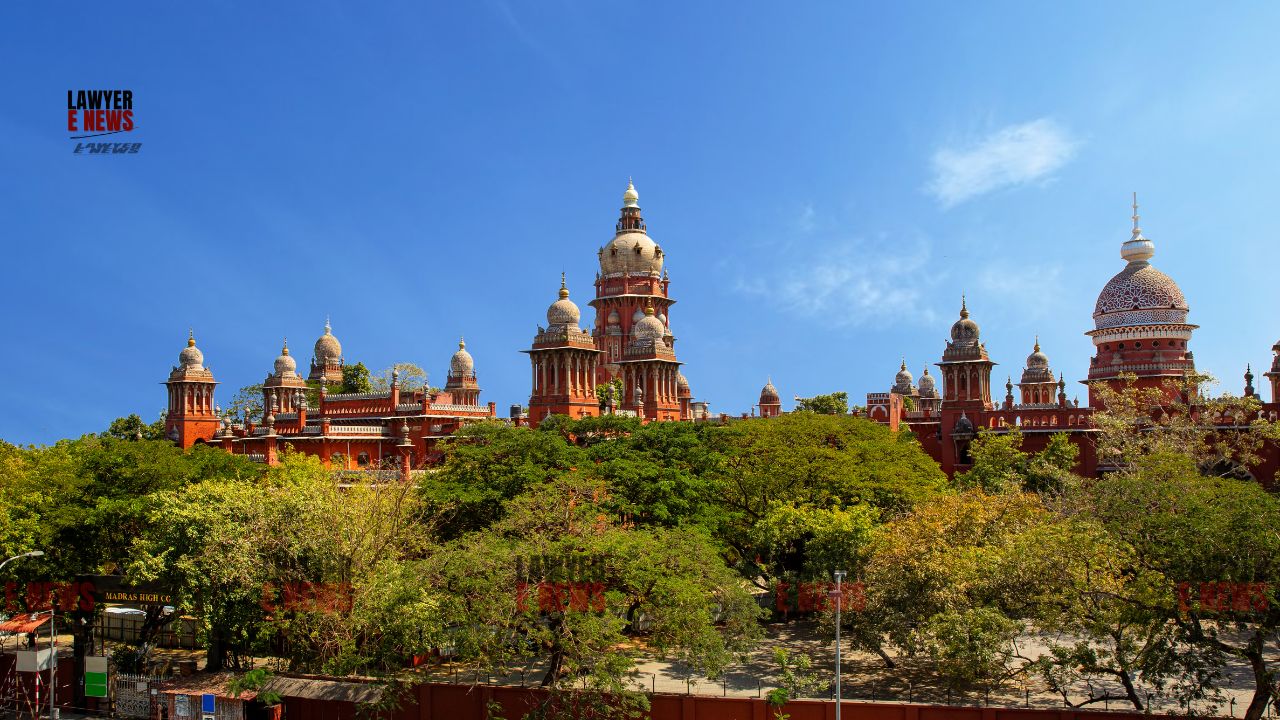
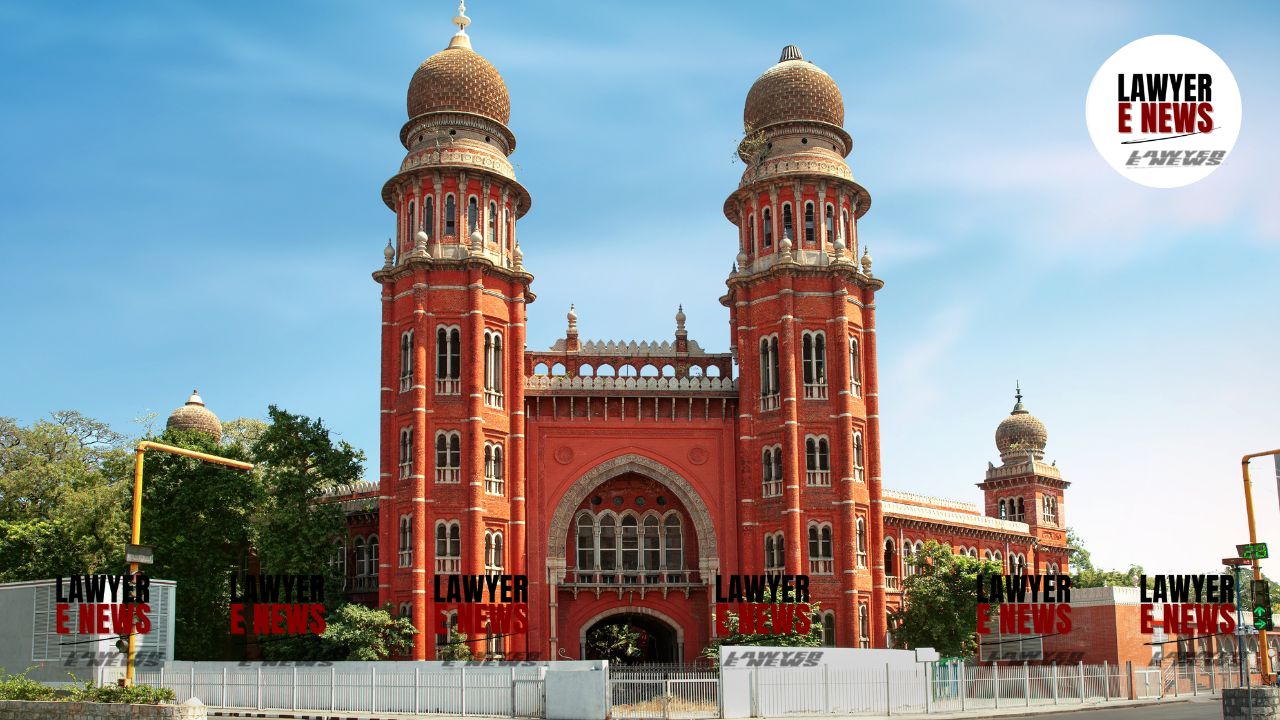
“Mere Assertions Without Documentary Proof Cannot Establish Marriage — Oral Testimony of Interested Witnesses Is Not Enough” - In a decisive verdict with wide implications for maintenance litigation under Section 125 of the CrPC, the Madras High Court (Madurai Bench) set aside a trial court decree granting maintenance to a woman who claimed to be the legally wedded wife of the appellant, holding that she failed to establish even a prima facie case of lawful marriage. The Bench comprising Justice C.V. Karthikeyan and Justice R. Vijayakumar found that the trial court’s decree was based entirely on conjecture and unreliable oral testimony.
“There is absolutely no tangible, believable, or credible evidence of the factum of marriage... The plaintiff has failed to establish, even on balance of probabilities, that she married the defendant on 06.07.1973 or on any other date.”
“Maintenance Can’t Be Claimed Without Proving the Relationship — Legal Marriage Is a Condition Precedent”
The appeal arose from a suit filed by the respondent/plaintiff before the Family Court, Dindigul, seeking ₹2,500 per month as maintenance, asserting that she had married the appellant/defendant in 1973 and lived with him until alleged acts of cruelty forced her to leave. She claimed that a Panchayat had directed the appellant to pay her maintenance, and that he had complied until 2009, when he abruptly stopped.
However, the appellant flatly denied any relationship whatsoever, claiming he had never married the plaintiff and that she had been instigated by his estranged sister due to property disputes. He further stated that he had married another woman, Muthulakshmi, in 1981, and produced documentary evidence of that marriage, including his son’s wedding invitation (Ex.B1) and transfer certificate (Ex.B2), identifying Muthulakshmi as his wife.
“All Witnesses Were Interested and Their Testimony Unreliable” — Oral Evidence Discredited by Appellate Court
The trial court had based its decree on the oral evidence of P.W.3, the husband of the defendant’s sister, who claimed to have witnessed the alleged 1973 marriage. The High Court, however, found this witness heavily biased and partisan, noting his proximity to the defendant’s estranged sister who allegedly instigated the suit.
“P.W.3, the brother-in-law of the defendant, was clearly an interested witness and the trial court failed to justify why his testimony was accepted while ignoring D.W.3 — the defendant’s father-in-law.”
The Bench found that none of the witnesses — P.W.2, P.W.3, D.W.2, or D.W.3 — were credible, as they all deposed in favour of the party who had summoned them, suppressing material facts and offering no independent or corroborated account of any marriage.
“Each of the four witnesses entered the witness box with a predetermined agenda — not to assist the court but to discredit the opposing party.”
“Where Is the Marriage Certificate?” — No Documentary Evidence, No Admissible Proof of Marriage
The Court strongly criticised the plaintiff for failing to submit even basic documentary evidence to support her claim of marriage or maintenance. She neither produced a marriage certificate, wedding invitation, nor any proof of the alleged Panchayat directive. Even a photograph she introduced was deemed inadmissible under Section 65B of the Indian Evidence Act, due to lack of certification.
“There is no evidence to show that the marriage was conducted in a grand manner, that 100 sovereigns of gold were given, or that a Panchayat directed payment of maintenance.”
The Court also rejected a Civil Miscellaneous Petition filed by the appellant under Order XLI Rule 27 CPC seeking to produce a judgment from another civil case to discredit the plaintiff, holding it irrelevant to the issue of marriage.
“Burden of Proof Rests on the Claimant — Maintenance Requires Proof of Lawful Marriage”
Reiterating settled legal principles, the Court held that in proceedings for maintenance, the burden is on the claimant to prove a valid marriage, even on the standard of preponderance of probabilities. The court noted that the plaintiff had failed to discharge this burden.
“In maintenance claims under Section 125 CrPC, the marriage must be at least prima facie proved. Mere oral assertion, unsupported by credible and admissible evidence, is not sufficient.”
Referring to Supreme Court precedents, including Radha Prasad Singh v. Gajadhar Singh, (AIR 1960 SC 115) and Madhusudan Das v. Narayani Bai (1983) 1 SCC 35, the Court reaffirmed that while appellate courts must exercise caution in overturning trial court findings, they are justified in doing so when the trial court ignores material evidence or bases conclusions on conjecture and inadmissible evidence.
“Trial Court Decree Was Based on Conjectures and Surmises” — Appellate Court Steps In
“The Trial Court misdirected itself in appreciating unreliable evidence to the undue advantage of the plaintiff. Its conclusions were based on conjectures and surmises drawn from wholly discredited testimony.”
The Appellate Court observed that the entire suit was driven by oral evidence lacking credibility, and the trial court completely omitted reference to the defence witnesses, thereby vitiating the evaluation of evidence.
Appeal Allowed, Maintenance Decree Set Aside, No Proof of Marriage
Holding that no valid marriage was established, and therefore, no liability to pay maintenance could be imposed, the Madras High Court allowed the appeal:
“There is no evidence before the Court to establish that the plaintiff was the legally wedded wife of the defendant. Consequently, there is no obligation on the part of the defendant to pay maintenance.”
The Court set aside the Family Court’s decree dated 02.03.2018 in O.S. No. 3 of 2017, and dismissed the connected civil miscellaneous petition. No costs were awarded.
Date of Decision: 17 September 2025