-
by sayum
15 August 2026 10:03 AM







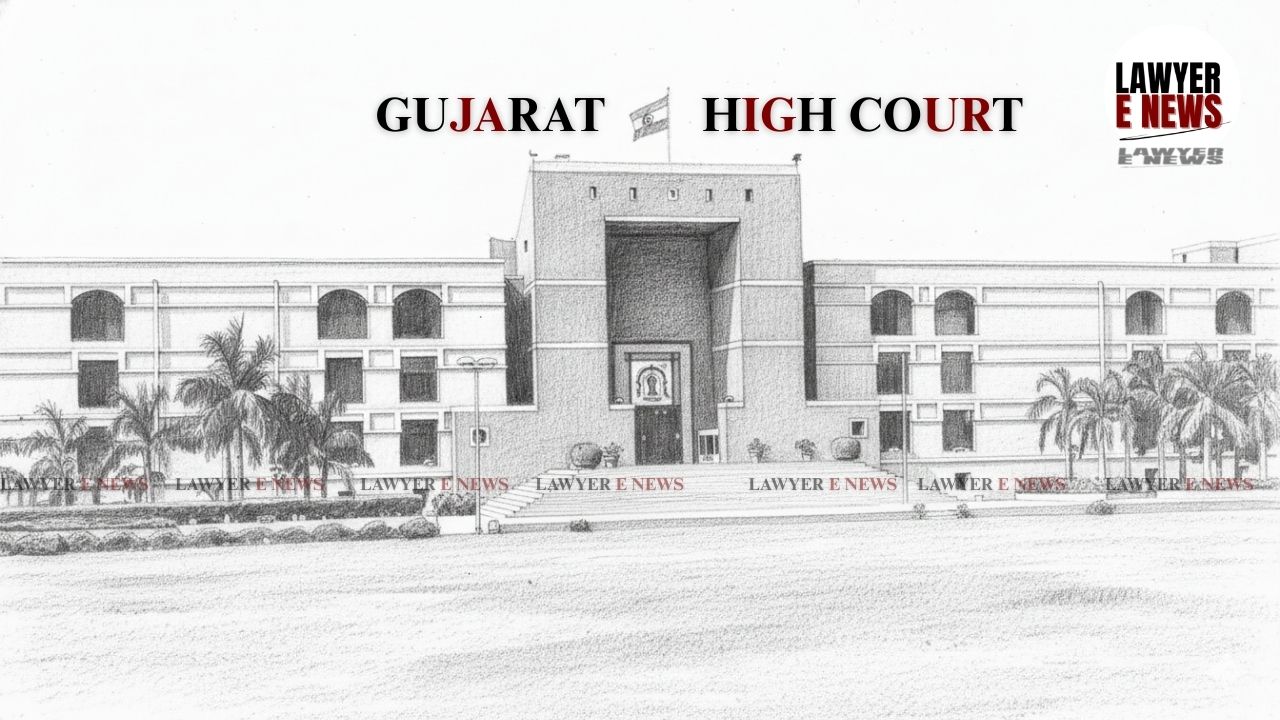
"In the absence of any evidence connecting the present respondents with the preparation or production of the said C-Form... the respondents cannot be held liable for the alleged offenses." High Court of Gujarat, in a significant ruling, held that public servants cannot be convicted for criminal misconduct or statutory offences under the Sales Tax Act based merely on assumptions, especially when no actual refund order was ever issued or disbursed by the department.
A single-judge bench of Justice Hemant M. Prachchhak observed that the prosecution miserably failed to establish any credible link between the accused tax officers and the alleged fraudulent preparation of C-Forms.
The State of Gujarat had filed a criminal appeal challenging a 2008 judgment of the Judicial Magistrate First Class, Junagadh, which acquitted two Sales Tax Officers. The accused were charged under Sections 75 and 80 of the Gujarat Sales Tax Act, 1969, read with Section 9(2) of the Central Sales Tax Act, for allegedly approving a false 4% tax refund for M/s Ashok Neon Coil Industries without proper verification. The State contended that the officers negligently performed their official duties and entered into a criminal conspiracy with the trader to sanction the refund. During the pendency of the present appeal, the first respondent passed away, and the appeal abated against him.
The primary question before the court was whether the trial court committed any error of law or fact in appreciating the evidence of the prosecution witnesses. The court was also called upon to determine whether the impugned judgment and order of acquittal suffered from any manifest illegality or perversity warranting appellate interference.
No Actual Refund Issued Or Sanctioned
The High Court observed that the entire prosecution case was launched merely on suspicion and assumptions. The court noted that no refund order had actually been processed or issued in favour of the beneficiary company. The bench emphasized that the prosecution failed to produce any documentary evidence to establish that a refund had been sanctioned or disbursed by the department, effectively collapsing the core allegation of illegal financial benefit.
Failure To Examine Key Beneficiary Vitiates Prosecution Case
The court strongly criticized the Investigating Officer for glaring lapses during the probe. It was noted that during the proceedings before the Sales Tax Department, an advocate had appeared on behalf of one Narayan Girdharbhai and produced the disputed C-Challan. However, the Investigating Officer failed to trace or examine this key individual to ascertain whether he was a director or proprietor of the claimant company.
Fatal Gaps In Investigation And Evidence
The bench highlighted that despite the presence of legal representatives for the claimant during the departmental proceedings, no investigation was carried out to ascertain the authenticity of the claim or the role of the beneficiary. The High Court concurred with the trial court that merely prosecuting the tax officers, without impleading or prosecuting the company, was wholly insufficient to establish the alleged criminal conspiracy.
"Considering the entire evidence on record, it clearly appears that there is no credible evidence to connect the present accused with the alleged crime and the evidence on record is not so convincing to prove beyond reasonable doubt that the accused has committed the alleged crime."
Double Presumption Of Innocence In Acquittals
Relying on a catena of Supreme Court decisions, including Chandrappa vs State of Karnataka and Ramesh vs State of Karnataka, the High Court reiterated the limited scope of interference in appeals against acquittal. The bench observed in prose that while an appellate court has full power to review and re-appreciate evidence, it must bear in mind that an acquittal reinforces the fundamental presumption of innocence available to every accused person.
Two Reasonable Views Rule Applied
The court explained that if two reasonable conclusions are possible based on the evidence on record, the appellate court should not disturb the finding of acquittal recorded by the trial court. The bench firmly stated that merely because an alternate view is possible, it does not justify upsetting a cogent and well-considered judgment of the lower court, unless the decision is characterized as perverse or suffers from manifest illegality.
No Perversity In Trial Court's Findings
Upon re-appreciating the oral and documentary evidence, the High Court concluded that the trial court committed no error of fact or law. The bench observed that the authorization required under the Act was not produced on record by the prosecution, and there was no infirmity in the trial court's findings since no actual offence was shown to have been committed by the surviving respondent.
The High Court dismissed the State's appeal as being devoid of merits, holding that the prosecution miserably failed to prove the charges beyond a reasonable doubt. The impugned judgment and order of acquittal passed by the trial court was confirmed, and the bail bonds of the accused were ordered to be cancelled.
Date of Decision: 08 July 2026