-
by sayum
04 August 2026 1:39 PM







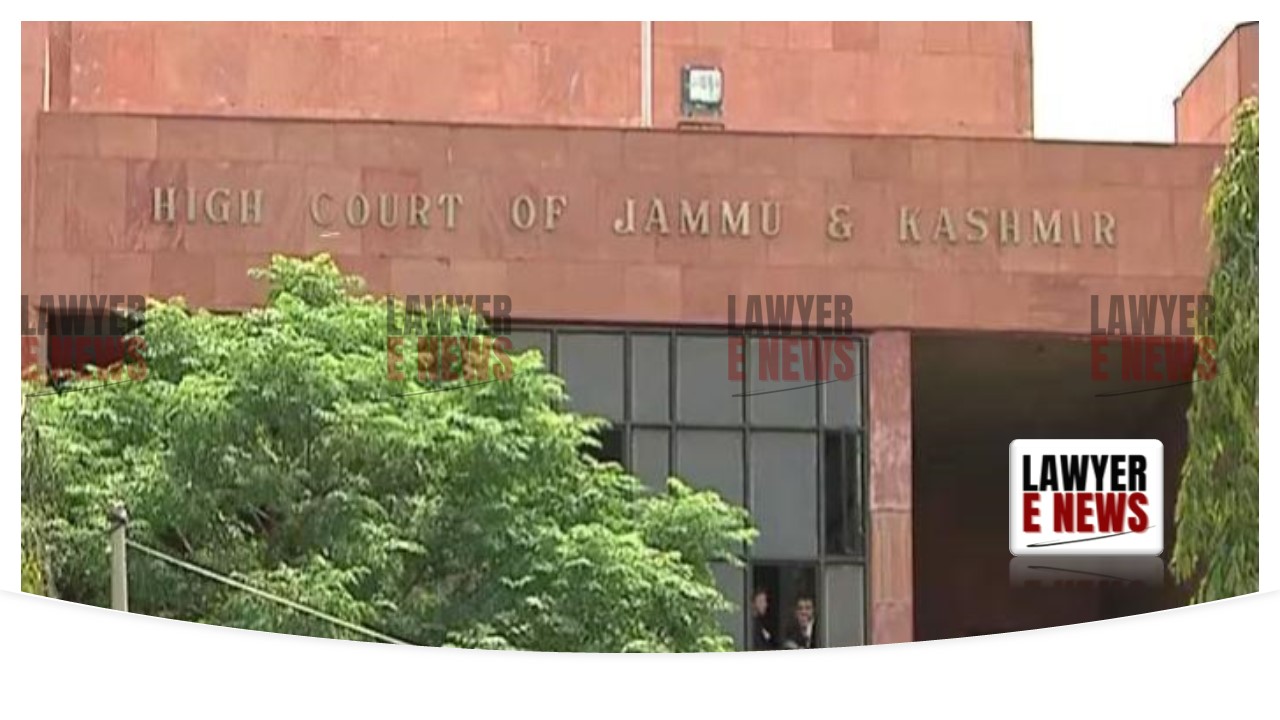
“Doctrine of Lis Pendens Does Not Override Procedural Bar – Transferee Pendente Lite Must Be Impleaded First”- In a significant pronouncement on the scope of interim injunctions under Order 39 Rules 1 and 2 of the Code of Civil Procedure, the High Court of Jammu & Kashmir and Ladakh at Srinagar upheld the rejection of a temporary injunction sought against a purchaser of land who was not a party to the suit or the appeal.
Justice Sanjay Dhar ruled that injunctions under Order 39 CPC can only be granted against parties to the suit or appeal, and that the proper remedy against a transferee pendente lite is through independent proceedings, not interim relief in an appeal where he is not a party.
The appellants had obtained a decree of pre-emption dated 19 February 2007 against one Mst. Farzi, who had sold the land to Mohammad Abdullah Sheikh. During execution proceedings, the respondent Mushtaq Ahmad Rather purchased the same property through a sale deed dated 5 October 2007 and took possession.
While an appeal by the original purchaser against the 2007 decree was pending, the appellants moved an application under Order 39 Rules 1 and 2 CPC before the Principal District Judge, Budgam, seeking an interim injunction to restrain Mushtaq Ahmad Rather from raising construction on the disputed property. However, Rather was not a party to the suit or the pending appeal.
The District Judge dismissed the application on 20 October 2020, noting that interim relief cannot be granted against a non-party. The appellants challenged that order before the High Court.
The principal issue was whether a court has jurisdiction to grant temporary injunction under Order 39 CPC against a person who is not a party to the proceedings, even if he is a transferee pendente lite.
Justice Sanjay Dhar answered in the negative, holding: “There is nothing in the provisions contained in Order 39 Rule 1 and 2 CPC that would vest power with a civil court or with appellate court to pass an interim injunction against a person who is not party to the proceedings.” [Para 12]
The Court clarified that the very language and purpose of Order 39 CPC limits the grant of interim relief to parties already before the court:
“An interim injunction is granted in favour of a party to the proceedings so as to preserve the subject matter of lis till the disposal of the suit... A person who is not a party to the proceedings obviously has not put forward his claim with regard to the suit property before the court.” [Para 13]
On the Doctrine of Lis Pendens and Transferee Pendente Lite
The appellants had invoked the doctrine of lis pendens, arguing that the respondent, being a transferee during the pendency of litigation, is bound by the decree, and therefore cannot claim better rights than the judgment debtor.
The Court acknowledged the settled principle as laid down in Usha Sinha v. Dina Ram (Civil Appeal No. 1998/2008), stating:
“Lis pendence itself is to be treated as constructive notice to a purchaser that he is bound by the decree that may be passed in the suit.” [Para 10]
However, it distinguished the present case on a crucial procedural ground: “...even though he may be claiming his rights to the suit property through the appellants before the court below, the proper course open to the appellants was to file a fresh suit for injunction... They cannot seek an order against the respondent in the appeal before the court below as the respondent is not a party therein.” [Para 14]
Thus, the doctrine of lis pendens cannot override the procedural bar against injuncting non-parties under Order 39 CPC. The Court reinforced that being bound by the decree does not ipso facto make the purchaser a party to proceedings.
The High Court upheld the reasoning of the District Judge and dismissed the appeal, reiterating:
“I do not find any ground to interfere in the impugned order passed by the learned District Judge, Budgam. The appeal lacks merit and the same is dismissed accordingly. Interim direction, if any, shall cease to be in operation.” [Para 15]
The Court emphasized that the appropriate remedy for the appellants is to institute an independent suit and implead the purchaser, rather than seeking relief in a proceeding where he is not a party.
The ruling reinforces the fundamental procedural principle that injunctive relief under Order 39 CPC cannot be granted against strangers to the suit, even if substantive doctrines like lis pendens apply in principle.
Date of Decision: 23 May 2025