-
by sayum
28 August 2026 12:24 PM







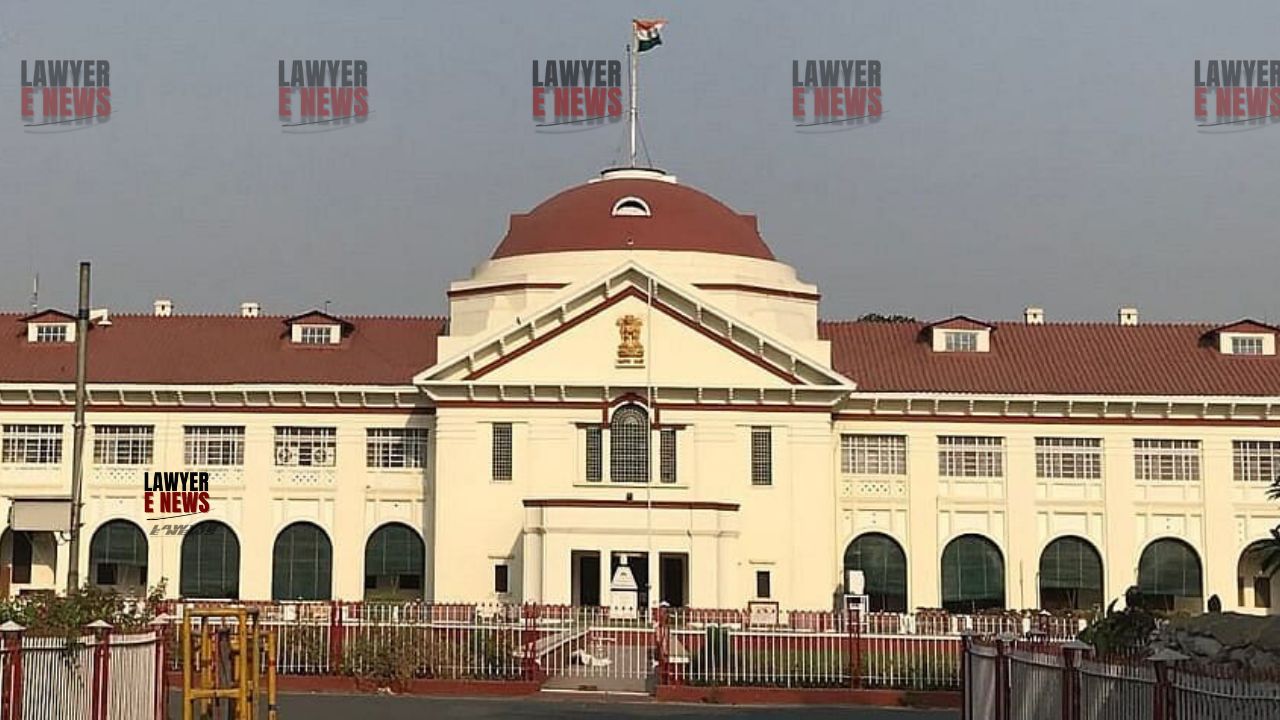
In a scathing rebuke of uneven justice and flawed investigation, the Rajasthan High Court on 24th September 2025 reversed the conviction of a man who had been sentenced under Section 307 of the Indian Penal Code for attempted murder, while his three co-accused were acquitted on the exact same set of evidence. Justice Farjand Ali, delivering the judgment in Ugma v. State of Rajasthan, called the conviction "unsustainable in law" and held that the trial court’s selective reliance on witness statements lacked any legal or factual justification.
The High Court decisively ruled, "There is no distinction to absolve three from the charges and choose the appellant alone for the act allegedly committed by four persons," adding that the prosecution had "utterly failed" to establish guilt beyond reasonable doubt, a cornerstone requirement in criminal jurisprudence.
"Convictions Cannot Rest on Hypothetical Reasoning and Selective Witness Belief" – Court Cautions Against Surmise-Based Judgments
The case involved Ugma, who had been convicted by the Additional Sessions Judge, Bhilwara, on 22nd June 1993, for allegedly firing a gun at the complainant, Amarchand, during a midnight attack on 9–10 January 1990. While Ugma was sentenced to five years rigorous imprisonment, the trial court acquitted the three other accused—Rameshwar, Mangu, and Deva—despite the fact that all four were tried together for the same act of alleged common intention.
Justice Farjand Ali found this differential treatment wholly unjustified. He observed, "Why a particular part of these two witnesses, PW-1 and PW-2, be discarded and disbelieved and why the same be accepted to bring home the guilt of the appellant only? No justification has been shown by the learned trial court in doing so."
The Court emphasized that unless there was a clear legal rationale or distinct evidence separating the conduct of the accused, a conviction of one while acquitting others on the same testimony amounted to arbitrary adjudication.
"No Gun, No Injury, No Ballistics – How Can There Be an Attempt to Murder?" – High Court Tears Into Shoddy Investigation
The judgment sharply criticized the glaring deficiencies in the police investigation. The prosecution’s case claimed that a close-range gunshot was fired at Amarchand, but he escaped unhurt by bending his knees. However, the Court found that neither the gun allegedly used by the appellant was recovered nor were the pellets seized from the scene subjected to ballistic examination.
"The crime scene was not photographed. The pellets allegedly found were not sent to the FSL. There should be a nexus between the firearm and the pellets which has not been established in this case," the Court held. It added that the SHO, who testified about the presence of gunshot marks, lacked any ballistic expertise to confirm that the marks on the wall were from a firearm.
This lack of scientific corroboration fatally undermined the prosecution’s narrative. "In the absence of a specific ballistic report and non-seizure of the gun from the appellant, it would be highly unsafe to convict the appellant for having an arm and opening gun fire upon PW-1 Amarchand, particularly when he sustained no injuries," the Court concluded.
"Attempt to Murder Cannot Be Presumed From Imaginary Scenarios" – Court Criticizes Conjectural Reasoning
The trial court had tried to justify the conviction by stating that if the victim had not bent down, the bullet might have hit him. The High Court categorically rejected this logic, calling it speculative and legally unsound.
"This Court is surprised to see this imaginary conclusion... An inference or presumption of committing any crime must always be based on sound, legally admissible evidence and certainly should not be based on hypothesis," Justice Farjand Ali held.
The Court reminded that criminal conviction must be rooted in proven facts, not on imaginative what-ifs. It found that the trial court’s findings were based on assumptions rather than evidence and failed to meet the legal threshold for conviction under Section 307 IPC.
"No Repeated Attack, No Injury, No Motive – Where Was the Intent to Kill?" – Court Finds Failure to Prove Mens Rea for Attempt to Murder
One of the key pillars of an offence under Section 307 IPC is the presence of mens rea—the intention to kill. The Court questioned why, if the accused had genuinely intended to murder, they did not fire again after the first shot missed, especially when the victim was alone and vulnerable.
"If the accused were four and the victim was all alone, and the accused were having a gun in their hand, then there was occasion for them to hit again and again to cause harm to the victim if there had been an intent to kill him," the Court reasoned.
The absence of any repeated attack, coupled with the immediate flight of the accused after a single missed shot, rendered the prosecution’s claim of murderous intent unconvincing. The High Court ruled that such circumstances "certainly go to the root of the case and a cloud of suspicion arises."
Final Verdict: Acquittal Ordered – Trial Court’s Judgment Set Aside for Legal and Factual Misapplication
After meticulously examining the FIR, site memo, seizure memos, and witness depositions, the Court allowed the appeal. Justice Farjand Ali ruled, "The prosecution did not succeed in proving its case beyond reasonable doubt," and observed that the entire case against Ugma was built on an unsound foundation.
The Court set aside the trial court’s conviction and acquitted the appellant. His bail bonds were canceled, and in compliance with Section 437-A CrPC, he was directed to furnish a personal bond of ₹40,000 to ensure appearance in case the State chooses to appeal.
With this judgment, the Rajasthan High Court reinforced the cardinal principles of criminal justice: equal treatment of similarly situated accused, the necessity of forensic corroboration, and the constitutional presumption of innocence unless proven guilty beyond doubt.
Date of Decision: 24 September 2025