-
by sayum
15 August 2026 10:03 AM







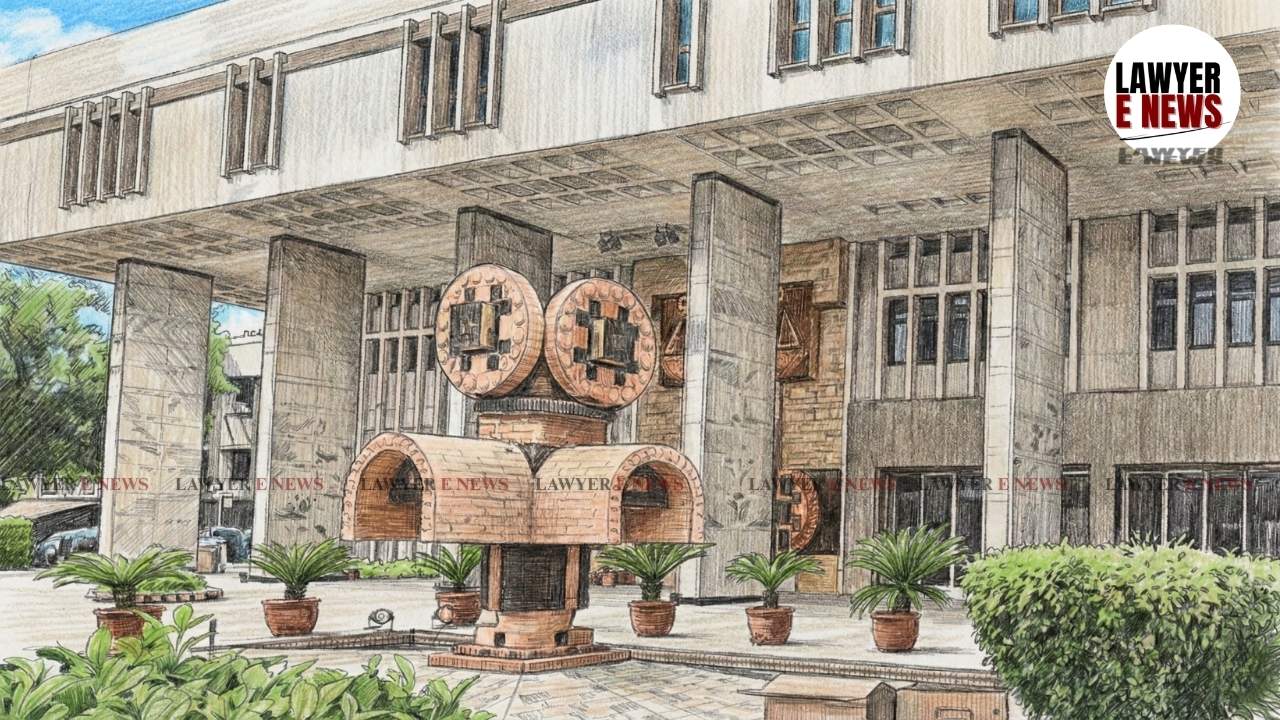
"An illegal construction no doubt gives a right to the municipal authorities to remove the illegal construction, but a right of a neighbour arises only if his easementary right to air and light under Section 15 of the Easement Act, 1882, is affected by virtue of illegal construction." Delhi High Court, in a significant ruling, held that residents of a locality cannot file a civil suit challenging alleged unauthorized construction merely by virtue of being neighbors, unless they can demonstrate that their personal easementary rights have been materially affected.
A bench of Justice Neena Bansal Krishna observed that speculative assertions regarding neighborhood congestion do not confer legal locus standi to institute such injunction suits.
The dispute arose when four local residents, claiming to be social workers, filed a civil suit seeking permanent and mandatory injunctions to demolish an alleged multi-storey commercial complex being constructed in Nabi Karim, New Delhi. They argued that the illegal structure would cause severe parking problems and street congestion, making the area unsafe. Both the Civil Judge and the District Judge had previously dismissed the suit, noting that the municipal corporation had already sealed the premises and demolished the unauthorized portions.
The primary question before the court was whether neighbors claiming no direct infringement of personal property rights have the locus standi to seek demolition of unauthorized construction. The court was also called upon to determine if the suit was barred under Section 41(j) of the Specific Relief Act and Section 91 of the Code of Civil Procedure regarding public nuisance.
Reliefs Rendered Infructuous By Municipal Action
The court first noted that the primary grievance regarding ongoing illegal construction had already been addressed by the statutory authorities. The bench highlighted the status reports filed by the municipal corporation, which confirmed that demolition action had been taken and the property was sealed multiple times. Consequently, nothing survived in regard to the demands for immediate demolition.
Future Injunctions Cannot Be Premature
Rejecting the prayer for a permanent injunction against future unauthorized construction, the High Court concurred with the lower courts. The judge emphasized that such prayers are entirely anticipatory in nature. The court observed that relief for any apprehensive unauthorized construction that may or may not be raised in the future is premature and cannot be granted.
No Locus Standi For Speculative Congestion Claims
Turning to the core issue of maintainability, the court firmly rejected the appellants' argument that anticipated street congestion gave them the right to sue. The bench clarified that while new houses might strain public resources, such speculative assertions do not establish a sustainable basis to demonstrate an impact on the plaintiffs' easementary rights.
"If the construction of houses is raised on the Plot as permissible under law, there may be a strain on the public resources, including the congestion in the gali, but such assertions are speculative and do not have any sustainable basis to demonstrate that there would be any impact on the easmentary rights of the Plaintiff."
Requirements Under Section 91 CPC And Specific Relief Act
The High Court further observed that the suit did not meet the statutory thresholds for a public nuisance claim. The bench pointed out that a suit under Section 91 of the Code of Civil Procedure requires at least two persons acting with the express leave of the Court, which was absent here. Consequently, the court affirmed that the suit was barred under Section 41(j) of the Specific Relief Act, 1963, as the plaintiffs possessed no personal interest in the matter.
Easementary Rights Must Be Materially Diminished
Relying on the coordinate bench judgment in Rajinder Motwani vs. MCD, the court detailed the specific parameters under which a neighbor can challenge illegal construction. The bench clarified that a neighbor's right arises exclusively if their right to air and light under Section 15 of the Easement Act is substantially affected. The court noted that such an easementary right must have been continuously enjoyed for twenty years before it can be claimed.
Substantial Damage Required Under Section 33
Expanding on the statutory protections, the court emphasized that the right to seek an injunction is not absolute. The bench observed that Section 33 of the Easement Act demands actual substantial damage to the complaining neighbor. The court explicitly noted that the infraction must materially diminish the value of the dominant heritage, leading to material interference in the physical comfort of the neighbor to live in his own house.
The Delhi High Court concluded that the appellants had failed to show any infirmity in the concurrent findings of the lower courts or raise any substantial question of law. Determining that the plaintiffs lacked the requisite locus standi, the court dismissed the second regular appeal for lacking merit.
Date of Decision: 17 July 2026