-
by sayum
28 August 2026 2:11 PM







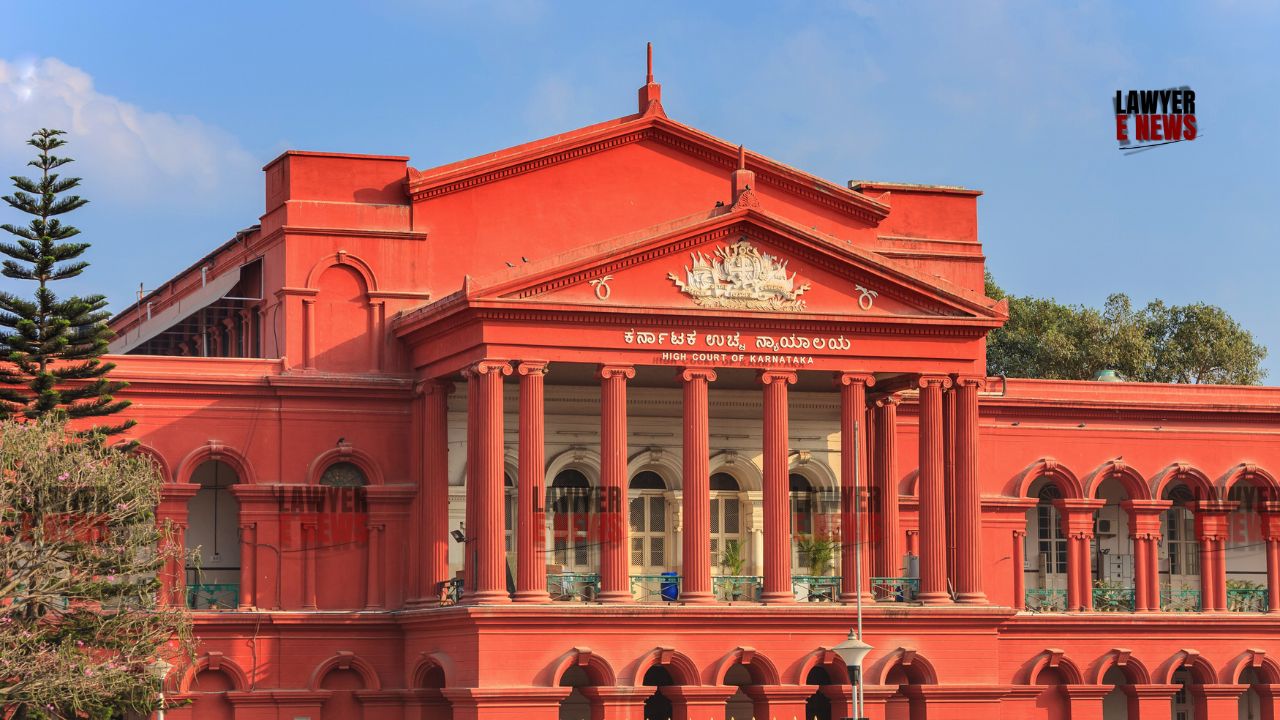
“What stares starkly in the face is negligence, and negligence, as law proclaims, can never come under the umbrella of reasonable cause” — In a significant decision sharpening the contours of procedural discipline in commercial litigation, the Karnataka High Court held that delays caused by administrative lapses or negligence cannot be condoned under the guise of ‘reasonable cause’ when a party seeks to file documents belatedly in a commercial dispute. The judgment came in the case where a writ petition filed under Article 227 of the Constitution was dismissed, upholding the Commercial Court’s refusal to permit late-stage document production.
The Court’s pronouncement is a decisive reaffirmation that the rigour of the Commercial Courts Act, 2015, must be respected in both form and substance, especially in light of the strict amendment to Order XI Rule 1(10) CPC, which governs disclosure of documents in commercial suits.
“You Cannot Seek Leniency in a Special Regime Built on Speed and Structure”
The Court sternly observed that ITI Limited, a public sector undertaking and defendant in Commercial O.S. No. 621/2024, failed to show any "reasonable cause" for not disclosing key documents along with its written statement. These documents, dating back to 2017–2018, were claimed to have been located in the company’s Gurugram corporate office, and were allegedly discovered only after cross-examination had begun.
Rejecting the affidavit and explanation filed by ITI Ltd., Justice Nagaprasanna wrote:
“Searching for a reasonable cause in the affidavit is akin to searching a needle in a haystack.”
He further emphasized: “The affidavit in support of the application is woefully bereft of particulars. It neither chronicles the nature of documents with clarity nor articulates any cogent reason for their delayed surfacing.”
The Court concluded that the application was clearly an afterthought, and allowing such belated attempts would erode the purpose of commercial litigation reforms:
“If indulgence would be shown, the very raison d’être of the Commercial Courts Act would stand defeated.”
“Commercial Courts Are Not to Be Run Like Ordinary Civil Courts”
The judgment underscores that the procedural stringency under the Commercial Courts Act is not ornamental — it is substantive and rooted in legislative intent to fast-track adjudication. The Court remarked that allowing parties to produce documents at will, post-pleadings and evidence, would dismantle the very ethos of the statute.
Quoting from leading High Court decisions across the country, the Court observed:
“Reasonable cause, necessarily, must refer to a cause which was outside the control of the petitioner, and which prevented the petitioner from filing the concerned documents along with the written statement.”
Referring to the Delhi High Court’s approach in commercial suits, Justice Nagaprasanna noted:
“Commercial suits are not to be conducted in a casual or leisurely manner as in ordinary civil suits. Procedural precision is the spine of the regime.”
“Trial Court Was Absolutely Right — Discretion Has No Place Where Statute Demands Discipline”
In a compelling paragraph of judicial discipline, the Court held:
“To permit litigants to dribble in documents piecemeal, long after pleadings and evidence have progressed, would be to strike at the heart of the legislative command.”
The Court affirmed that the trial court’s order dated 09.07.2025, passed by the LXXXIV Additional City Civil and Sessions Judge (Commercial Court), was not only legally correct but also essential to maintain procedural integrity in commercial trials.
“The order impugned is in consonance with law, congruent with precedent, and anchored in the policy imperative of expeditious disposal of commercial litigation.”
“Commercial Disputes Are Not a Free-For-All — Litigants Must Respect the Framework They Step Into”
Ultimately, the Court sent a strong message: commercial parties, regardless of their public or private status, must act with procedural diligence. Laxity, indifference, or bureaucratic excuses will not be tolerated.
“What the petitioner seeks is leniency; what the law demands is discipline. Between the two, it is the law that must prevail.”
The writ petition was dismissed, with no interference in the Commercial Court’s decision.
Date of Judgment: 15 September 2025