-
by sayum
26 October 2026 4:04 PM







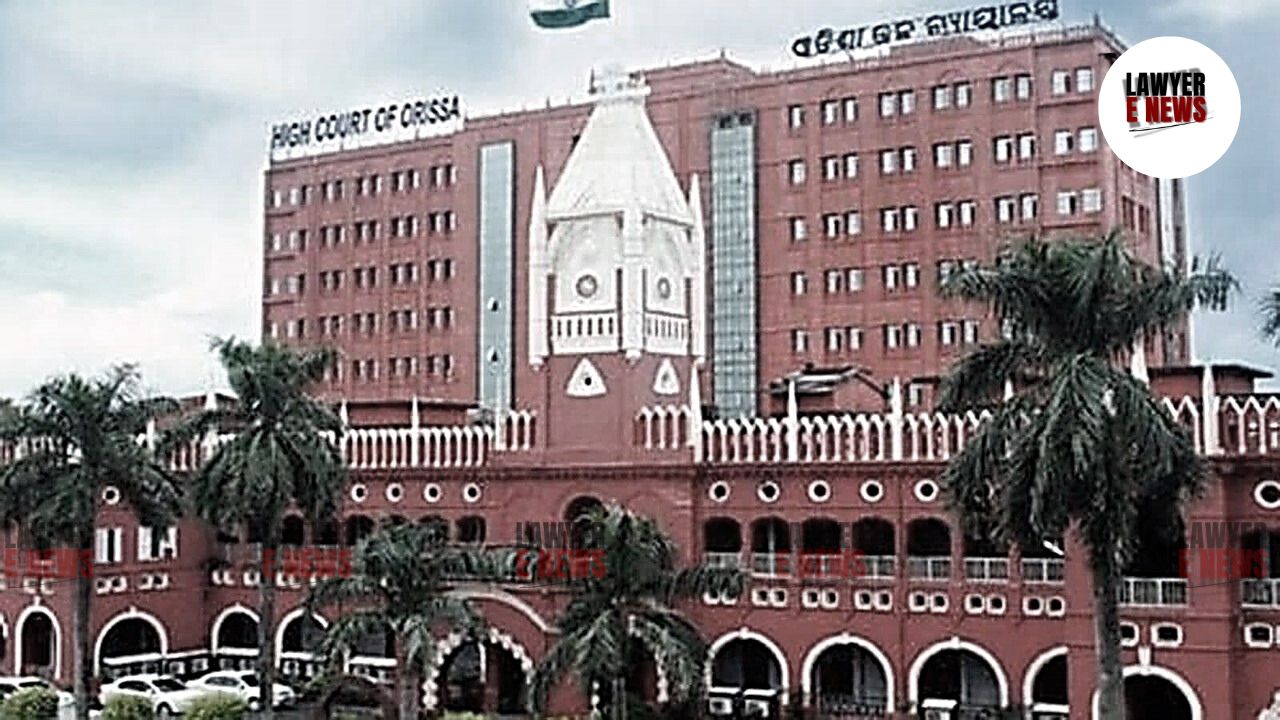
"Tribunal about giving right of recovery to the insurer, merely because the impugned judgment states that the right of recovery is granted to the insurer to realize the compensation from the owner... such finding of the learned Tribunal being contrary to law, cannot sustain." Orissa High Court, in a ruling dated September 29, 2026, held that a Motor Accident Claims Tribunal cannot grant a 'right of recovery' to an insurance company against the vehicle owner unless there is specific evidence establishing a breach of policy conditions.
A bench of Justice G. Satapathy observed that the mechanical grant of recovery rights, in the absence of any discussion or proof regarding policy violations, is legally unsustainable and must be set aside.
The appellant-claimant suffered grievous injuries in a motor accident on November 13, 2003, involving an offending motorcycle. Although the Claims Tribunal awarded compensation of Rs. 1,15,000, it also granted the respondent-insurer the right to recover the amount from the vehicle owner. The claimant challenged the quantum of compensation in the present appeal, while the insurer had not contested the findings of negligence or liability in the lower court.
The primary question before the court was whether the Tribunal erred in granting the insurer a right of recovery against the insured owner without any evidence of policy violation. Additionally, the court was tasked with determining the just and fair quantum of compensation, considering the parties had previously reached a negotiated settlement before the National Lok Adalat.
Insurer Must Prove Breach of Policy
The Court observed that the insurer failed to produce any evidence, either oral or documentary, to substantiate its claim that the offending vehicle was 'planted' or that the insured violated any statutory conditions. Notably, the insurer had admitted in its written statement that the rider of the motorcycle held a valid driving license during the period in question.
Arbitrary Recovery Rights Set Aside
The bench emphasized that the Tribunal’s decision to allow the insurance company to recover the awarded amount from the owner was passed without any findings of policy breach. Because the record was entirely silent on any violation by the owner, the High Court held that such a direction was "contrary to law" and summarily set it aside.
"This Court does not consider it proper to confirm such finding of the learned Tribunal about giving right of recovery to the insurer... such finding of the learned Tribunal being contrary to law, cannot sustain and is accordingly set aside in this appeal."
Settlement of Compensation Quantum
Regarding the quantum of compensation, the Court took note of the previous negotiations held before the National Lok Adalat, where the parties had reached a consensus on a consolidated sum of Rs. 1,50,000. Relying on the principle of amicable settlement, the court exercised its discretion to fix the compensation at this consolidated amount.
Interest of Justice Served by Settlement
The Court observed that since both the claimant and the insurer’s counsel agreed to the proposed consolidated sum, the interest of justice would be best served by finalizing the amount at Rs. 1,50,000. This approach aligns with the precedent in Taslim Parvin & Another v. (Smt.) Usha Devi & Another, focusing on the resolution of claims without further protracted litigation.
The Court disposed of the appeal by directing the insurance company to pay the consolidated sum of Rs. 1,50,000 to the claimant within eight weeks. The Court explicitly ordered that upon deposit, the amount be disbursed to the claimant in cash, and the previous direction regarding the right of recovery against the vehicle owner was formally quashed.
Date of Decision: 29 September 2026