-
by sayum
25 October 2026 3:59 PM







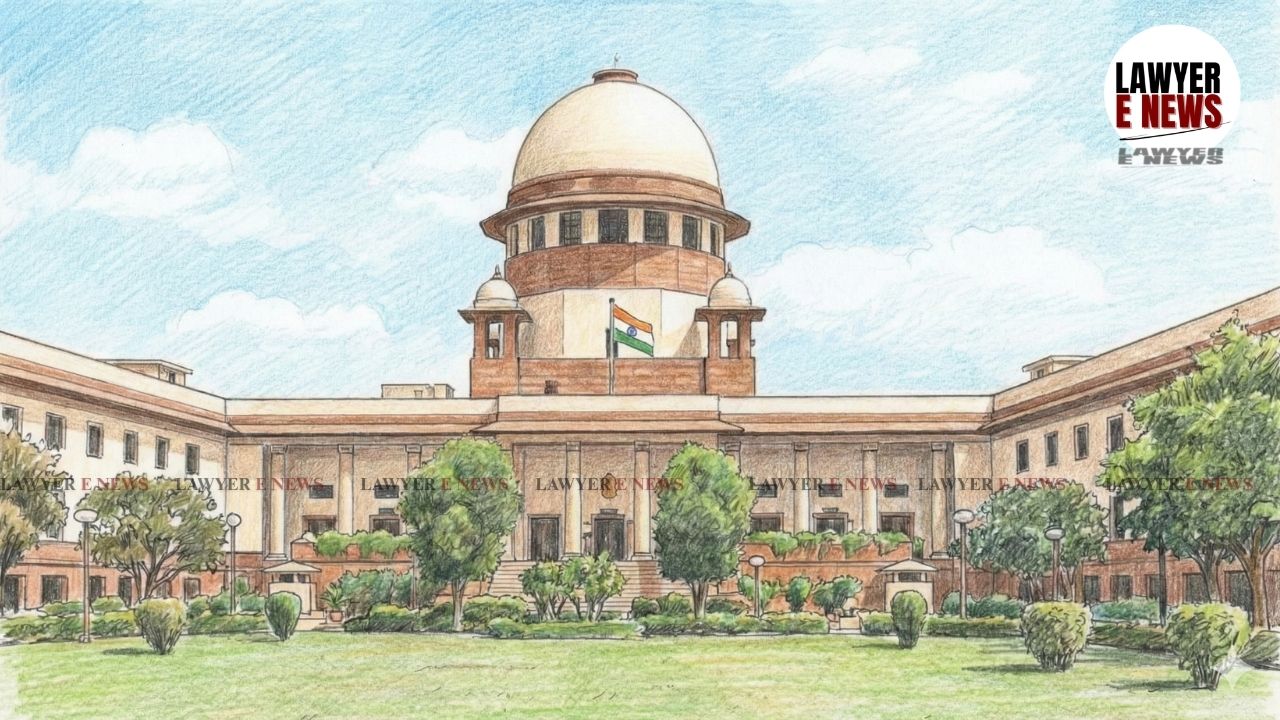
"The right to live with dignity, free from the fear of violence, is an intrinsic facet of the fundamental guarantee of life and personal liberty enshrined under Article 21 of the Constitution." Supreme Court of India, in a significant Suo Moto Writ Petition dated 28 September 2026, has asserted that the State holds a primary obligation to ensure public spaces remain safe, accessible, and secure, failing which the fundamental rights of citizens are compromised.
A bench of Justices J.B. Pardiwala and K. Vinod Chandran observed that expressions of concern by authorities, when devoid of concrete accountability, fall short of addressing the systemic institutional failures that expose citizens to heightened security risks in urban environments.
Systemic Failure In Public Safety
The court initiated these proceedings following a series of disturbing reports concerning egregious crimes against women and minors across the Delhi-NCR region, including incidents at Aastha Kunj Park, Swaroop Nagar, and on public transport. The judges noted that these safety concerns cannot be viewed in isolation, as they highlight a persistent vulnerability in spaces that ought to be safe for all. The court explicitly stated that public spaces such as parks, roads, and metro stations cannot be permitted to become high-risk zones due to administrative deficiencies like poor lighting or lax patrolling.
Beyond Rhetoric: The Need For Measurable Accountability
The bench emphasized that solidarity is not a substitute for effective governance and that there is an urgent need to fix responsibility upon authorities entrusted with the maintenance of public order. The court clarified that the scope of these proceedings is not to assess individual criminal culpability, which must follow the due process of law, but to evaluate the effectiveness of systemic, preventive, and monitoring frameworks. It stressed that mechanisms for protection are only valid if they are functional, adequately staffed, and subject to continuous oversight.
Mandatory Status Reports On Security Infrastructure
The Court has directed the concerned authorities to file a comprehensive status report detailing the operational status of critical safety mechanisms in Delhi. This includes the utilization of the National Database on Sexual Offenders (NDSO) for antecedent verification and the monitoring of the Investigation Tracking System for Sexual Offences (ITSSO). The authorities must also account for the implementation of the Mission Shakti umbrella programme and the functional status of emergency resources like the ERSS number 112 and the Women Helpline number 181.
Operational Efficiency Over Paper Schemes
The court further specified that these reports must not be limited to theoretical frameworks but must detail actual field operations, including geographical coverage and average response times. It highlighted that the utility of these systems is dependent on their accessibility and the integration of police, medical, and counseling services. The court reiterated that any mechanism intended to protect the vulnerable must be capable of responding promptly to perceived threats in real-time.
Immediate Interim Measures And Infrastructure Audits
Pending the final consideration of these reports, the Court issued specific interim directions to be executed within four weeks. The Commissioner of Police, Delhi, is tasked with constituting dedicated district-level teams, headed by officers not below the rank of Deputy Superintendent, to conduct immediate vulnerability mapping of public areas. This audit must incorporate data from the National Crime Records Bureau and citizen grievances to identify "blind spots" in lighting and surveillance.
Compulsory Enforcement Of Safety Protocols
The bench mandated an immediate audit of lighting and CCTV infrastructure across all vulnerable zones, including public transport hubs. Furthermore, the court directed strict compliance with the prohibition on black, tinted, or solar-control films on vehicle windows, as laid down in Avishek Goenka v. Union of India & Anr. The police are directed to impound non-compliant vehicles and prosecute offenders to eliminate the use of such vehicles for the concealment of criminal activities.
"Headlines and reportage must prioritize dignity, factual accuracy, and institutional accountability over sensationalism, ensuring that the discourse remains centered on justice and safety."
Media Responsibility And Victim Identity Protection
The court also issued a stern reminder to media organizations regarding their constitutional and ethical obligations when reporting on sexual offences. Emphasizing the mandates of Section 72 of the Bharatiya Nyaya Sanhita, 2023, and Section 23 of the POCSO Act, the court prohibited any direct or indirect disclosure of the identity of victims. It urged the district administration to engage with media houses to ensure that platforms are used for public education and the dissemination of helplines rather than sensationalist coverage that may cause secondary trauma.
The matter is slated for further hearing on 5 October 2026, with Senior Counsel Ms. Liz Mathew appointed as Amicus Curiae to assist the Court in addressing these systemic concerns.
Date of Decision: 28 September 2026