-
by sayum
19 August 2026 8:35 AM







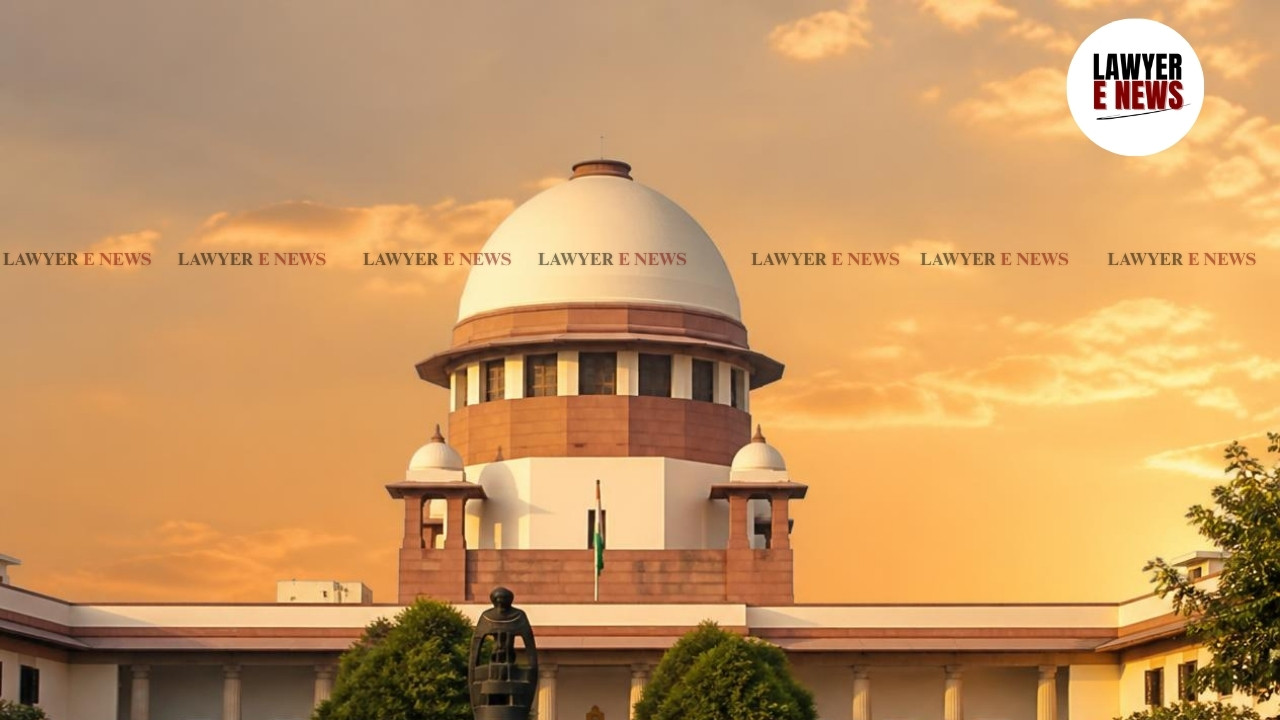
"Mere use of the word ‘bastard’, by itself, is not sufficient to arouse prurient interest of a person. More so, when such words are commonly used in modern era during heated conversations," Supreme Court of India, in a significant ruling dated April 06, 2026, held that the mere use of abusive terms like "bastard" during a heated argument does not constitute the offence of obscenity under Section 294(b) of the Indian Penal Code.
A bench comprising Justice Pamidighantam Sri Narasimha and Justice Manoj Misra observed that profanities do not inherently possess the effect of arousing prurient interests, particularly as such language has become commonplace in modern-day altercations.
The appeals arose from a property dispute between close relatives who shared a common boundary. A physical altercation ensued when the deceased insisted on fencing the disputed boundary despite objections from the accused. The High Court had convicted the appellants for uttering obscene words under Section 294(b) IPC, alongside convicting one accused under Section 304 Part II IPC and the other under Section 304 Part II read with Section 34 IPC, prompting the present appeals before the Supreme Court.
The primary question before the court was whether the use of an abusive word during a sudden altercation constitutes an "obscene act" punishable under Section 294(b) of the IPC. The court was also called upon to determine whether the first appellant shared a common intention under Section 34 of the IPC to commit culpable homicide, and whether the sentence for the fatal blow delivered by the second appellant was disproportionate.
Profanities Do Not Equate To Obscenity
Addressing the conviction under Section 294(b) IPC, the Supreme Court emphasized that the word "obscene" in the IPC must be construed as something possessing the potential to appeal to the prurient interest of a person. The bench relied heavily on the precedent set in Apoorva Arora & Anr. v. State, noting that vulgar and expletive-filled language may be distasteful, uncivil, or improper, but it is not per se "obscene" unless it arouses sexual and lustful thoughts.
The Court firmly rejected the State's argument that calling the deceased a "bastard" fulfilled the statutory ingredients of the offence. The bench stated that such abusive language is unlikely to evoke lustful thoughts and instead usually evokes disgust or revulsion, thereby rendering the conviction under Section 294(b) unsustainable.
No Common Intention Established
Turning to the charge of culpable homicide against the first appellant (A-1 Senthil), the Court analyzed the applicability of vicarious liability under Section 34 IPC. The bench observed that while A-1 initially charged with an agricultural tool (Aruval), he only caused non-grievous injuries to an intervening witness. The fatal blow to the deceased was delivered independently by the second appellant (A-2 Sivakumar) with a wooden log picked up from the spot.
The Court found no reliable evidence that A-1 exhorted A-2 or shared a premeditated common intention to cause death or fatal bodily harm. The bench noted that the entire incident unfolded in the heat of the moment during a sudden surge of passions.
"upon consideration of the circumstances in which the incident unfolded and the manner in which the deceased was assaulted by A-2... it would not be safe to hold that A-1 shared common intention with A-2 to cause such bodily harm to the deceased as is likely to cause his death."
Single Blow In Heat Of Moment
While setting aside A-1's conviction under Section 304 Part II read with Section 34 IPC, the bench upheld his conviction under Section 324 IPC for voluntarily causing hurt to the intervening witness. Regarding A-2, who delivered the fatal head injury, the Court concurred with the High Court that the offence amounted to culpable homicide not amounting to murder, as he struck the head with a heavy log and uttered words indicating an intent to finish the deceased off.
However, the bench took a lenient view on the quantum of sentence for A-2, noting the absence of premeditation. The weapon used was a log found lying at the scene, indicating that the assault occurred spontaneously without the use of a dangerous weapon brought specifically for the attack. The Court noted that "only a solitary blow was inflicted in the heat of the moment."
The Supreme Court partly allowed the appeals. The conviction of both appellants under Section 294(b) IPC was set aside. The first appellant's sentence under Section 324 IPC was reduced to the period already undergone, while the second appellant's sentence under Section 304 Part II IPC was modified and reduced from five years to three years of rigorous imprisonment.
Date of Decision: 06 April 2026