
-
by sayum
26 August 2026 1:49 PM







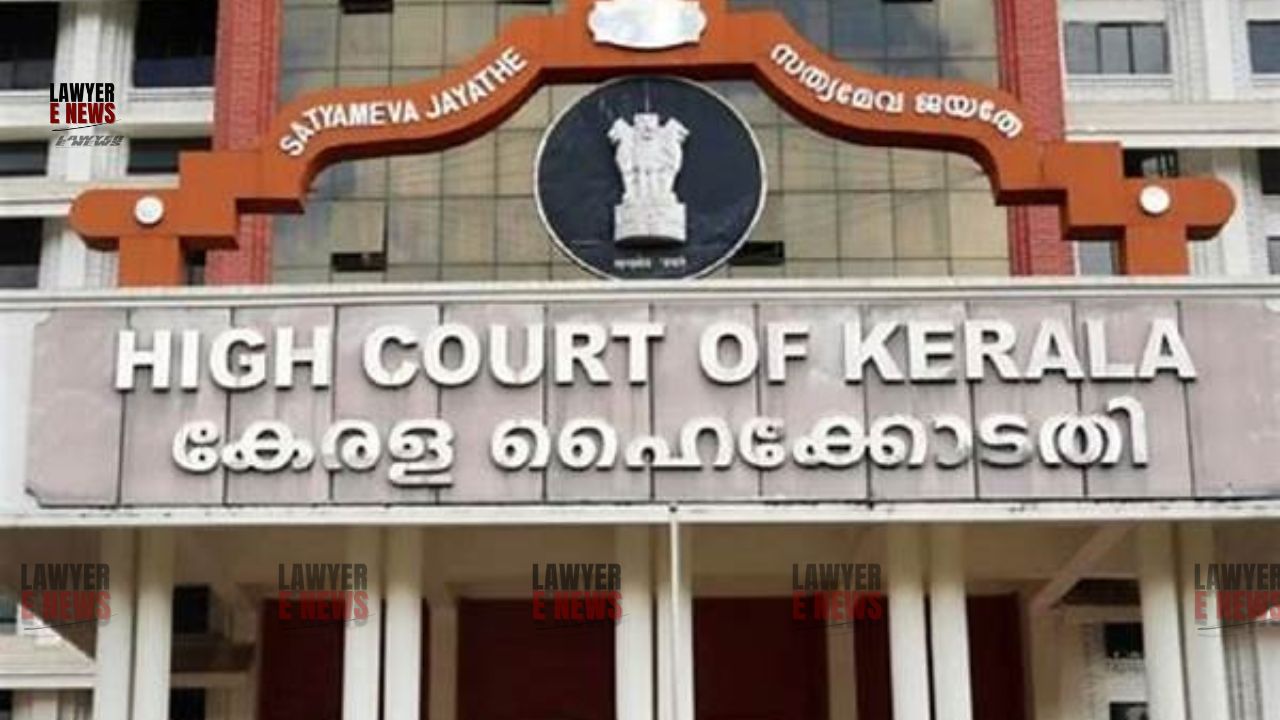
“Where the parties have voluntarily executed a mediated agreement, courts cannot overlook its evidentiary sanctity merely based on oral assertions contrary to its terms” — In a judgment delivered by Kerala High Court in significantly modified the Family Court’s decree awarding 75 sovereigns of gold ornaments to the wife, reducing it to 38½ sovereigns, citing the binding effect of a mediated agreement (Ext. A2) and corroborating photographic and oral evidence.
The Division Bench comprising Justice Sathish Ninan and Justice P. Krishna Kumar upheld other parts of the Family Court’s ruling, including the direction for the husband to return ₹7,00,000, the value of household articles, and maintenance to wife and children, but intervened only on the quantum of gold ornaments.
The Court held that the Family Court erred in discarding the mediated settlement, which was voluntarily executed and not shown to be vitiated by coercion or fraud.
“Admissions Made in a Signed Mediation Agreement Are Binding—Oral Explanation of ‘Compulsion’ Is Unconvincing and Unsupported”
The core dispute revolved around whether the wife, Shanitha, was entitled to 75 sovereigns of gold ornaments, allegedly entrusted to the husband Noorshah at the time of their marriage in 1996. The Family Court had accepted this claim, but the High Court found otherwise, holding:
“The respondent admitted in Ext. A2, a mediation agreement, that only 38½ sovereigns of gold were to be returned. This document was voluntarily signed, and no credible evidence of coercion or undue influence was produced.”
The wife’s attempt to argue that she accepted a lower figure “to purchase peace” during mediation failed to impress the Court. The oral testimony of the mediator, examined as PW4, did not support any suggestion of compulsion, and the Court concluded:
“The explanation offered by the respondent is only to be rejected. Her evasive explanation is contrary to the terms of Ext. A2 and to the inference we draw from the marriage photographs, which suggest gold ornaments of around 40 sovereigns.”
The judgment underlined that the terms of a compromise agreement, especially one executed after mediation, cannot be diluted by post-facto oral assertions, unless vitiated by compelling evidence—which was absent in this case.
“Written Compromise Carries More Weight Than Oral Allegations—Marriage Photos Show Around 40 Sovereigns Only”
The Court examined Ext. A1, a set of marriage photographs, which according to the judges visually confirmed possession of only about 40 sovereigns of gold ornaments, thus aligning with the terms recorded in Ext. A2.
Rejecting the Family Court’s reliance on oral testimony alone to award 75 sovereigns, the Bench stated:
“The Trial Court accepted the respondent’s claim based solely on oral evidence and overlooked the binding nature of Ext. A2. Such an approach is legally unsustainable.”
Accordingly, the High Court modified the decree to hold that the appellant-husband was liable to return only 38½ sovereigns, or the market value at the time of realisation, if physical return was not possible.
“Trial Court’s Findings on Monetary Claims Are Based on Proper Evaluation of Documentary and Oral Evidence—No Interference Warranted”
While the appellant disputed his liability to return ₹7,00,000, the Court found the oral evidence of PW1 and bank statements (Exts. B8 and P9) to be reliable and corroborative. Further, clauses in Ext. A2, wherein the husband agreed to deposit ₹2,00,000 each for his minor children and to assign 10 cents of land in their names, substantiated the wife’s claim of financial contribution.
“If the appellant had not received ₹7,00,000 from the respondent, he could not have made such deposits or agreed to assign land to the children. The Trial Court rightly concluded that the claim was more probable.”
The Court upheld the award of ₹7,00,000, with 6% annual interest, as also the ₹2,00,000 awarded for furniture and household articles, noting that both were explicitly acknowledged in Ext. A2.
“Maintenance Awarded at ₹5,000 to Wife and Elder Child, ₹2,500 Each to Two Younger Children is Justified—Earning Abroad No Excuse for Neglect”
The appellant, working abroad in Malaysia, claimed he had consistently sent remittances to the wife. However, the Court found through the evidence of PW1 that he had neglected to maintain his family and that the respondent, an unemployed homemaker, lacked the means to support herself and three children.
The Court upheld the maintenance award:
“There is no reason to interfere with the Family Court’s direction. The respondent has no job, while the appellant earns well abroad and failed in his legal obligation to provide maintenance.”
The Bench added that when any of the children attain majority, the Family Court may re-evaluate the maintenance orders, providing a mechanism for future reassessment.
Partial Relief to Husband Based on Binding Terms of Settlement; Rest of Family Court’s Ruling Stands
The Kerala High Court’s ruling affirms the binding nature of mediated settlements, holding that parties cannot later disown them without strong and credible proof of vitiating factors like coercion or fraud. The Court clearly drew a line between settled facts recorded in writing and oral exaggerations made during litigation.
It reiterated that written admissions and contemporaneous documentary evidence, like bank records and settlement agreements, must be given greater evidentiary weight than uncorroborated oral testimony.
“Family Court failed to appreciate that the mediated agreement was voluntarily executed and supported by independent evidence—Decree awarding 75 sovereigns modified to 38½”, the Court summed up, providing partial relief to the husband, while safeguarding the wife’s and children’s rights to monetary recovery and maintenance.
Date of Decision: 14 October 2025





