-
by sayum
15 August 2026 2:23 PM







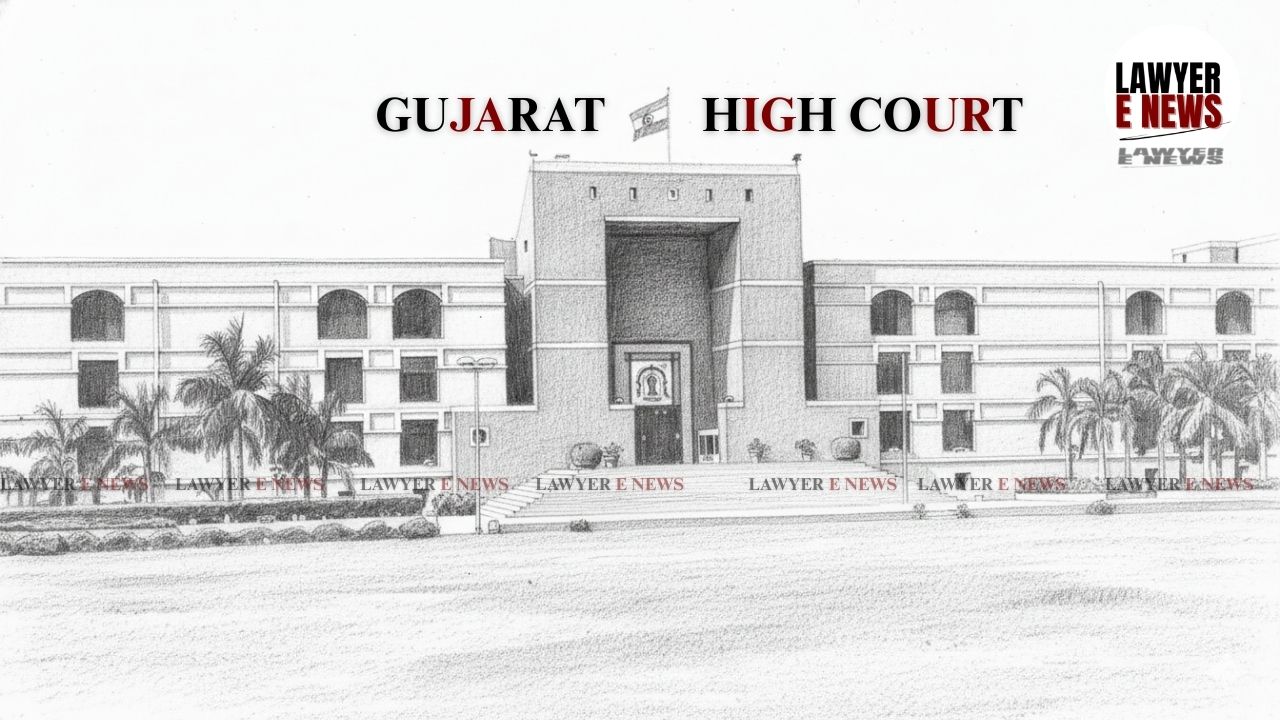
"The prosecution's version that PW-4 intervened during the incident is contradicted by the testimony of PW-4 himself. This material contradiction stands proved from the deposition of PW-4 and goes to the root of the prosecution case." Gujarat High Court, in a decision, dismissed a State appeal against the acquittal of an individual accused of assaulting a public servant and committing offences under the SC/ST (Prevention of Atrocities) Act.
A single-judge bench of Justice Hemant M. Prachchhak observed that material contradictions in eye-witness accounts and the deliberate non-examination of independent witnesses created a significant dent in the prosecution’s case. The Court held that when two reasonable conclusions are possible, the appellate court should not disturb the finding of acquittal recorded by the trial court.
The case originated from a complaint by an employee of the Siddhpura Nagarpalika who was entrusted with rent collection. He alleged that on September 15, 2009, while discharging his duties, the respondent-accused assaulted and abused him in public view, purportedly harbouring a grudge over a previous altercation regarding rent dues. Following a trial, the Special Judge at Patan acquitted the accused in 2012, leading the State to challenge the verdict before the High Court.
The primary question before the Court was whether the trial court was justified in passing the judgment of acquittal and whether there was any illegality or perversity in the appreciation of evidence. The Court was also called upon to determine if the prosecution had established the necessary ingredients for a conviction under Section 3(1)(10) of the Atrocity Act.
Court Highlights Material Contradictions In Eye-Witness Accounts
While perusing the evidence, the Court noted a glaring discrepancy in the testimony of the alleged eye-witness (PW-4). According to the complainant, PW-4 had intervened at the time of the assault to rescue him. However, during cross-examination, PW-4 admitted that he was not present at the time of the incident and only reached the spot fifteen minutes later.
The bench observed that such a contradiction goes to the root of the case. "Thus, the prosecution's version that PW-4 intervened during the incident is contradicted by the testimony of PW-4 himself. This material contradiction stands proved and disproves the prosecution’s narrative regarding the assault," the Court remarked.
Non-Examination Of Independent Witnesses Creates Doubt
The Court took serious note of the Investigating Officer’s (PW-6) admission that independent witnesses, specifically other shop owners in the vicinity, were not included in the charge-sheet. The IO admitted that these witnesses were dropped because they did not support the prosecution’s version of events.
The bench held that the exclusion of independent witnesses who were present at the scene suggests that the complainant’s story was likely concocted. The Court noted that the companion of the complainant (PW-2) also failed to support the vital aspects of the incident, specifically failing to mention any abusive words used by the accused with the intent to insult the complainant's community.
Stringent Requirements For Conviction Under Atrocity Act
Relying on the Supreme Court's decisions in Shajan Skaria Vs. State of Kerala and Gunjan @ Girija Kumari Vs. State (Nct Of Delhi), the High Court reiterated that Section 3(1)(10) of the Atrocity Act is only attracted when abusive words are uttered in a public place within public view with the specific intention of insulting a person based on their community.
The Court found that the evidence in the present case was "completely silent" on this aspect. It held that the prosecution must lead prima facie satisfactory and cogent evidence to prove such a charge. "In the present case, the evidence is completely silent on that aspect and no other witnesses have supported the case of the prosecution," the bench observed.
Double Presumption Of Innocence In Acquittal Appeals
The Court emphasized the high threshold required to reverse an acquittal. It noted that in an appeal against acquittal, there is a "double presumption" in favour of the accused: first, the fundamental principle of innocence, and second, the reinforcement of that innocence by the trial court’s verdict.
Justice Prachchhak observed that an appellate court should not ordinarily interfere with an order of acquittal unless the lower court's approach is vitiated by manifest illegality or perversity. The Court held that if two reasonable conclusions are possible on the basis of the evidence on record, the appellate court must defer to the trial court's view.
Concluding the judgment, the Court held that the prosecution had "miserably failed" to prove the charges beyond reasonable doubt. Finding no infirmity or illegality in the trial court's reasoning, the High Court confirmed the acquittal and ordered the cancellation of the accused's bail bonds.
"Considering the entire evidence on record, it clearly appears that there is no credible evidence to connect the present accused with the alleged crime and the evidence on record is not so convincing to prove beyond reasonable doubt," the Court concluded.
Date of Decision: 23 June 2026