-
by sayum
28 August 2026 10:07 AM







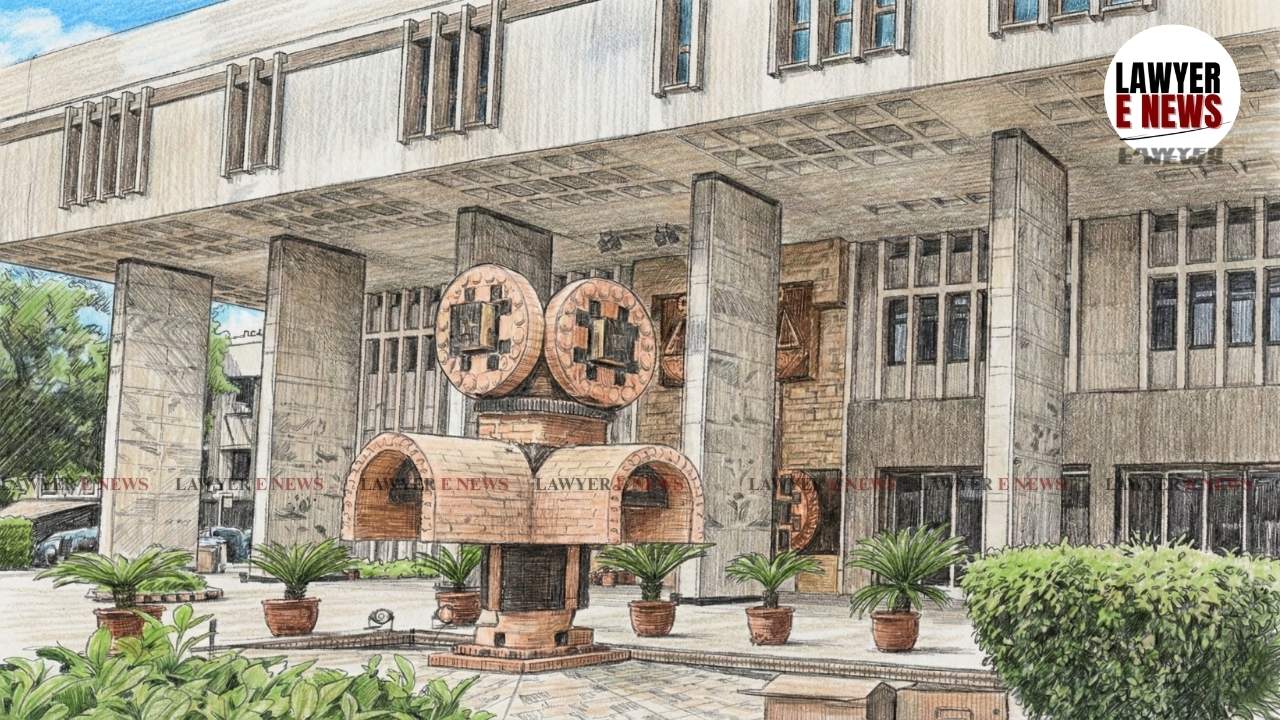
"A writ court cannot enforce a monetary claim disguised as mandamus when the right stands abandoned and the remedy is long barred by limitation" — held the Delhi High Court while allowing intra-court appeals filed by IREDA and the Ministry of New and Renewable Energy (MNRE), and setting aside a Single Judge’s ruling that had directed enhanced payment of Generation Based Incentive (GBI) to Chhattisgarh State Power Distribution Company Ltd. (CSPDCL).
Delivering a reportable judgment on 9 October 2025, a Division Bench comprising Chief Justice Devendra Kumar Upadhyaya and Justice Tushar Rao Gedela ruled that a Committee constituted under Clause 8 of the MNRE’s 2010 Rooftop Solar Guidelines had no authority to override the scheme’s core provisions or the contractual MoU, and its decision to compute GBI based on SERC tariff, instead of CERC tariff, was legally untenable. The Court also held that CSPDCL’s writ petition, filed in 2017, was barred by waiver, acquiescence, and laches, having been filed two years after rejection of its claims by the Appellate Tribunal for Electricity.
“Power to Remove Difficulties Does Not Mean Power to Rewrite the Scheme”: High Court Declares GBI Committee’s Tariff Fixation Unenforceable
The Court’s key finding centred on the legal limits of Clause 8 of the 2010 MNRE Guidelines, which authorised the Ministry to constitute a Committee to “remove difficulties” in the implementation or interpretation of the scheme. In 2013, this Committee had decided that ₹15.84/kWh, the tariff prevailing at the time of project registration as per SERC, would be the sole basis for GBI computation, and not the CERC tariff of ₹17.91/kWh.
Rejecting the authority of this Committee to alter the tariff basis, the Court observed:
“The Committee under Clause 8 cannot override or modify the express terms of the Guidelines. It cannot rewrite the policy, nor can it substitute the tariff determination mechanism laid down under the scheme or the contract. Such a decision is ultra vires.”
The Bench emphasised that both the Scheme dated 16.06.2010 and MoU-2 signed between IREDA and CSPDCL expressly stated that GBI would be computed as the difference between the CERC-determined tariff and a base rate of ₹5.50/kWh (escalated annually).
The Committee’s decision, therefore, to peg the GBI to the SERC tariff of ₹15.84/kWh instead of ₹17.91/kWh as notified by CERC, was held to be:
“An impermissible act of rewriting the Guidelines which could only be altered by the Ministry, and not by any Committee functioning under delegated authority.”
The Court noted that the MoU was not merely procedural but contractual, and its terms could not be diluted or altered by a third-party Committee:
“Sanctity of contract cannot be overridden by administrative committees. No clause in the MoU permits such deviation.”
“CSPDCL Abandoned Its Claim by Conduct and Cannot Revive It Years Later”: Court Applies Estoppel, Acquiescence, and Laches
While rejecting the maintainability of the writ petition filed by CSPDCL in 2017, the Division Bench found that the respondent had waived and abandoned its claim years earlier, and could not now seek enforcement through writ jurisdiction.
Referring to a letter dated 28.06.2013, in which CSPDCL expressly acknowledged the SERC tariff of ₹15.84/kWh as applicable, the Court said:
“By accepting the Committee’s decision and confirming the tariff basis for GBI calculation, the respondent waived its right to dispute the same later. Such express conduct bars revival of the issue on grounds of estoppel.”
The Court cited the Supreme Court’s ruling in M/s M. Ramnarain Pvt. Ltd. v. State Trading Corporation of India Ltd., observing:
“Waiver may be express or implied. Even where there is no formal waiver, conduct inconsistent with the right, especially continued acquiescence, creates an estoppel in equity.”
The Court found that CSPDCL had not only accepted the GBI computation based on the ₹15.84/kWh tariff but had also unsuccessfully raised the same dispute before CSERC and APTEL, where its claims were rejected in 2015.
Despite this, no challenge was made to the Committee’s decision, and the writ was filed two years later, making the petition palpably belated and barred by delay and laches.
In strong words, the Court noted:
“A party that stands by while its rights are allegedly infringed, and participates in the alternative forums without objection, cannot be permitted to return to court later under a different guise.”
“Mandamus Cannot be a Tool for Enforcing Time-Barred Monetary Claims”: Court Reaffirms Limits of Article 226 in Recovery of Contractual Dues
Rejecting the Single Judge’s issuance of a writ of mandamus directing GBI recalculation and refund, the Division Bench held that such a direction could not have been issued for a claim that would be otherwise barred in a civil suit.
Referring to the landmark precedent in Tilokchand & Motichand v. H.B. Munshi, the Court reaffirmed:
“Where a writ petition seeks enforcement of a monetary claim akin to a civil suit for recovery, and such a claim is time-barred, the writ court must decline relief. Public law remedy is not a substitute for a barred private law action.”
The Bench clarified that limitation principles apply even under Article 226 where the claim arises from contract or statute, and observed:
“The respondent sought to bypass statutory limitation by invoking constitutional jurisdiction, which is impermissible in the absence of any fundamental or public law violation.”
“Single Judge Failed to Consider Estoppel and Waiver”: Court Finds Legal Error in Judgment Under Appeal
The Division Bench also took note of a significant omission in the judgment of the learned Single Judge. Although IREDA had raised the argument of estoppel and waiver, the Single Judge recorded but failed to decide the plea.
Calling this a serious legal error, the Bench held:
“The omission to decide a material plea, especially one that strikes at the root of maintainability, renders the judgment legally unsustainable.”
Consequently, the High Court concluded that the judgment dated 21.05.2025 passed in W.P.(C) No. 4527/2017 was not legally tenable and stood set aside.
Conclusion: CSPDCL’s Petition Dismissed; Committee’s Power Curtailed; GBI to be Computed as per Original CERC-Based Formula
The Delhi High Court allowed the intra-court appeals filed by IREDA and MNRE, holding that:
“The Committee under Clause 8 of the Guidelines had no jurisdiction to alter the substantive terms of the scheme or the MoU. The Single Judge erred in entertaining a belated, barred, and contract-based monetary claim under the guise of public law remedy.”
The writ petition was dismissed, restoring the original position that GBI computation must be governed by the CERC tariff specified at the time of commissioning, and not subject to post-facto reinterpretation by any administrative committee.
Date of Decision: 9 October 2025