Tender Conditions Cannot Be Waived Or Relaxed If They Constitute Essential Eligibility Criteria: Supreme Court Land Acquisition Act, 1894 | Section 28A Application Cannot Be Filed Against Appellate Court Order When Reference Under Section 18 Was Initially Rejected: Supreme Court Insurer Not Liable To Pay Claims If Insured Violates Policy Conditions Regarding False Declarations: Supreme Court 173(8) CrPC | Failure Of Investigation To Uncover Truth Violates Right To Fair Trial Under Article 21: Supreme Court Orders De Novo Investigation UAPA | Filing Of Charge Sheet Without Prosecution Sanction Does Not Entitle Accused To Default Bail Under Section 167(2) CrPC: Supreme Court 173(8) CrPC | Constitutional Courts Can Direct De Novo Investigation Even After Trial Commences To Prevent Miscarriage Of Justice: Supreme Court Order 14 Rule 2 CPC | Power To Try Preliminary Issue Cannot Be Invoked Once Trial Of Issues Generally Has Commenced: Supreme Court Violation Of Article 22(1) & (2) | Arrestee Entitled To Release, But Investigating Agency Not Precluded From Re-Arresting If Due Procedure Is Followed: Supreme Court Section 134 Trade Marks Act | Power Of High Court To Notify Civil Judge (Senior Division) As Commercial Court Requires Re-Examination By Larger Bench: Supreme Court Trial Court Must Summon Essential Witnesses Under Section 311 CrPC To Ensure Fair Trial; Conviction Based On Withheld Evidence Unstable: Allahabad High Court Arya Samaj Marriage Certificate Alone Does Not Prove Valid Marriage Without Essential Hindu Rituals: Allahabad High Court Circumstantial Evidence | Prosecution Must Prove Chain Of Events Excluding Every Hypothesis Except Guilt: Supreme Court Contempt Of Courts Act | Tahsildar Cannot Stall Mutation Proceedings Contrary To Judicial Orders Under Pretext Of Pending Litigation: Andhra Pradesh High Court Order XLI Rule 5 CPC | Appellate Court Must Balance Equities While Imposing Conditions For Stay Of Eviction Decree: Bombay High Court Medical Assessment Board Cannot Reassess Disability Percentage Determined Under RPWD Act: Calcutta High Court Disciplinary Appeal Under Section 37 Of Advocates Act 1961 Is Amenable To Challenge Only Before Supreme Court Under Section 38: Delhi High Court Executive Instructions Cannot Unsettle Settled Seniority Or Override Statutory Rules Post-Facto: Andhra Pradesh High Court MACT Claim | Driver Colliding With Parked Vehicle Cannot Shift Liability Without Proving Negligence Of Owner Of Parked Vehicle: Gauhati High Court Absence Of Specific Findings In Statutory Enquiry Report And Lack Of Criminal Antecedents Are Relevant Factors For Granting Pre-Arrest Bail: Kerala High Court Section 7 & 13 PC Act | Mere Recovery Of Tainted Money Without Proof Of Demand Does Not Establish Guilt: Madhya Pradesh High Court Absence Of Female Police Officer During Arrest/Raid Does Not Vitiate Conviction Under Section 373 IPC: Bombay High Court Section 144 BNSS | Disputed Questions Of Fact Regarding Factum Of Marriage Cannot Be Decided In Quashing Proceedings: Gauhati High Court Failure To Subject Seized Contraband To Chemical Analysis Vitiates Prosecution Under NDPS Act: Kerala High Court Section 4 Cinematograph Act | Orders Refusing Chardikala Film Certification Passed By Regional Officer Without Statutory Delegation Are Coram Non Judice: Punjab & Haryana High Court

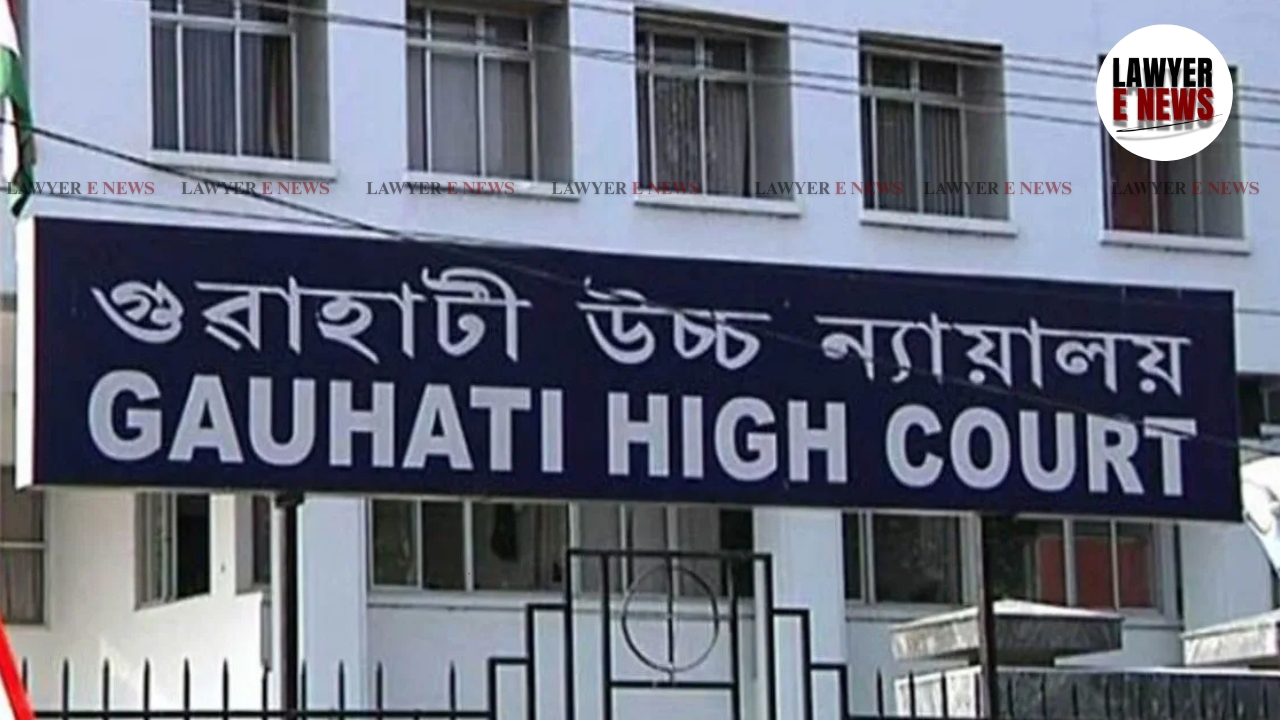
MACT Claim | Driver Colliding With Parked Vehicle Cannot Shift Liability Without Proving Negligence Of Owner Of Parked Vehicle: Gauhati High Court

22 September 2026 1:11 PM

By: sayum


"This Court does not find any negligence on the part of the oil tanker, much less contributory negligence, which was hit from behind on the right side by the defence vehicle driven by P.W.1, whose testimony does not inspire any confidence to accept it as a truthful one." Gauhati High Court, in a judgment, held that a driver who collides with a stationary vehicle from behind cannot establish a claim for damages under Section 166 of the Motor Vehicles Act, 1988, by merely alleging the stationary vehicle was parked without lights.

A bench of Justice Manish Choudhury observed that the burden of proving negligence or contributory negligence lies squarely on the claimant, and the mere act of hitting a parked vehicle from the rear generally raises a presumption of rash and negligent driving by the rear-ending driver.

Failure to Discharge Evidentiary Burden

The appellant, Union of India, sought compensation of Rs. 62,100 for damages sustained by a defence vehicle that rammed into the back of an oil tanker parked on the side of National Highway No. 37. The appellant argued that the tanker was parked without back parking lights, thereby causing the collision. However, the court found the evidence presented by the appellant to be inconsistent with the physical evidence on record.

Reliance on Sketch Plan and Physical Evidence

The court noted that the Sketch Plan and photographs of the accident site contradicted the testimony of the defence vehicle’s driver. While the driver claimed he swerved to avoid an oncoming vehicle and hit the tanker, the physical evidence revealed that the defence vehicle had struck the rear right corner of the tanker, which was parked on the extreme left side of the road.

Court Rejects Applicability of Precedents

The appellant relied on the Supreme Court decision in Archit Saini vs. Oriental Insurance Company Limited to argue that the tanker owner was liable for parking on the road. The High Court distinguished the present case, noting that unlike Archit Saini, where a vehicle was parked in the middle of a busy road, the tanker here was parked on the side of the highway. The court held that the driver of the defence vehicle had sufficient time and space to exercise caution and avoid the collision.

Adverse Presumption Due to Suppression of Facts

The Tribunal below had drawn an adverse inference against the appellant because the claimant suppressed the fact that the accident resulted in a fatality and injuries to other occupants. The High Court affirmed this view, noting that the driver of the defence vehicle had been charge-sheeted under Sections 279, 304A, 338, and 427 of the Indian Penal Code. The failure of the claimant to address these criminal proceedings further eroded the credibility of the claim.

No Case for Contributory Negligence

The court concluded that the entire negligence for the collision rested with the driver of the defence vehicle. Rejecting the plea for compensation, the court observed that the version of events provided by the driver did not inspire confidence and failed to establish any actionable negligence against the respondents. Consequently, the appeal was dismissed, and the dismissal of the claim application by the Tribunal was upheld.

Date of Decision: 18 August 2026

Latest Legal News