-
by kapil
16 October 2026 4:47 PM







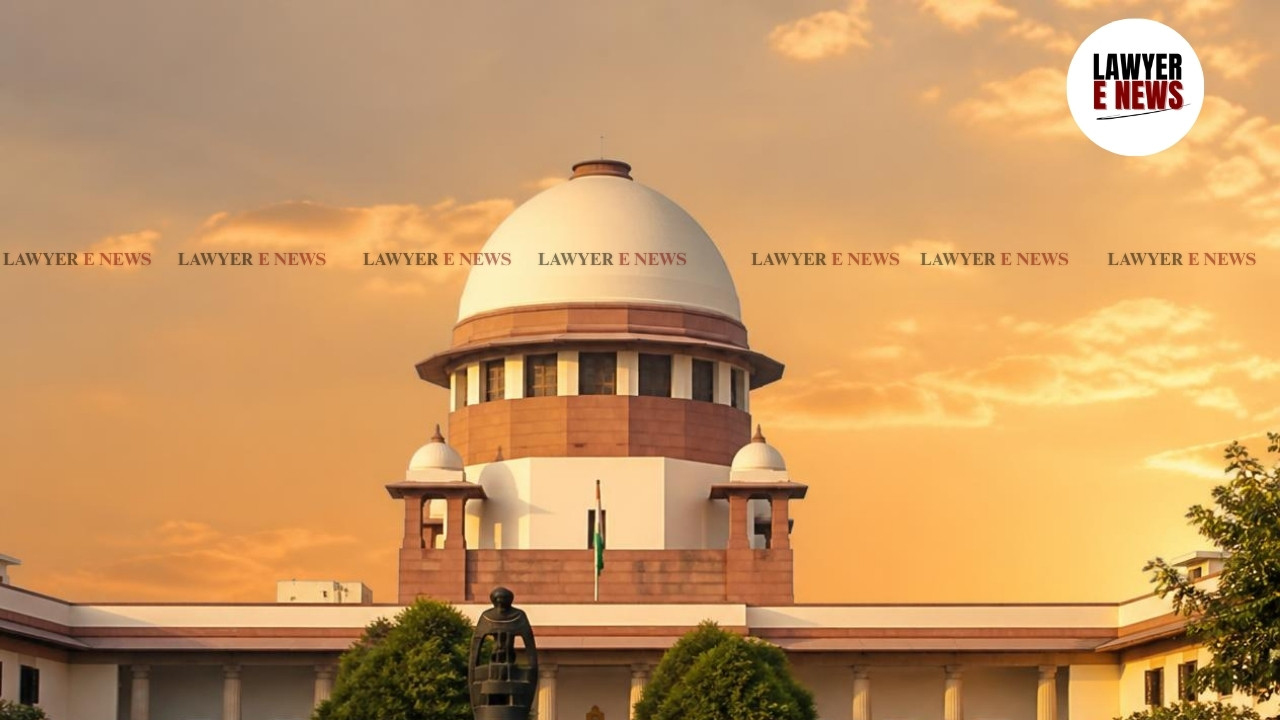
"If an insured makes false averments to bolster its claim, contrary to the policy conditions, the insurer would be lawfully entitled to reject such claim on that ground without further ado." Supreme Court of India, in a judgment dated September 21, 2026, held that an insurance company is legally justified in repudiating a claim in its entirety if the insured has willfully made false declarations or engaged in fraudulent practices in violation of the insurance policy conditions.
A bench comprising Justice Sanjay Kumar and Justice Sanjeev Sachdeva observed that the insurer’s discretion to reject a claim based on survey reports cannot be termed a deficiency in service if the rejection is based on cogent evidence of contractual breaches and lack of bona fide efforts by the claimant.
Contractual Breach Vitiates Claim
The dispute arose after M/s. New India Assurance Company Ltd. repudiated a fire insurance claim filed by M/s. Hemkund Duplex and Board Pvt. Ltd. following a fire incident at their factory in 2009. While the National Consumer Disputes Redressal Commission (NCDRC) had originally directed the insurer to pay over ₹2.40 crore, the Supreme Court set aside this order, noting that the claimant had systematically manipulated records and provided false information to inflate the insurance claim.
Court Examines Mandatory Procedural Compliance
The primary question before the court was whether the insurer was justified in repudiating the claim at the threshold based on findings of fabricated evidence and bookkeeping irregularities. The court also examined the extent to which the NCDRC could disregard statutory survey reports mandated under Section 64UM of the Insurance Act, 1938. The bench underscored that while a surveyor's report is not "sacrosanct" or the "last word," it constitutes a vital foundation for claim settlement that cannot be brushed aside by a consumer forum without substantial justification.
Surveyor Reports And The Code Of Conduct
The court relied on established precedents, including Khatema Fibres Limited vs. New India Assurance Company Limited, to reiterate that an insurer’s discretion to reject a report is limited; it cannot be exercised arbitrarily. However, in this case, the court found the surveyors' reports to be detailed and consistent in highlighting "abnormalities," including the absence of electric connections at the fire site and the suspicious nature of the fire itself.
Evidence Of Fabricated Claims
The court highlighted that the management's statements were directly contradicted by their own employees, who confirmed that usable raw material was never stored in the tin shed that caught fire. The bench noted that the "raw material" purportedly destroyed was in fact dead and obsolete stock, which the management had attempted to present as valuable inventory through manipulated accounts.
Policy Conditions On Disclosure
The Supreme Court specifically pointed to Policy Conditions No. 6 and No. 8, which mandate honest and full disclosure by the insured. The bench noted that these conditions are not mere procedural formalities but are the bedrock of the contract of insurance. By making false averments regarding the nature of the stock and the circumstances of the fire, the respondent effectively forfeited its benefits under the policy.
Judicial Scrutiny Of Fire Minimization Efforts
The court found it highly suspicious that the claimant made no sincere efforts to summon a fire brigade despite the fire station being only 6-7 kilometers away. The delay in reporting the incident, combined with evidence that the shed was destroyed by a JCB prior to the fire, led the bench to conclude that the claimant's actions were neither bona fide nor consistent with an accidental occurrence.
Consequently, the Supreme Court allowed the appeal filed by New India Assurance Company Ltd. and dismissed the respondent’s appeal. The court ordered the registry to return the deposited sum of ₹50 lakh to the insurance company along with accrued interest, thereby upholding the sanctity of the insurance contract and the necessity for transparency in claim processing.
Date of Decision: 21 September 2026