-
by sayum
15 August 2026 10:03 AM







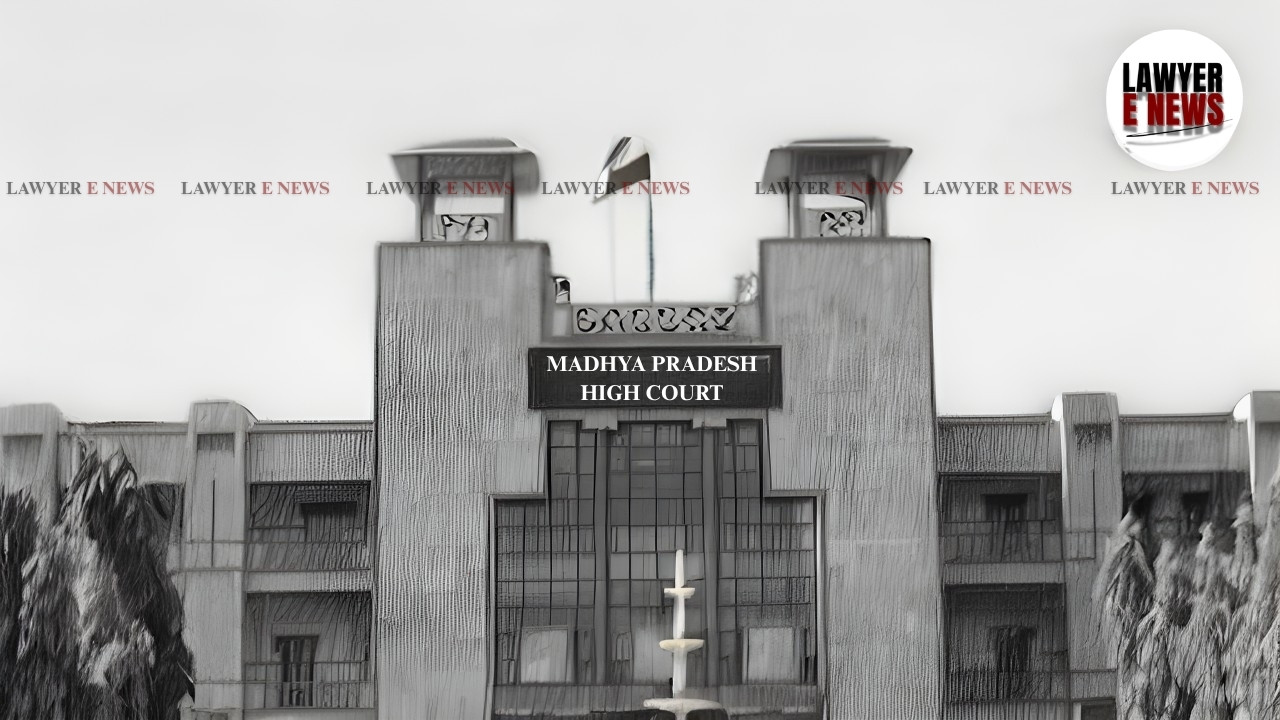
"The admission made in the written statement by the original defendant cannot be withdrawn by legal representatives by filing their own written statement. As such they were not permitted to plea contrary to the admitted position of facts." Madhya Pradesh High Court at Indore, in a significant procedural ruling, held that legal representatives brought on record after the death of a defendant cannot withdraw the factual admissions made by the deceased in the original written statement.
A single-judge bench of Justice Pavan Kumar Dwivedi observed that legal heirs must continue the litigation in the character of the original defendant and cannot set up an entirely new case by filing contradictory pleadings.
The original dispute involved an eviction suit instituted by the plaintiffs under Section 12(1)(a) and (o) of the M.P. Accommodation Control Act, 1961, seeking recovery of arrears and eviction of a tenant. The original defendant filed a written statement expressly admitting the landlord-tenant relationship but denying the default in rent. During the pendency of the suit, the original defendant passed away, leading to the impleadment of his legal representatives, who subsequently filed a fresh written statement denying both the tenancy and the plaintiff's ownership.
The primary question before the court was whether legal representatives brought on record under Order 22 Rule 4 of the Code of Civil Procedure (CPC) have an absolute right to file a written statement that takes pleas completely contrary to the admissions made by the deceased defendant. The court was also called upon to determine whether denying the legal representatives an opportunity to cross-examine witnesses based on their newly asserted defenses amounted to a denial of a fair hearing.
No Absolute Right For Legal Heirs To File Fresh Defense
The High Court extensively examined the scope of pleadings available to legal heirs under the civil procedure framework. The bench clarified that the right of legal representatives to file a written statement is not absolute. They are strictly bound by the pleadings of the deceased and cannot introduce averments that fundamentally conflict with the original factual admissions made before the trial court.
Legal Representatives Step Into The Shoes Of Deceased
Analysing the statutory mandate, the court emphasized the provisions governing the substitution of parties upon a litigant's death. The judge noted that the legal framework explicitly requires substituted parties to adopt the character of the original litigant. "Order 22 Rule 4 Sub-Rule II provides that any person made party on the death of one or several defendants or sole defendant may make any defence appropriate to his character as legal representative of the deceased defendant," the court observed.
"The legal representative has to continue in the character of the original defendant. He cannot just come and raise a plea contrary to the plea taken by the original defendant without withdrawing the same."
Admissions Cannot Be Retracted Arbitrarily
The bench noted that allowing the legal heirs to deny the landlord-tenant relationship, which had already been expressly admitted by the original defendant, would be legally untenable. The court held that the legal heirs could not merely step into the proceedings and take a plea contrary to the original defendant's stance without legally withdrawing the original admission, which they had no mechanism to do in this context.
Reliance On Supreme Court Precedent
The trial court had earlier deleted issues framed on the basis of the new written statement, relying on the Supreme Court's judgment in Vidyawati Vs. Man Mohan and others (1995). The High Court affirmed this approach, noting that unless legal representatives assert an entirely independent right—which would require them to be impleaded independently under Order 1 Rule 10 of the CPC—they cannot deviate from the factual matrix admitted by the deceased whose estate they represent.
Rejection Of Cross-Examination Justified
Addressing the appellants' grievance regarding the denial of an opportunity to cross-examine the plaintiffs' witnesses under Order 18 Rule 17 of the CPC, the High Court found no infirmity in the lower court's decision. Because the application for cross-examination was based entirely on the heirs' legally invalid contradictory written statement, it lacked any foundational merit. "There was no occasion for the trial court to recall witnesses as the written statement of LRs was of no consequence in view of availability of written statements of the original defendant," the bench concluded.
Finding no substantial question of law, the High Court dismissed the second appeal and upheld the concurrent findings of the lower courts directing eviction and handover of vacant possession. The ruling reinforces the procedural sanctity of admissions in civil pleadings and prevents legal heirs from derailing ongoing trials by setting up entirely new and contradictory defenses.
Date of Decision: 20 July 2026