Readiness and Willingness Under Section 16(c) Is Not a Ritualistic Phrase — Plaintiff Must Prove It With Substance, Not Just Words: Karnataka High Court FIR in Disproportionate Assets Case Quashed: Patna High Court Slams SP for 'Non-Application of Mind' and 'Absence of Credible Source Information' Ownership of Vehicle Linked to Commercial Quantity of Heroin – Custodial Interrogation Necessary: Punjab & Haryana High Court Denies Anticipatory Bail under Section 482 BNSS Death Caused by Rash Driving Is Not a Private Dispute — No FIR Quashing on Basis of Compromise in Section 106 BNS Cases: Punjab & Haryana High Court No Bank Can Override Court Orders: Rajasthan High Court Slams Axis Bank for Unauthorized Withdrawal from Court-Ordered FD" Indian Courts Cannot Invalidate Foreign Arbitral Awards Passed Under Foreign Law: Madhya Pradesh High Court Enforces Texas-Based Award Despite Commercial Court’s Contrary Decree Sudden Quarrel over Mound of Earth — Not Murder but Culpable Homicide: Allahabad High Court Eligibility Flows from Birth, Not a Certificate Date: Delhi High Court Strikes Down Rule Fixing Arbitrary Cut-Off for OBC-NCL Certificates in CAPF (AC) Recruitment Bar Under Order II Rule 2 CPC Cannot Be Invoked Where Specific Performance Was Legally Premature Due To Statutory Impediments: P&H High Court Calling Wife by Her Caste Name in Public Just Before Suicide is Immediate Cause of Self-Immolation: Madras High Court Upholds Husband’s Conviction Under Section 306 IPC No Work No Pay Is Not a Universal Rule: Punjab & Haryana High Court Dock Identification Without Prior TIP Is Absolutely Useless: P&H High Court Upholds Acquittal in Attempt to Murder Case Filing Forged Court Pleadings in Union Government’s Name is Criminal Contempt: Karnataka High Court Sentences Litigant to Jail Execution of Will Proved, But Probate Justly Denied Due to Concealment of Property Sale: Delhi High Court Mere Designation Doesn’t Establish Criminal Liability: Bombay High Court Quashes Proceedings Against ICICI Officials in Octroi Evasion Case Fraud on Power Voids the Order: Supreme Court Quashes FIR Against Karnataka BJP Leader R. Ashoka, Slams Politically Motivated Prosecution Cause of Fire Is Immaterial If Fire Itself Is Insured Peril: Supreme Court Rebukes Insurer’s Repudiation Dragging a Trained Army Officer Up 20 Steps Without Resistance? The Story Lacks Credence: Supreme Court Upholds Acquittal in Army Officer’s Murder Semen Stains Alone Do Not Prove Rape: Supreme Court Acquits Doctor Accused of Rape No Mortgage, No SARFAESI: Supreme Court Rules Against NEDFi, Says Recovery Action in Nagaland Without Security Agreement Was Illegal Parity Cannot Be Denied by Geography: Supreme Court Holds Jharkhand Bound by Patna HC's Judgment, Orders Pay Revision for Industries Officer Once Power Flows Continuously from a Synchronized Turbine, It Is No Longer Infirm: Supreme Court Orders TANGEDCO to Pay Fixed Charges to Penna Electricity

Leak of Investigative Videos on Social Media Raises Alarming Questions About Police Accountability: Punjab & Haryana High Court Summons Chandigarh DGP

22 May 2025 7:16 PM

By: Admin


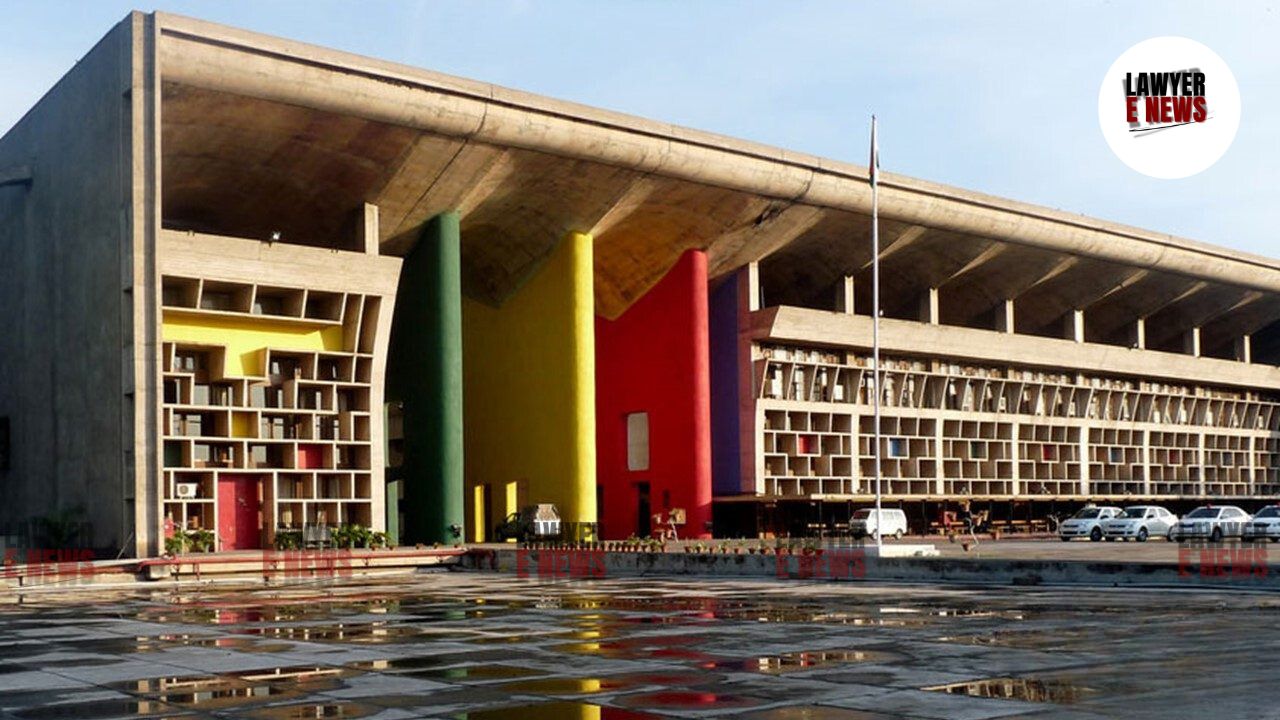
“Reply is vague, evasive, and silent on core issues… This raises serious concern about the functioning of the Chandigarh Police”, In a scathing order issued on 21 May 2025, the Punjab & Haryana High Court, in Prakash Singh Marwah v. Union of India & Others, CWP No. 9388 of 2025, summoned the Director General of Police, Chandigarh, to appear in person on 22 May 2025, after the police failed to identify who uploaded a sensitive investigation video on social media.

Justice Kuldeep Tiwari, expressing grave dissatisfaction with the affidavit filed by the Senior Superintendent of Police (SSP), U.T. Chandigarh, stated that the police reply was vague and evasive, and failed to answer even the basic judicial queries directed in a previous order dated 3 April 2025.

“Strangely enough, as of today, the Senior Superintendent of Police, U.T., Chandigarh could not lay hands on any material as to who had uploaded the video clip in question on social media platform(s).”

Court Questions Use of Official WhatsApp Group for Circulating Investigative Content

The matter arose from a viral videographed content of an investigation being circulated online. The Court had specifically asked the police to disclose:

  • Who uploaded the video online

  • Whether the act was done in official capacity

  • Whether there were any governing guidelines in place

The reply filed on 20 May 2025, via affidavit of Ms. Kanwardeep Kaur, IPS, SSP Chandigarh, revealed that Constable Yogesh had shared the video in an official WhatsApp group, but the police were still “in the process of ascertaining the source of leakage.”

The Court took a dim view of this explanation:

“Even if the stand is considered, the reply does not disclose in which capacity and under which official guidelines/instructions such a WhatsApp group was created…”

“Sensitive information regarding investigations is being uploaded therein and accepted as part of practice by the Chandigarh Police—this raises serious concern about its functioning.”

“Was the Constable’s Phone Seized?”—Court Appalled to Hear Negative Response

In a dramatic moment in court, Justice Tiwari posed a direct query to the Additional Public Prosecutor: Had the mobile phone of Constable Yogesh been confiscated and sent for forensic analysis?

The answer was a stark “No.”

“This Court posed another specific query… to which the latter answered in negative.”

“When despite specific directions… a totally vague and silent reply has been furnished, especially when the case at hand involves serious concern regarding functioning of the Chandigarh Police…”

Personal Appearance of DGP Ordered—“No Adjournments Will Be Entertained”

Considering the gravity of the issue and the unsatisfactory police response, the High Court ordered:

“This Court deems it appropriate to direct the Director General of Police, Chandigarh, to cause his personal appearance before this Court on 22.05.2025 at 10:00 a.m.”

The Court further clarified that no delay tactics would be tolerated:

“It is made clear that on the subsequent date of hearing, no request for adjournment would be entertained on behalf of either side.”

This development highlights growing judicial intolerance towards institutional opacity in sensitive criminal investigations, especially when confidential material leaks into the public domain. The High Court’s firm stance underscores that law enforcement bodies must be held accountable for digital and procedural integrity in criminal probes.

“Such acts of evasion in the face of judicial queries corrode public trust in institutional systems… Accountability must not stop at the constable level.”

Date of Order: 21 May 2025

Latest Legal News