-
by sayum
04 August 2026 1:39 PM







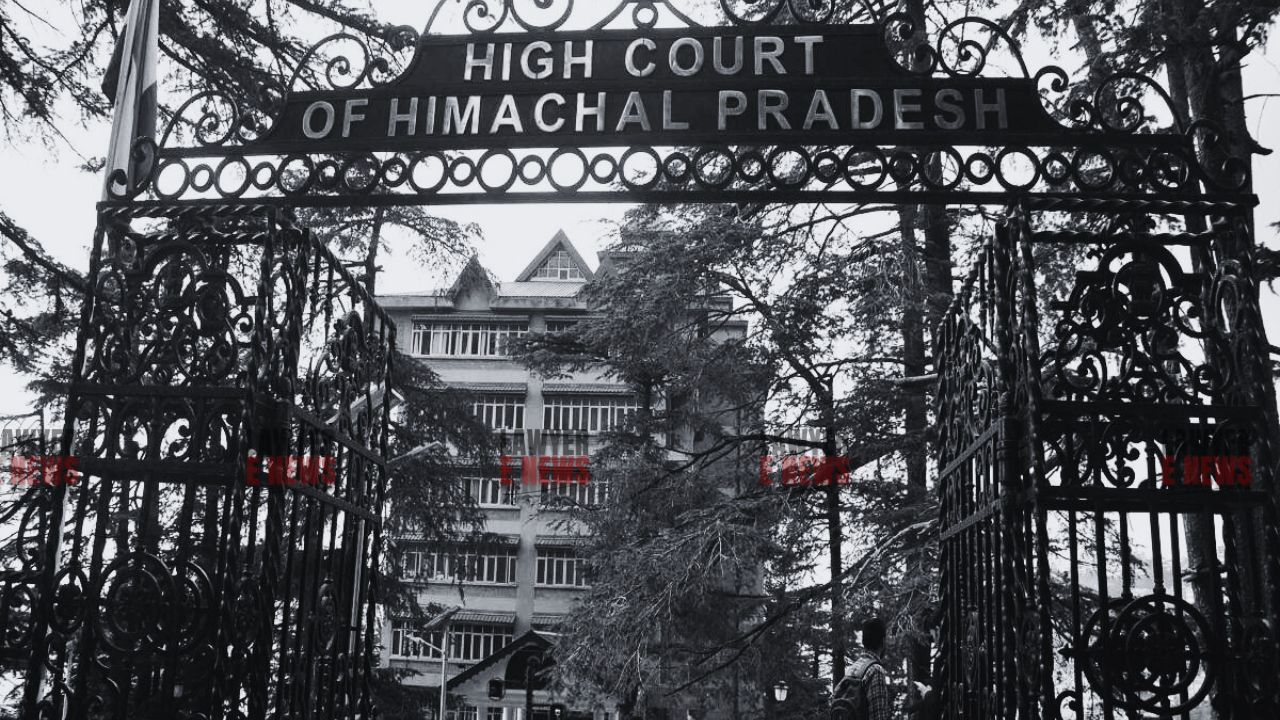
“The law is good, but justice is better,” observed Justice Virender Singh of the Himachal Pradesh High Court on 16 May 2025, as he partially allowed a criminal revision petition filed by Dinesh Negi, upholding his conviction under Section 138 of the Negotiable Instruments Act but modifying the sentence of two months’ imprisonment to "till the rising of the Court" in light of full compensation having been paid.
The High Court’s judgment came in Dinesh Negi v. Sahil Sood, a cheque dishonour case where the accused had issued a cheque for ₹5,20,000 as part payment of an existing liability. The cheque was dishonoured due to insufficient funds, and despite a statutory legal notice being served, the payment was not made, prompting the complainant to file a complaint under Section 138 of the NI Act.
The Trial Court convicted Dinesh Negi and sentenced him to two months’ simple imprisonment along with ₹5,50,000 in compensation. The Appellate Court upheld the conviction and sentence, leading to the filing of the present revision petition.
While the accused challenged the judgments as erroneous and argued that documents relied upon were never mentioned in the initial notice or complaint, the High Court found no perversity in the findings of the lower courts. Justice Virender Singh held:
“Once the cheque has been issued, the complainant is entitled to draw the presumption in his favour under Section 142 of the NI Act. The accused, having admitted his signatures on the cheque, has failed to rebut this statutory presumption.”
Referring to the scope of revisional jurisdiction, the Court observed that findings of fact reached by the trial and appellate courts cannot be re-evaluated unless shown to be perverse. Citing Duli Chand v. Delhi Administration, AIR 1975 SC 1960, and State of Maharashtra v. Jagmohan Singh, (2004) 7 SCC 659, the Court reiterated that in revision, the High Court acts only in supervisory capacity.
However, considering that the accused had deposited the full compensation—20% before the Trial Court and 80% before the High Court—the Court took a nuanced approach to sentencing. It referred to the landmark Supreme Court ruling in P. Mohanraj v. Shah Brothers Ispat Pvt. Ltd., (2021) 6 SCC 258, which characterized Section 138 NI Act proceedings as quasi-civil in nature and emphasized that “the real object of the provision is not to penalise the wrongdoer... but to compensate the victim.”
Justice Virender Singh applied this reasoning to observe:
“In the absence of a sentencing policy, and considering that under Section 138 NI Act, no minimum punishment is prescribed, the quantum of punishment in this case appears on the higher side.”
The Court concluded that sentencing the accused to imprisonment till the rising of the Court would meet the ends of justice, given the full compensation and the nature of the offence.
Accordingly, while the conviction was upheld, the sentence was modified, allowing the revision petition only to the extent of sentencing.
Date of Decision: 16 May 2025