-
by sayum
28 August 2026 2:11 PM







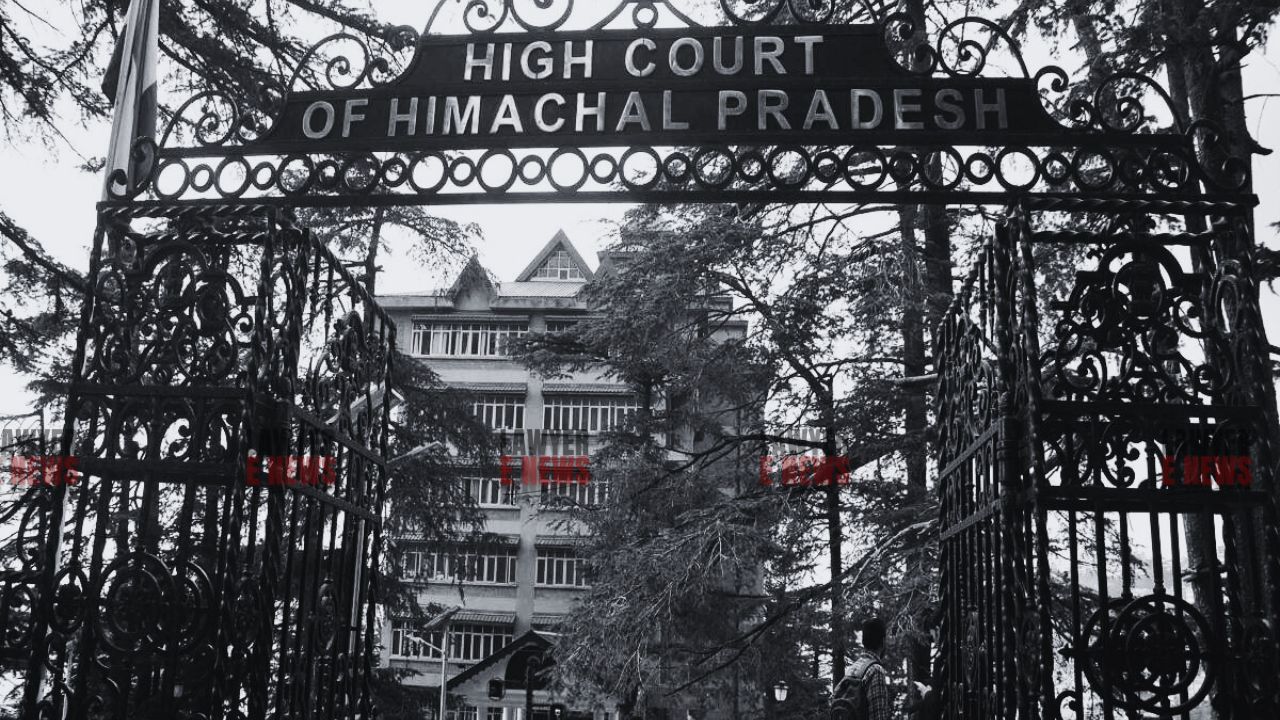
“Even If the Act Was Gruesome, Legislative Wisdom Prevails — Section 238 of BNS is Bailable”: High Court of Himachal Pradesh at Shimla delivered a legally profound and philosophically significant judgment granting regular bail to a man accused of involvement in a forest shooting incident, where the dead body was posthumously decapitated and burned. The court held that absence of mens rea (intention to kill) combined with the statutory classification of offences as bailable mandates bail, even if the alleged conduct appears morally disturbing.
The Court declared, “When the legislature has classified an offence as bailable, the disapproval of the Court must give way to legislative wisdom, even if the facts are gruesome.”
"Shooting at What Was Believed to Be a Wild Fowl Cannot Be Murder": Court Applies BNS Illustration to Dismiss Section 103 Charge
The matter emerged from a tragic event on 21st January 2025, when Som Dutt alias Sonu was reported missing after he went into a forest for hunting. His decapitated and partially burnt body was later recovered. The FIR was registered under FIR No. 23/2025 at Police Station Sadar, Solan, under Sections 103(1) and 238 read with Section 3(5) of the Bhartiya Nyaya Sanhita, 2023, and Sections 25 & 27 of the Arms Act. The petitioner Bhutto Ram, a pump operator stationed in the forest, was arrested on 24th January 2025.
According to the prosecution’s own version, Bhutto Ram and co-accused Sandeep Kumar went into the forest with firearms, believing they were hunting wild animals. Sonu, who was also in the forest, had concealed himself in the bushes. Mistaking him for a wild fowl, Sandeep fired the shot, causing Sonu's death. Afterwards, the accused decapitated the corpse using a darat (sharp instrument) and burnt the head and body at separate locations.
Yet, the Court observed that the shooting was not intended to kill a human being and squarely fell under Illustration (c) to Section 100 of the BNS, which mirrors Section 299 of the IPC, dealing with unintentional killings during unlawful acts.
The Court quoted the illustration: “A, by shooting at a fowl with intent to kill and steal it, kills B, who is behind a bush; A, not knowing that he was there. Here, although A was doing an unlawful act, he was not guilty of culpable homicide…”
It added, “They did not intend to cause the death of Som Dutt and cannot be prima facie held liable for the commission of an offence punishable under Section 103 of BNS, but would be liable under Section 106 of the BNS, which is bailable in nature.”
“To Punish What Was Never Intended Is Barbarous and Absurd”: Court Cites 1837 Penal Code Report Against English Common Law Notions
Justice Rakesh Kainthla delved into the philosophical foundation of Indian criminal law by citing the original report of the Indian Law Commissioners of 1837, which rejected the English common law doctrine that unintended killings during felonies are murder.
Quoting the historic text, the Court observed:
“It will be admitted that, when an act is in itself innocent, to punish the person who does it because bad consequences which no human wisdom could have foreseen have followed from it would be in the highest degree barbarous and absurd.”
The Court further emphasized that the Indian framers consciously departed from English law to ensure that criminal liability must align with intention or foreseeable consequences. It stated that accidental death caused while committing an unlawful but non-violent act must be punished proportionally — not as murder.
“Postmortem Decapitation May Be Morally Repugnant But Does Not Make the Offence Non-Bailable”: Section 238 of BNS Holds the Field
One of the most contentious aspects of the case was the postmortem mutilation of the body, wherein the accused severed the head and attempted to burn the corpse to destroy evidence. The prosecution argued that such actions demonstrated a gruesome mindset, warranting denial of bail.
But the Court stood firm on legislative classification. It noted that Section 238 of the BNS, which deals with destruction of evidence, is bailable, even if the underlying offence is punishable with death.
The Court stated,
“The legislature, in its wisdom, has made this offence bailable, even if an attempt is made to destroy the evidence in an offence punishable with capital punishment. Therefore, the gruesome nature of the act and disapproval of the Court will have to give way to the wisdom of the legislature.”
“Gruesome Crimes Alone Cannot Disentitle Bail Where Statutory Threshold Is Not Met”: Supreme Court Precedents Applied
The Court meticulously applied the parameters for bail laid down in Ajwar v. Waseem (2024) 10 SCC 768, including gravity of offence, role of the accused, likelihood of tampering with evidence, and nature of the charge. It reiterated that judicial emotion must not override the statutory framework.
Referring to Shabeen Ahmad v. State of U.P. (2025) 4 SCC 172, the Court acknowledged the caution against superficial bail decisions, but distinguished the present case on facts and statutory application. It noted:
“Prima facie, there is insufficient material to conclude that the accused has committed a non-bailable offence justifying his further detention.”
The Court allowed the bail petition and ordered the release of Bhutto Ram on execution of personal bond of ₹1,00,000/- with one surety. Specific conditions were imposed, including attendance at trial, prohibition on witness tampering, travel restrictions, and surrender of passport.
The Court concluded with clarity:
“The observations made hereinabove are regarding the disposal of this petition and will have no bearing, whatsoever, on the case’s merits.”
Date of Decision: 19 September 2025