-
by sayum
15 August 2026 10:03 AM







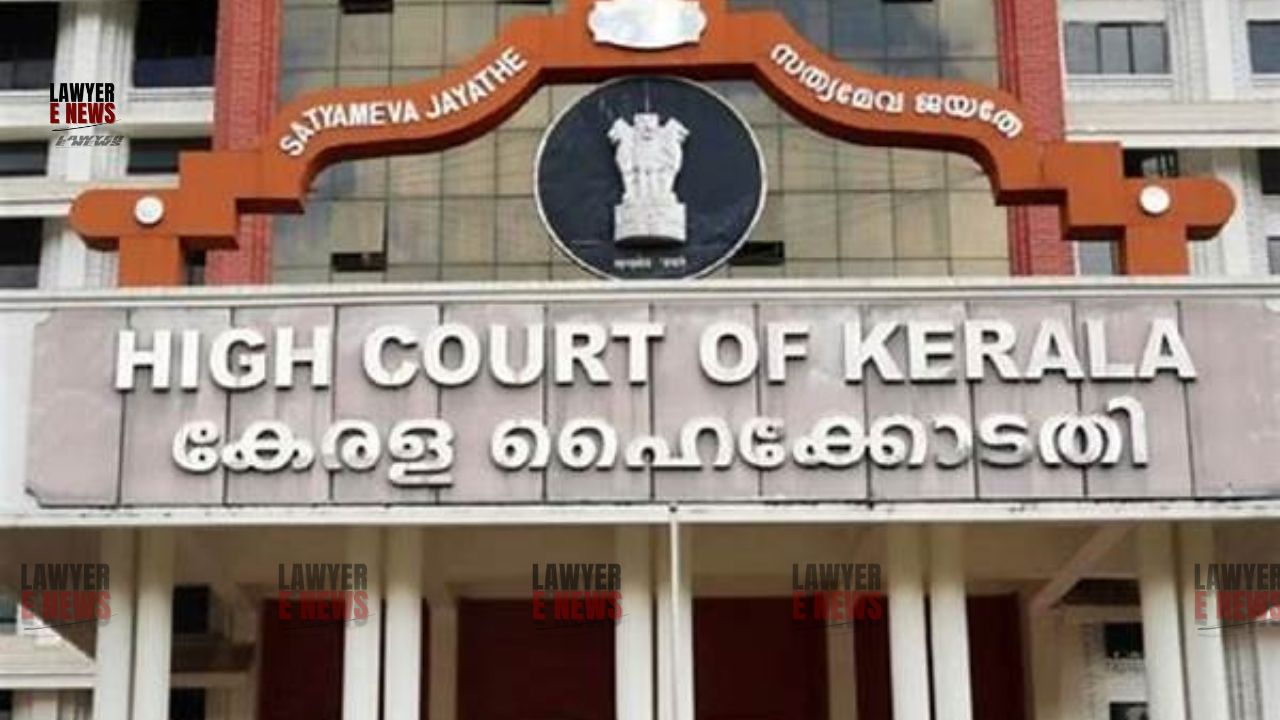
"I tender my sincere, unconditional, and unqualified apology to this Hon'ble Court... I realize that the words used by me may have been inappropriate. I sincerely regret the same and unconditionally withdraw any such statement." Kerala High Court, in a decision, has closed criminal contempt proceedings against Kumbakudi Sudhakaran after accepting his "sincere, unconditional, and unqualified apology" for derogatory remarks made against members of the judiciary.
A Division Bench comprising Justice Raja Vijayaraghavan V and Justice K. V. Jayakumar observed that the apology tendered was bona fide and in consonance with the relevant High Court rules.
The court noted that the respondent had expressed deep regret for his statements and had assured the bench of exercising greater restraint in the future. The bench held that since the contemnor had admitted to the contempt and filed a genuine affidavit of apology, he was entitled to be discharged under the prevailing legal framework.
The matter originated from a public speech delivered by the respondent on August 3, 2019. During the address, the respondent made several disparaging remarks and cast aspersions on the learned Judges who had rendered a judgment in a Writ Appeal (W.A. No. 628 of 2018). The petitioner, Janardhana Shenoy K, alleged that these remarks were derogatory and calculated to lower the dignity and authority of the court.
Following the speech, the petitioner approached the Advocate General seeking sanction to initiate criminal contempt proceedings. On April 30, 2021, the Advocate General granted the requisite sanction under Section 15(2) of the Contempt of Courts Act, 1971, noting that the respondent had described the judicial order as "മ്ലേച്ഛമായ വിധി" (despicable/vile judgment) and had scandalized the judges.
The primary question before the court was whether the unconditional apology tendered by the respondent was bona fide and sufficient to discharge the contempt notice. The court also examined whether the respondent's conduct met the requirements for closing proceedings under Rule 14(a) of the Contempt of Courts (High Court of Kerala) Rules, 1988.
The Court observed that during the proceedings, the respondent chose not to contest the allegations on merits but instead submitted that he sincerely regretted making the statements. It was argued on his behalf that the remarks were made during an extempore speech and there was never any intention to defame or malign the integrity and impartiality of the High Court or its judges.
Respondent Claims Remarks Were Momentary And Impulsive
In an affidavit filed before the bench, the respondent stated that the impugned expressions were made "spontaneously in a moment of anger, frustration, and emotional distress" arising out of the circumstances prevailing at that time. He maintained that the statement was purely momentary and was not the result of any deliberate or malicious intent to undermine the institution.
The respondent further asserted his unwavering faith in the rule of law and the judiciary. He requested the court to take into consideration that the utterance was an isolated incident. He explicitly stated in his affidavit that he realized the words used were inappropriate and sought to unconditionally withdraw them to maintain the majesty of the court.
Court Evaluates Apology Under Kerala High Court Rules
The Bench referred to Rule 14(a) of the Contempt of Courts (High Court of Kerala) Rules, 1988. This rule provides that if a respondent tenders an unconditional apology after admitting to the commission of contempt, the Court may proceed to pass such orders as it deems fit, including discharging the contemnor if the apology is found to be satisfactory.
"After hearing the respondent and the learned counsel, we are satisfied that the apology tendered by the respondent is bona fide and genuine and is in consonance with the requirements of Rule 14(a) of the Contempt of Courts (High Court of Kerala) Rules, 1988."
The judges emphasized that the essence of contempt jurisdiction is to uphold the dignity of the institution rather than to punish the individual. Since the respondent appeared in person and reiterated his regret, the court found no reason to prolong the punitive proceedings.
Respondent Discharged And Case Closed
In view of the unconditional apology and the respondent's assurance to exercise greater caution in the future, the Court accepted the plea. The bench noted that the respondent’s realization of the inappropriateness of his words served the purpose of the contempt notice.
Consequently, the respondent was discharged from the contempt proceedings. The court ordered the closure of the case, effectively ending the legal battle that had persisted since the grant of sanction in 2021.
Date of Decision: 08 July 2026