-
by sayum
04 August 2026 1:39 PM







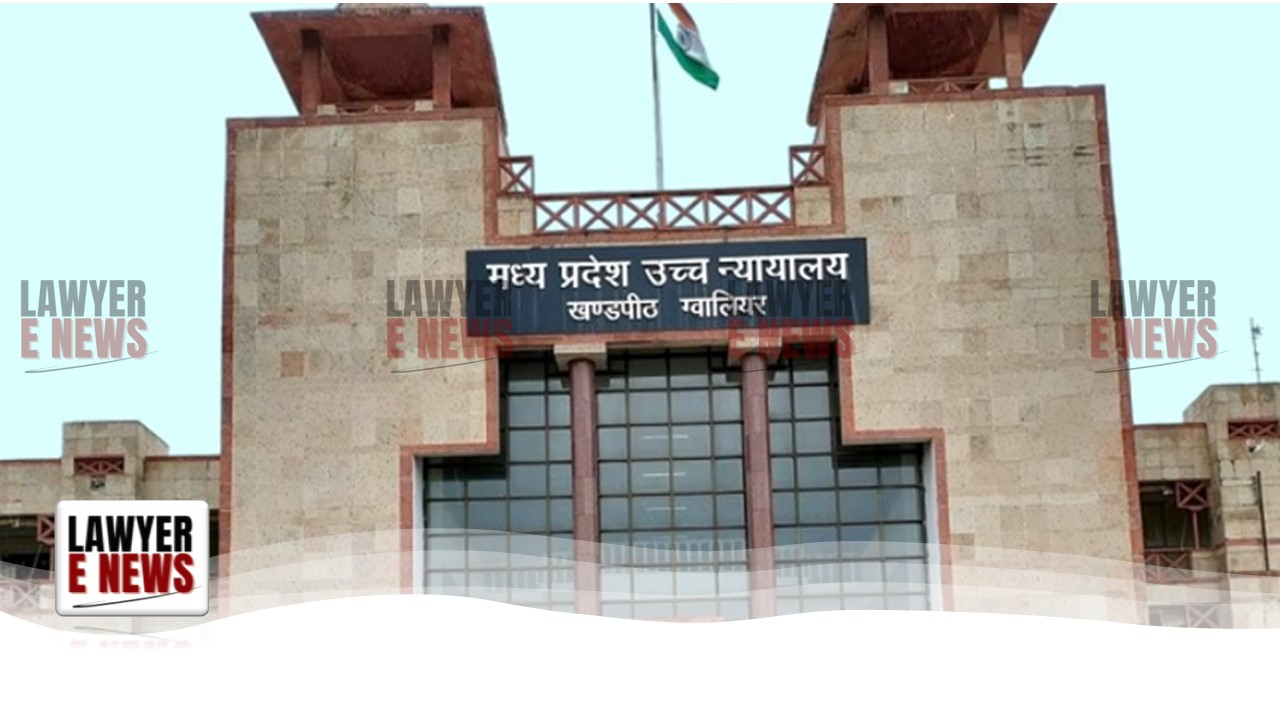
“JJ Act has overriding effect over NIA Act — Children in conflict with law must be tried only by Children’s Courts, even for terrorism-related offences”, Madhya Pradesh High Court at Jabalpur delivered a landmark decision resolving a critical jurisdictional question regarding the trial of juveniles involved in serious offences investigated by the National Investigation Agency (NIA). The Court held that “when a juvenile is directed to be tried as an adult, the jurisdiction to try the case would still vest in the Children’s Court and not in the Special Court under the NIA Act.”
This ruling significantly reinforces the supremacy of child-centric justice under the Juvenile Justice (Care and Protection of Children) Act, 2015 (“JJ Act”), even when national security statutes like the NIA Act, 2008, are involved.
The reference arose in the backdrop of Sessions Trial No. 187/2024, stemming from Special Case No. 4/2017 (State v. Atif Mujaffar and others), initially registered and charge-sheeted by the NIA for offences under IPC, Explosives Act, Railways Act, UAPA, and others. One of the accused was a juvenile (under 18 at the time of offence). After assessment, the Juvenile Justice Board found him fit to be tried as an adult and transferred the matter to the Children’s Court.
However, this transfer led to a dispute — whether the trial should proceed in the Children’s Court under the JJ Act, or revert to the Special Court under the NIA Act. The Principal District Judge made a reference seeking guidance.
Whether the Children’s Court or the Special NIA Court has jurisdiction to try a juvenile charged under NIA scheduled offences?
The Court emphatically held that “Section 1(4) of the Juvenile Justice Act, 2015 has an overriding effect on any other legislation for the time being in force, including the NIA Act.”
“It is hereby held that when the FIR is registered under a Scheduled Act prescribed under the NIA Act and a juvenile has been directed to be tried as an adult by the Children’s Court, then the jurisdiction to try the case would vest in Children’s Court and not in the Special Judge under the NIA Act.”
Key Statutory Analysis:
Section 1(4) of JJ Act, 2015:
“Notwithstanding anything contained in any other law for the time being in force, the provisions of this Act shall apply to all matters concerning children in conflict with law, including apprehension, detention, prosecution, penalty or imprisonment…”
The Court compared this with:
Section 13 of the NIA Act, which gives overriding effect only over the Code of Criminal Procedure, not over special statutes like the JJ Act.
“A perusal of Section 13 of the NIA Act would show that the non-obstante clause provides for overriding effect upon the ‘Code’ and does not provide any overriding effect over any other law.”
Hence, the Court concluded: “The JJ Act, 2015, being a later and more specific statute concerning juveniles, will prevail over the NIA Act.”
In various decisions, the Supreme Court had emphasized that juvenile legislation is “beneficial and socially oriented” and must be interpreted to protect the child’s rights.
“The whole object of the JJ Act is to provide for care, protection, treatment, development and rehabilitation of juveniles. It is settled law that interpretation of the statute of beneficial legislation must be to advance the cause of legislation to the benefit for whom it is made and not to frustrate the intendment.”
The Court also referenced UN Conventions and the Beijing Rules, emphasizing:
“Depriving a juvenile of his liberty should be used as the last resort and for the shortest period. The justice system for adults cannot be applied to juveniles.”
In a compelling affirmation of child rights jurisprudence, the Madhya Pradesh High Court ruled that Children’s Courts alone have jurisdiction to try juveniles, even when serious offences under the NIA Act are involved. This decision safeguards the unique position of juveniles in conflict with law and reaffirms that “a child cannot be a juvenile for one purpose and an adult for another.”
Date of Decision: May 19, 2025