
-
by sayum
28 August 2026 2:11 PM







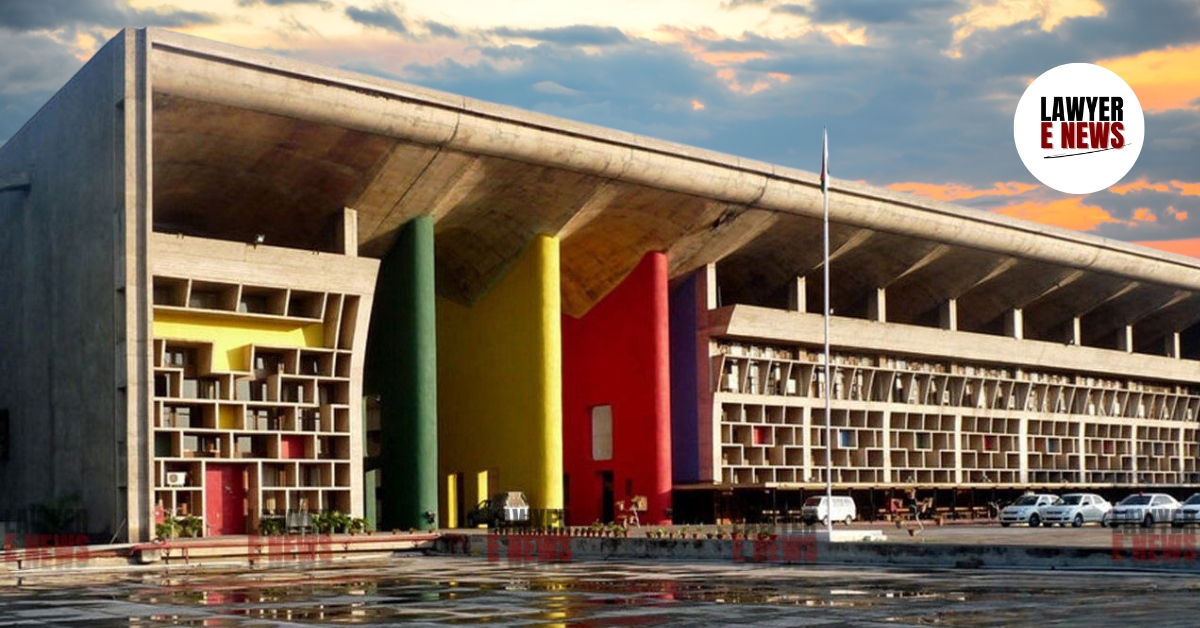
“A party seeking discretionary relief must approach the Court with clean hands… the injunction application was founded on a misstatement, admitted in the plaintiff’s own testimony” – In a decisive ruling that underscores the sanctity of truth in securing equitable relief, the Punjab and Haryana High Court set aside concurrent injunction orders passed by lower courts in a suit for specific performance, on the ground that the plaintiff had misstated a material fact regarding extension of time for performance under the contract, a misrepresentation that was later admitted by the plaintiff himself in evidence.
The case, Nidhi Dhawan v. Atul Garg and Another (Civil Revision No. 5746 of 2025), arose out of interim injunctions granted in a property dispute where the plaintiff had initially claimed that the defendant had extended the deadline for executing the sale deed. However, in a significant twist, during the course of his evidence, the plaintiff admitted that he himself had sent the message proposing the extension—not the defendant. Justice Virinder Aggarwal held that such misrepresentation strikes at the foundation of the interim relief, warranting interference under Article 227 of the Constitution.
“The Plaintiff's Own Testimony Contradicted His Pleadings – A Clear Case of Material Misstatement”
The controversy centered around a property deal executed via an Agreement to Sell dated 29.11.2021, concerning a 1,000 square yard plot in Sector 21-A, Faridabad, for ₹4.55 crore. The plaintiff, Atul Garg, filed a suit for specific performance claiming that ₹45 lakh had already been paid and that the defendant, Nidhi Dhawan, had agreed via WhatsApp to extend the date for the balance payment and execution of the sale deed to 15.04.2022, beyond the original deadline of 01.03.2022.
Interim injunctions were granted by the Civil Judge (Junior Division) and affirmed by the Additional District Judge, restraining the defendant from alienating or transferring the property.
However, when the plaintiff entered the witness box and submitted his examination-in-chief, he expressly stated that it was he who had sent the message proposing the new date, contradicting the very foundation of his pleadings and injunction application.
Justice Aggarwal observed: “This part of the examination-in-chief clearly demonstrates that the plaint and the injunction application were founded on a material misstatement of facts, which the respondent-plaintiff himself has admitted in his testimony.”
He further emphasized that: “Where a party has suppressed material facts or mis-stated material facts, the Court may withhold discretionary relief. Since the misstatement admitted by the plaintiff directly affects the entitlement to the injunction, he is dis-entitled to the relief sought.”
“Clean Hands Doctrine Is Not a Mere Rhetoric – It’s a Precondition for Relief”
The High Court invoked the principle of "clean hands", reiterating that equitable remedies like interim injunctions are discretionary in nature and cannot be granted to parties who approach the court by concealing or misstating material facts.
The Court remarked: “It is settled law that a party seeking discretionary relief must approach the Court with clean hands. The injunction application was founded upon a misstatement, now admitted by the plaintiff. Relief cannot be granted in such circumstances.”
The ruling further clarified that this misstatement went to the heart of the plaintiff's case, particularly on the critical issue of readiness and willingness to perform the contract, which is a condition precedent in suits for specific performance.
“WhatsApp Messages Cannot Be Considered Without Compliance with Section 65-B” – Court Criticises Appellate Judge for Treating Injunction Appeal as Final Trial
Another key legal point addressed in the judgment was the treatment of electronic evidence, particularly WhatsApp messages relied upon by both parties.
The First Appellate Court had dismissed the defendant’s appeal against the injunction, holding that WhatsApp messages lacked admissibility due to non-compliance with Section 65-B of the Indian Evidence Act, which mandates a certificate for admissibility of electronic records.
However, the High Court found this reasoning flawed. Justice Aggarwal clarified that in interlocutory matters, the court should not conduct a mini-trial or reach conclusive findings on the admissibility of evidence. He observed:
“The learned Additional District Judge treated the matter as if conducting a trial and recording final findings, even though the parties had not yet led evidence to prove the documents relied upon.”
He further cautioned: “In an appeal against an interim injunction order, the limited scope is to examine whether the plaintiff has a prima facie case, balance of convenience in his favor, and would suffer irreparable loss if the injunction is denied… instead, findings were prematurely recorded on the admissibility of documents.”
“Interim Relief Based on WhatsApp Emoticons? Evidence Must Speak Louder than Emoji”
Interestingly, the case also delved into the interpretation of WhatsApp emoticons used in communication between the parties. The trial court had speculated upon the difference between a ‘happy thumbs up’ emoji and a regular thumbs up emoji, attempting to infer intent and acceptance of monetary transactions through digital gestures.
Justice Aggarwal, however, refused to entertain such speculative reasoning at the stage of interim relief, especially in the absence of clear legal footing or contextual explanation of digital expressions.
The High Court held that the trial court had erred in placing unwarranted weight on ambiguous digital gestures, without corroborative evidence, thereby diluting the focus from hard legal principles.
Interim Orders Quashed, Discretion Misused by Courts Below
After a detailed analysis of pleadings, admissions, electronic evidence, and judicial principles governing interim relief, the High Court allowed the revision petition. The Court set aside the impugned orders of 08.07.2025 and 02.08.2025, and directed that:
“The present revision petition is allowed, and the orders passed by both the Courts below are set aside.”Justice Aggarwal concluded that the invocation of supervisory jurisdiction under Article 227 was warranted in this case, as both the trial court and the appellate court had failed to appreciate the impact of material misstatement on the plaintiff’s entitlement to interim protection.
Truth Is the Foundation of Equity – Misstatement in Pleadings Can Be Fatal Even at Interim Stage
This judgment sends a clear message that courts will not tolerate misrepresentation, even at the interim stage, particularly in suits for specific performance, where readiness, willingness, and bona fides of the plaintiff are central to the relief claimed.
By grounding the ruling in principles of equity, judicial restraint, and evidentiary standards, the Punjab and Haryana High Court has reaffirmed that injunctive protection is a serious judicial tool, not a strategic shield to be misused through concealment or half-truths.
Date of Decision: 16 September 2025





