-
by sayum
04 August 2026 1:39 PM







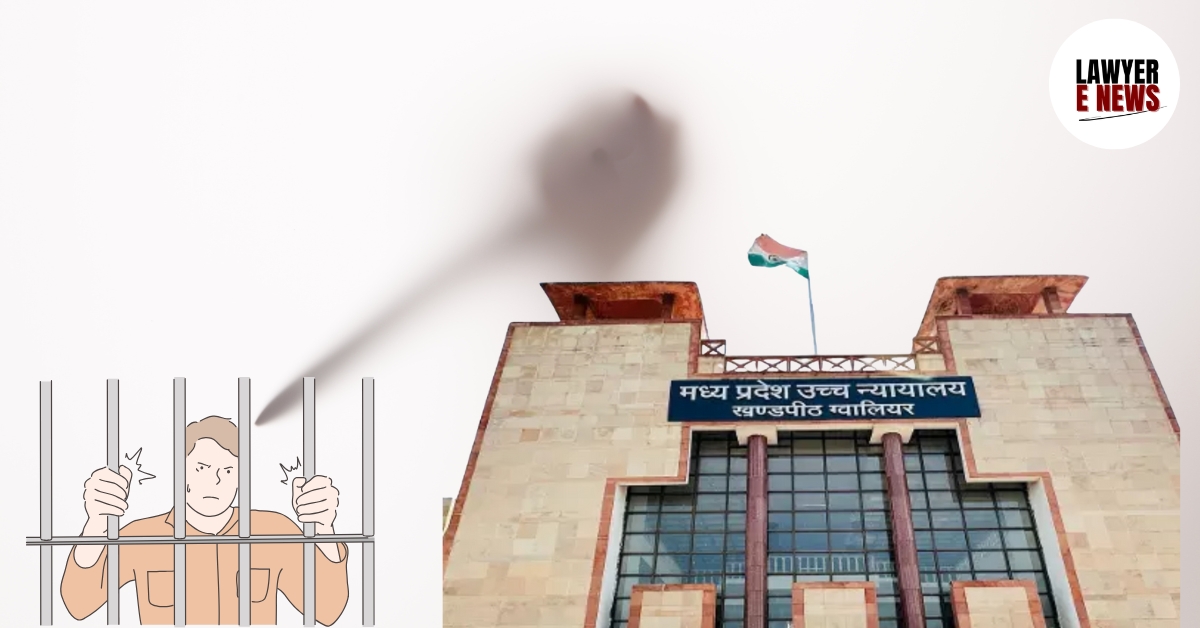
“The injuries may be dangerous to life, but there is no evidence of intention or knowledge to kill—Section 307 IPC not attracted”, - In a significant judgment on the correct interpretation of Section 307 of the IPC, the Madhya Pradesh High Court held that grievous injuries alone do not justify a conviction for attempt to murder without proof of intention or knowledge to kill. The Court, therefore, set aside the conviction under Section 307/34 IPC and converted it to Section 325/34 IPC, while reducing the sentence to the period already undergone and enhancing the fine.
Justice Prem Narayan Singh, delivering the judgment, observed: “It cannot be assumed that the appellants caused injuries with the intention to cause death… the prosecution has not proved the requisite ingredients to attract Section 307 IPC.”
Assault with Sword Alleged, But No Incised Wound or Fatal Injury Found
The appellants were convicted by the Trial Court for barging into the complainant’s house and attacking him with a sword, causing multiple head injuries. However, the High Court noted that the medical evidence revealed no incised wounds and no bony injuries, and all injuries were caused by hard and blunt objects, not sharp weapons.
“The injuries sustained were caused by hard and blunt object… not sharp-edged as claimed. The sword theory is not medically corroborated.”
“No x-ray or fracture evidence was produced. Even the recovery of weapons remained unproved.”
Absence of Motive and Spontaneous Nature of Incident Diluted Murder Attempt Charge
The Court found no prior enmity or motive and emphasized that the incident appeared spontaneous and unplanned. Citing precedents including Sarju Prasad v. State of Bihar (AIR 1965 SC 843) and Mukesh v. State of M.P. (2022), the Court reiterated: “Intention or knowledge to cause death is essential… grievous injury alone is not enough to sustain a conviction under Section 307.”
The Court further held that merely using a weapon like a sword does not by itself establish homicidal intent, especially when no injuries were found to be sufficient to cause death in the ordinary course of nature.
Injured Witness Credible, But Conviction Must Fit Legal Standards
While upholding the credibility of the injured witness Mukesh (PW-2) and accepting that the injuries were serious, the Court drew a clear legal line:
“Convincing evidence is required to discredit an injured witness. His testimony is valuable. But that alone is insufficient to elevate the charge to attempt to murder without additional legal elements being satisfied.”
Sentence Reduced to Period Already Undergone with Enhanced Fine and Compensation
The Court observed that the appellants had already undergone around six months in custody and had suffered the ordeal of criminal litigation since 2012. Taking into account the time elapsed and the modified offence, the Court ruled:
“Ends of justice would be met by reducing the sentence to the period already undergone and enhancing the fine.”
Each appellant was directed to deposit:
Out of the total, ₹50,000 is to be paid to the injured complainant as compensation under Section 357(1) CrPC.
The Madhya Pradesh High Court has delivered a legally sound verdict clarifying that grievous injuries, without clear intent to kill, do not automatically qualify as attempt to murder. The judgment reinforces that Section 307 IPC requires not just injury, but the mental element of intention or knowledge to cause death.
“The prosecution has failed to establish the mental element essential for Section 307… The ingredients are missing. Conviction is modified accordingly.”
Date of Decision: 19 May 2025