-
by sayum
28 August 2026 2:11 PM







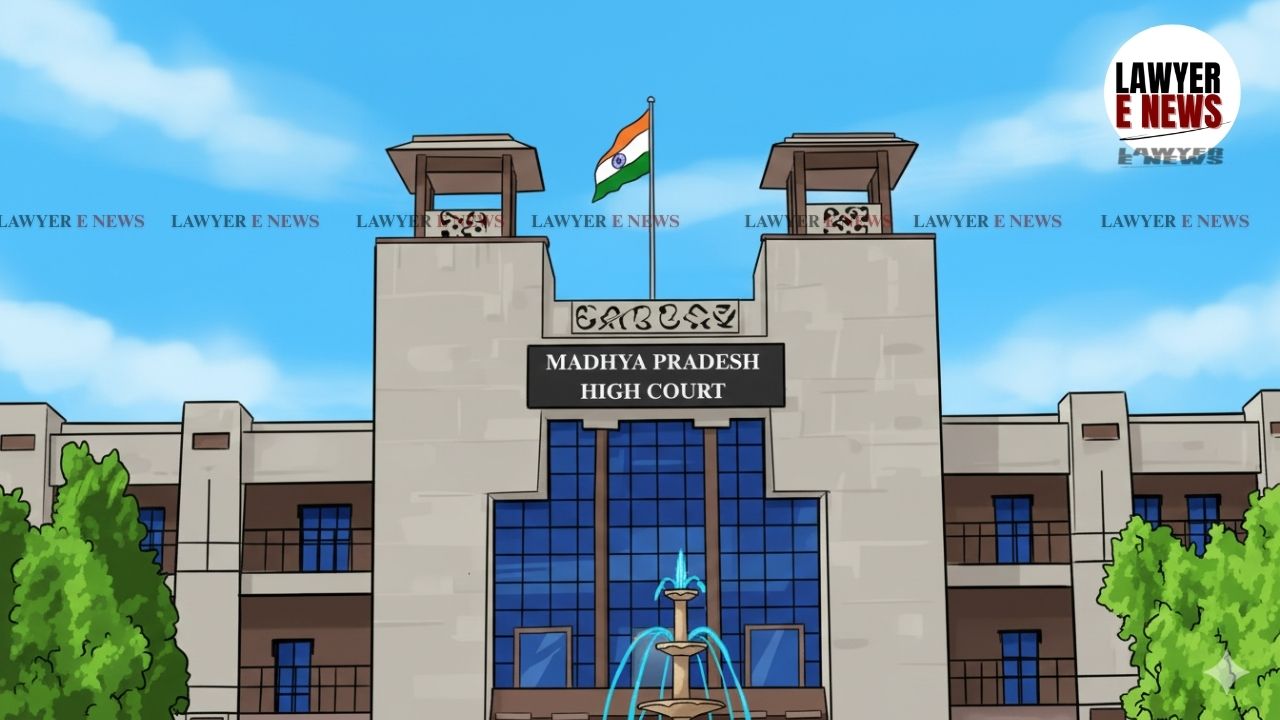
“No injunction can be granted against the true owner — even continuous possession cannot confer legitimacy when the title is absent” — High Court of Madhya Pradesh delivered a firm ruling against the misuse of temporary injunctions in land disputes, especially when no registered title document exists. The Court held that equitable relief like injunction cannot be granted to a person who is not a lawful owner and whose possession is questionable and unsupported by any formal mutation or legal basis.
The case stemmed from a disputed claim over Survey No. 643, which the petitioner asserted was omitted “by mistake” from a registered sale deed executed in 1987. Justice Deepak Khot, in a detailed judgment, held that the insertion of the petitioner's name into the Khasra records in 1990-91 was without legal basis and could not override the ownership rights of the vendor’s daughter, who was now recorded as Bhumiswami.
“You Cannot Sneak Into Title Through a Typing Error”: Court Calls Claim of Omitted Survey Number Baseless
The petitioner had filed a suit for declaration of possession and permanent injunction, which was later amended in 2023 to include declaration of title, citing that Survey No. 643 had been left out by mistake in the original sale deed. The amendment was filed after the vendor’s daughter initiated revenue proceedings and succeeded in getting her name corrected as the legal owner.
However, the High Court pointedly observed: “No sale deed includes Survey No. 643. The petitioner himself admitted it was not transferred through a registered instrument. The plea that it was ‘intended’ to be included is legally insufficient to confer title.”
Further, it found that no mutation had been ordered in 1987 for Survey No. 643, and the entry in Khasra records in 1990-91 was unexplained, possibly manipulated. The Court noted: “From the record, it is clear that such entry has been made in the Khasra entry of the year 1991 without any base or record.”
“Possession Without Title is No Ground for Injunction”: Court Refuses to Protect Petitioner’s Occupation Over Land Belonging to Legal Heir
The civil court and the appellate court had both rejected the petitioner’s application for temporary injunction under Order 39 Rule 1 & 2 of CPC, finding no prima facie case or irreparable injury. The High Court upheld those decisions, citing Supreme Court precedents that disallow injunctions in favour of persons in unlawful or unproven possession.
Quoting Mahadeo Savlaram Shelke v. Pune Municipal Corporation [(1995) 3 SCC 33], the Court reminded: “It is settled law that no injunction can be granted against the true owner at the instance of persons in unlawful possession.”
It further referenced Sopan Sukhdeo Sable v. Assistant Charity Commissioner [(2004) 3 SCC 137], reiterating that: “Judicial proceedings cannot be used to protect or perpetuate a wrong committed by a person who approaches the court.”
“Correction of Revenue Records Must Follow Due Process”: Revenue Authorities Pulled Up for Sidestepping Collector’s Approval
While the petitioner’s civil petition was dismissed, his revenue petition (M.P. No. 1722 of 2021) received partial relief.
The Court noted that the SDO had passed a correction order under Section 115 of the M.P. Land Revenue Code, 1959, but without obtaining the mandatory permission of the Collector — a procedural lapse that rendered the order invalid despite its substantive correctness.
“The original court of correction, i.e., SDO, has not taken permission from the Collector which is mandated under Section 115... The formality mandated under the Code must be followed.”
As such, the Court quashed the correction orders dated 26.11.2019 and 05.04.2021 passed by the Additional Collector and Additional Commissioner, respectively, and remanded the matter back to the SDO to comply with proper procedure.
“Equity Cannot Protect Occupation Born of Ambiguity”: High Court Denies Relief to Claim Based on Omitted Survey Number
Rejecting the plea for temporary injunction, the Court reiterated the foundational principle:
“Injunction may be granted even against the true owner only when the person seeking the relief is in lawful possession and legally entitled to be in possession — not to dispossess him except in due process of law.”
The Court emphasised that the petitioner’s entire claim was based on an unproven assumption, and he had failed to establish either title or even lawful continuous possession.
Date of Judgment: 21st August 2025