-
by sayum
28 August 2026 2:11 PM







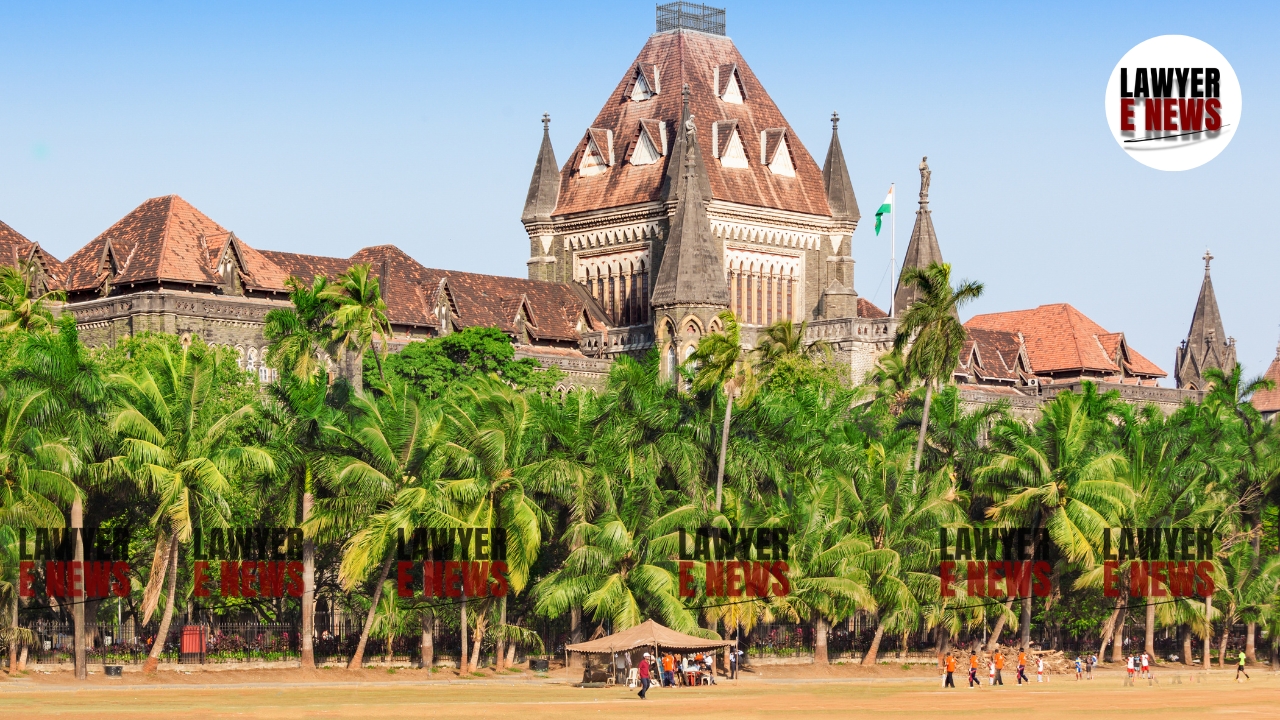
"When two dying declarations are materially inconsistent, the prosecution must offer corroboration — absence of which vitiates the conviction." - Nagpur Bench of the Bombay High Court acquitting Smt. Vimalbai Vitthal Dhavne, who had been convicted under Section 302 of the Indian Penal Code for allegedly setting her daughter-in-law ablaze within three months of marriage. The Court held that contradictions between two dying declarations, coupled with the possibility of tutoring and procedural infirmities, rendered the prosecution case unreliable.
“A Dying Declaration Must Be Consistent and Free from Suspicion to Form Sole Basis of Conviction”
The bench comprising Justice Urmila Joshi Phalke and Justice Nandesh S. Deshpande categorically ruled that the accused was entitled to benefit of doubt. The Court observed, “We are satisfied that the dying declarations are not recorded as per the legal provisions and create doubt. The dying declarations are also not consistent, therefore, we are not inclined to accept the said dying declarations by placing reliance upon the same.”
This observation formed the bedrock of the judgment, which not only overturned the conviction of the accused but also reaffirmed the legal standards governing dying declarations.
“Presence of Relatives Before Dying Declaration Raises Possibility of Tutoring — A Fatal Flaw in Prosecution’s Case”
The case centered around the tragic death of Mangala, a young woman who had been married for just three months when she sustained 100% burn injuries at her matrimonial home on 11th June 2008, eventually succumbing on 15th June 2008.
Two dying declarations were recorded — one by PSI Devanand Bagade and another by Executive Magistrate Sanjay Markal — and both attributed blame to the accused, Vimalbai. However, the Court noted a critical contradiction. In one statement, Mangala alleged that her mother-in-law poured kerosene while her husband lit the matchstick, whereas in the other, she claimed it was the mother-in-law alone who both poured kerosene and ignited the fire.
The Court remarked, “Both the dying declarations are inconsistent as far as the role of the present accused is concerned. In one, she is said to have poured kerosene; in the other, she is said to have poured and lit the matchstick as well.”
What deeply undermined the prosecution’s version was the testimony of Mangala’s own mother, PW-2 Anusaya, who turned hostile and admitted that Mangala had initially told her the burns were accidental, caused by a kerosene can falling while cooking. She also stated in court that her daughter was tutored by a relative named Shankar to implicate her in-laws.
The bench emphasized, “The presence of relatives near the deceased prior to recording of dying declarations, therefore, makes the possibility of tutoring probable — and that cannot be ruled out.”
“In Cases of Multiple Dying Declarations, Consistency is the Gold Standard”
The judgment delved into settled principles laid down by the Supreme Court in decisions like Laxman v. State of Maharashtra (2002), Uttam v. State of Maharashtra (2022), and Abhishek Sharma v. State (NCT of Delhi) (2023). The Court reiterated that while a dying declaration can form the sole basis of conviction, it must be voluntary, reliable, consistent, and recorded with procedural safeguards.
Quoting from Uttam, the Court stressed: “Where dying declaration is suspicious, it should not be acted upon without corroborative evidence… A dying declaration which suffers from infirmity cannot form the basis of conviction.”
The bench found no evidence that either the police officer or the executive magistrate had satisfied themselves about the mental fitness of the declarant, and while medical endorsements were placed on record, they too lacked explicit confirmation regarding the deceased’s mental capacity to make a statement.
The Court held: “PW-4 and PW-8 who recorded the dying declarations are not consistent. Their evidence nowhere states that they have satisfied themselves as to the physical and mental fitness of the deceased to give a statement.”
“When the Only Evidence is Unreliable, Acquittal is the Only Judicial Course”
The High Court also addressed another argument from the defence — that the deceased had sustained 100% burns, yet her thumb impression appeared on the dying declarations. While the Court acknowledged that thumb ridges can survive in some cases even with extensive burns, it emphasized that lack of clarity on whether her thumb was burnt or not further weakened the dying declarations.
Moreover, the Court noted the absence of any independent corroboration — no witness testified to seeing the act, and none of the articles seized from the scene conclusively pointed to the accused’s guilt beyond reasonable doubt.
In the final analysis, the Court stated: “The prosecution failed to prove that the evidence of dying declarations is cogent, reliable and trustworthy. Therefore, further corroboration is required. The veracity of the oral dying declaration is also doubtful.”
“The Rule of Prudence Cannot Be Ignored Where Lives Hang in the Balance”
Summing up, the Bombay High Court decisively set aside the trial court’s conviction, holding that the accused had established her defence successfully by raising reasonable doubt. The judgment is a salutary reminder of the sanctity of procedural safeguards in criminal trials, particularly when the sole evidence rests on dying declarations.
The Court concluded: “The Trial Court failed to appreciate the evidence and convicted the accused. The plea of the accused is succeeded as the accused has shown that the dying declarations are inconsistent, and therefore, corroboration was required.”
Date of Decision: 22nd September 2025