-
by sayum
15 August 2026 2:19 PM







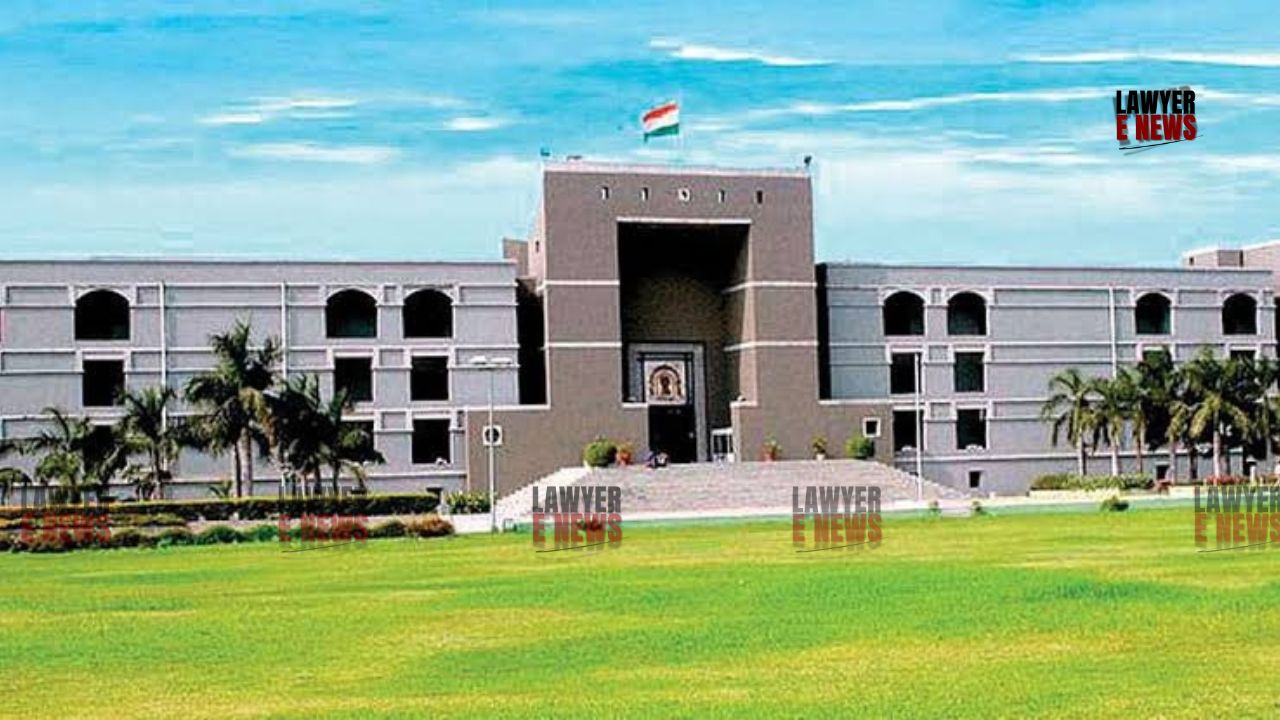
"Fundamental object of Section 15 is to provide protection to a person who has filed an appeal against a decree of dissolution of marriage, ensuring that the said appeal is not frustrated. The explicit purpose is to avoid the legal and factual complications that would inevitably arise due to a second marriage being contracted during the pendency of the appeal." Gujarat High Court, in a significant ruling, held that a spouse who obtains a divorce decree has a duty to inquire whether an appeal has been preferred before contracting a second marriage.
A bench of Justice Ilesh J. Vora and Justice R. T. Vachhani observed that the statutory right to appeal cannot be frustrated by the hurried actions of a party contracting a second marriage, as such conduct would "non-suit" the appellant and cause irreparable loss of status.
The case arose from a matrimonial dispute where the Family Court, Ahmedabad, dissolved the marriage between the parties on May 15, 2024, on grounds of cruelty and desertion under Section 13(1)(ia)(ib) of the Hindu Marriage Act. While the husband deposited the directed alimony and medical expenses for their son, the wife challenged the dissolution. During the period the wife was preparing her appeal, the husband contracted a second marriage on July 11, 2024, leading to the present application for a stay on the divorce decree.
Primary Legal Question Before The Court
The primary question before the court was whether the husband’s act of contracting a second marriage during the subsistence of the appeal process could justify the refusal of a stay on the operation of the divorce decree. The court was also called upon to determine the scope of protection intended under Section 15 of the Hindu Marriage Act (HMA) regarding the right to marry again following a decree of dissolution.
Object Of Section 15 Of The Hindu Marriage Act
The Court began its analysis by examining the core objective of Section 15 of the HMA, which outlines when divorced persons may marry again. The bench noted that the provision is designed to safeguard the interests of a party exercising their statutory right to appeal. The judges emphasized that the law seeks to prevent the legal and factual complications that arise when a second marriage is performed while the validity of the first marriage's dissolution is still under judicial scrutiny.
Court Explains Protection Against Frustrating Statutory Rights
The Court observed that allowing a second marriage to act as a bar against staying a divorce decree would effectively render the right of appeal infructuous. The bench remarked that the protection intended by the statute must be extended to prevent an appeal from being rendered meaningless. If a party could marry immediately and then claim that the stay should be refused because of the new union, the legal process would be compromised.
"It is incumbent on the part of the respondent to make sure whether an appeal has been preferred or not. Therefore, the respondent, by marrying immediately, deprived the wife of her legitimate right to present her case, which otherwise may be dealt with on its own merits."
Duty Of Successful Spouse To Inquire About Appeal Status
Relying on the Supreme Court’s precedents in Tejinder Kaur v. Gurmit Singh and Chandra Mohini Srivastava v. Avinash Prasad Srivastava, the High Court held that the party who succeeds in the lower court must wait for a reasonable time. The bench noted that it is incumbent upon the successful spouse to make sure whether an application for leave to appeal or a regular appeal has been filed in the higher court before proceeding to remarry.
Husband Cannot Take Advantage Of His Own Wrong
The Court addressed the husband's reliance on the case of Anurag Mittal v. Shaily Misra Mittal, clarifying that the principles of Section 15 must be interpreted purposively. It noted that the husband contracted the second marriage on July 11, 2024—the very same day the wife's appeal was notarized. The bench held that such an action cannot be used as a justification to deny a stay, as a party cannot be allowed to benefit from an attempt to circumvent the appellate process.
Balance Of Convenience Tilts In Favor Of The Wife
While granting the stay, the Court found that the balance of convenience heavily tilted in favor of the petitioner-wife. The bench observed that the non-granting of interim relief would lead to an irreparable loss of her status as a wife, which would adversely impact her legitimate claims and any other pending proceedings. The judges stated that establishing a prima facie case was essential, and the wife had successfully demonstrated the need for judicial protection.
"The petitioner appears to have successfully established a prima facie case, as non-granting of the interim relief at this stage would amount to nonsuiting the petitioner herein. Such an outcome would culminate in an irreparable loss to the petitioner, specifically regarding the loss of her status as the wife of the opponent."
Final Directions And Ad-Interim Stay
In conclusion, the High Court stayed the execution, operation, and implementation of the Family Court's judgment dated May 15, 2024, until the final disposal of the first appeal. However, the Court clarified that these observations are strictly prima facie for the purpose of the stay application and would not prejudice the final adjudication of the case on its merits. The bench also noted that this order is based on the specific facts of the case and shall not be treated as a binding precedent.
Date of Decision: July 6, 2026