-
by sayum
19 August 2026 10:42 AM







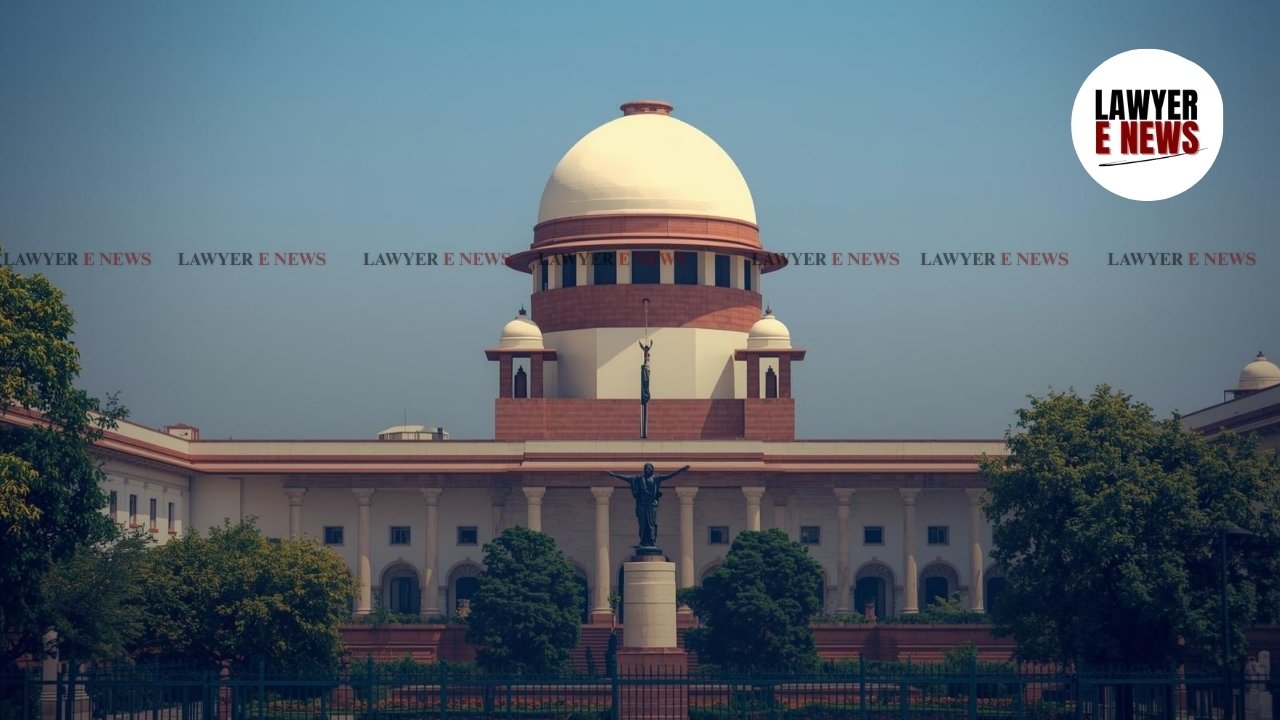
"Ordinarily, the Court would not substitute its decision in place of the decision required to be taken by the concerned authority in exercise of its discretion", Supreme Court of India, in a significant ruling, held that a High Court cannot issue a writ of mandamus to directly grant extraordinary pension when the discretionary power to do so is statutorily vested in the Governor.
A bench of Justice J.K. Maheshwari and Justice Atul S. Chandurkar observed that courts must not usurp the jurisdiction of statutory authorities, especially when the designated authority has not yet had the occasion to examine the matter and exercise its discretion.
The dispute arose after Dr. Sunil Kumar Singh, a government medical officer, was shot dead while discharging his duties at a Community Health Centre in Uttarakhand in 2016. His widow approached the Uttarakhand High Court seeking compensation and extraordinary pension under the Uttar Pradesh Civil Services (Extraordinary Pension) Rules, 1981. The High Court directed the State to pay compensation of ₹1.99 crore along with extraordinary pension, prompting the State of Uttarakhand to appeal before the Supreme Court.
The primary question before the court was whether the High Court could itself direct the grant of extraordinary pension without the Governor having exercised the discretion vested in him under the Rules of 1981.
Rules Of 1981 Constitute A Complete Code
The bench examined the Uttar Pradesh Civil Services (Extraordinary Pension) Rules, 1981, noting that the rules act as a complete code governing the circumstances, procedure, and determination of extraordinary pension. The court pointed out that Rule 4 strictly mandates that no award can be made without the sanction of the Governor. The judges observed that this administrative discretion must be exercised by the Governor in the specific contingencies indicated within the rules.
Statutory Authority Must Exercise Discretion First
Emphasising the separation of administrative and judicial functions, the Supreme Court held that where discretionary powers are conferred upon an authority, that authority must take the decision at the first instance. The court noted that the Governor was required to examine all relevant aspects before granting sanction. The bench stated, "where an authority has been conferred with discretionary powers... it would always be preferable that such authority itself takes such decision."
High Court Cannot Usurp Governor's Jurisdiction
The court faulted the High Court for issuing a mandamus without the Governor ever having the occasion to consider or refuse the widow's request. Relying on the precedents of State of West Bengal v. Nuruddin Mallik and Union of India v. S.B. Vohra, the bench reiterated that courts cannot substitute themselves for statutory authorities. The court noted that it would have been appropriate for the High Court to "first requested the Hon’ble Governor to examine the matter" rather than deciding the entitlement itself.
"In such a scenario, the Court would be slow to itself take such decision especially when the authority on whom the power has been conferred to take such decision has had no occasion to examine the matter and exercise its discretion in accordance with law."
When Can The Court Interfere?
While cautioning against usurping administrative powers, the bench clarified the limited scenarios where judicial intervention would be justified. The court explained that interference is warranted only if the authority has refused to take a decision for a reasonable period, or if the decision taken is "wholly arbitrary or suffering from non-application of mind." Even in such situations, the bench noted, the normal course is to direct the authority to take a fresh decision.
Monetary Compensation Protected
Despite setting aside the High Court's direction on extraordinary pension, the Supreme Court protected the monetary benefits already extended to the widow. The court noted that she had received ₹1 crore in compensation during the pendency of the proceedings, along with salary arrears, an official residence, and compassionate appointment for her son. The bench confirmed that this ₹1 crore "shall be the amount of monetary compensation to which she is entitled" and directed that it shall not be recovered.
The Supreme Court partly allowed the State's appeals by setting aside the High Court's absolute direction to pay the extraordinary pension. However, the court permitted the widow to make a fresh application for the pension under the 1981 Rules within four weeks, directing the Competent Authority to decide the claim strictly in accordance with the rules.
Date of Decision: 09 April 2026