-
by sayum
15 August 2026 2:23 PM







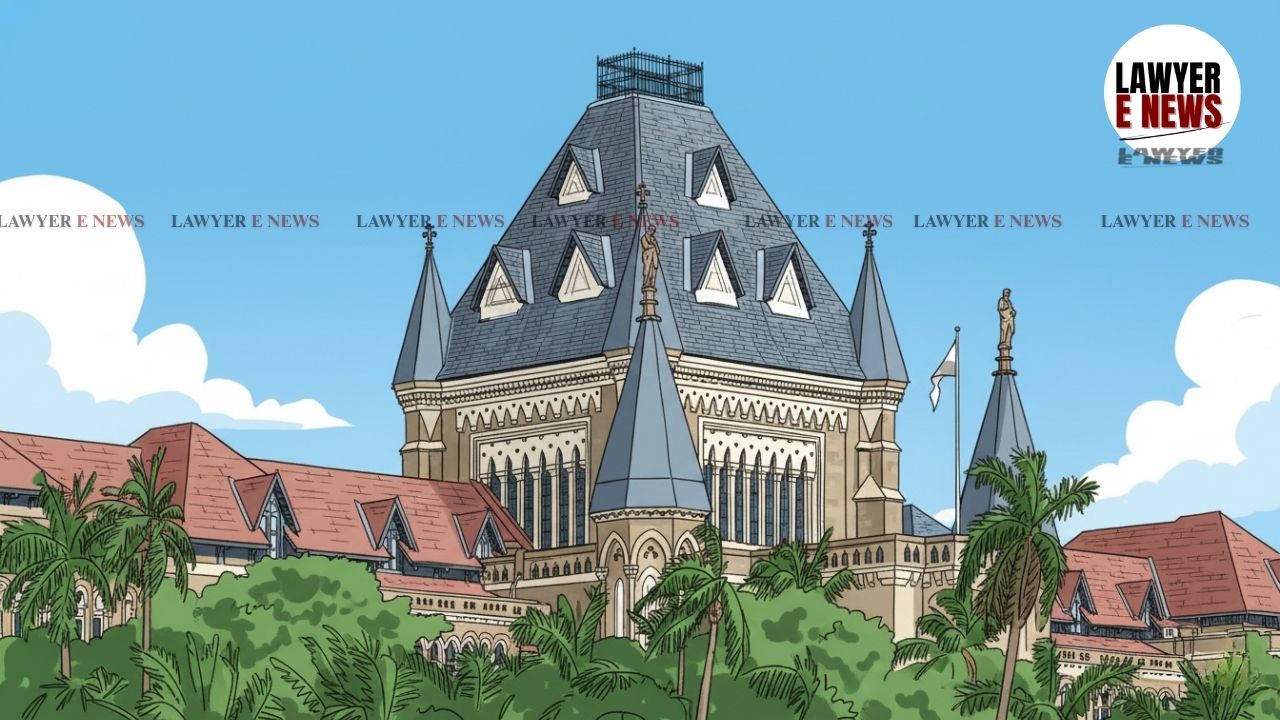
"In the absence of any evidence to show that he was doing private practice, a welfare legislation cannot be used for profiteering, and moreso by a person who is engaged in the profession of a doctor and working with the government." Bombay High Court, in a judgment, has ruled that a government doctor cannot be awarded compensation for "loss of income" due to accident-related absence if they continued to draw their full salary during the leave period.
A bench of Justice Jitendra Jain observed that granting such compensation in the face of express admissions by the employer regarding salary payment constitutes a "perverse" finding that contradicts the facts on record.
The appeal was preferred by Bajaj Alliance Insurance Co. Ltd. challenging a 2012 award passed by the Motor Accident Claims Tribunal (MACT), Thane. The Tribunal had awarded Rs. 11,71,394 to the claimant, a government doctor, for injuries sustained in a motor accident. The insurance company specifically contested the award of Rs. 3,66,586 towards loss of salary during the 11-month leave period and Rs. 6,60,000 towards loss of income from private practice.
The primary question before the court was whether a claimant is entitled to compensation for loss of earnings when they have continued to receive their salary from their employer during the period of recovery. The court was also called upon to determine if a government doctor can be presumed to have an additional income from private practice in the absence of any documentary evidence or government permission.
Compensation Cannot Be Granted For Loss Of Salary Already Received By Claimant
Regarding the loss of income due to absence from duty, the Court noted that the Tribunal had awarded salary for 11 months despite evidence to the contrary. Justice Jain highlighted that a witness from the employer’s side, Ms. Usha Kanchan, had admitted during cross-examination that the claimant had indeed taken his salary during the leave period.
The Court held that if the employer admits the claimant was drawing a salary while on leave, awarding compensation for "loss of income" on that same account is based on material contrary to the facts. The bench remarked that such an award could not have been granted in light of the express admission by the employer, as no actual financial loss was suffered by the claimant regarding his professional salary.
No Presumption Of Private Practice For Government Doctors Without Tangible Evidence
The Court then addressed the claim of Rs. 6,60,000 awarded for loss of income from private practice. It was observed that the claimant’s original application before the Tribunal contained no mention of additional income from private practice, and the claim was raised for the first time during the examination-in-chief.
Justice Jain noted that a private practitioner must have some form of establishment or clinic where patients are treated. However, the claimant failed to produce a single piece of documentary evidence to show he was a private practitioner or that he was earning the claimed Rs. 10,000 per month from such a source.
"A private practitioner needs to have some establishment where the patients come for the treatment. Nothing has been brought on record to show by any documentary evidence that the claimant was doing private practice."
Welfare Legislation Cannot Be Utilized For Profiteering
The Court emphasized that the Motor Vehicles Act is a welfare legislation intended to compensate actual loss, not to facilitate profiteering. It noted that the claimant, being a government doctor, was required to show that he had the necessary government permissions to engage in private practice or that such practice was not prohibited by service rules.
In the absence of such evidence, the Court found the Tribunal’s findings to be unsustainable. The bench stressed that a person who has not led any evidence nor shown compliance with government regulations cannot be permitted to take the benefit of welfare legislation without discharging the basic onus of proof.
Bombay High Court Disagrees With Madras High Court’s View On Presumed Income
The counsel for the claimant had relied on a Madras High Court decision in Mary Immanuvel & Anr. vs. Periyasamy & Ors., which suggested a presumption that a government doctor definitely engages in private practice. Justice Jitendra Jain expressly disagreed with this view, stating that the onus remains strictly on the person claiming such income to prove it through evidence.
"With respect, I do not agree with the view taken by the Madras High Court. The onus is on the person claiming that he is in a private practice to show that in effect he was doing private practice and was earning from the said practice."
The High Court quashed the Tribunal's award to the extent of Rs. 6,60,000 (loss of private practice income) and Rs. 3,66,586 (loss of salary). It directed that if these amounts were deposited by the Insurance Company, they should be refunded with accrued interest. The claimant was permitted to withdraw only the balance compensation amount with interest.
The Court concluded that compensation under the Motor Vehicles Act must be reflective of actual loss and substantiated by evidence. It reaffirmed that government employees cannot claim double benefit by receiving both a salary and accident compensation for "loss of income" for the same period, nor can professional income be presumed without a factual foundation.
Date of Decision: 07 July 2026