-
by sayum
28 August 2026 12:24 PM







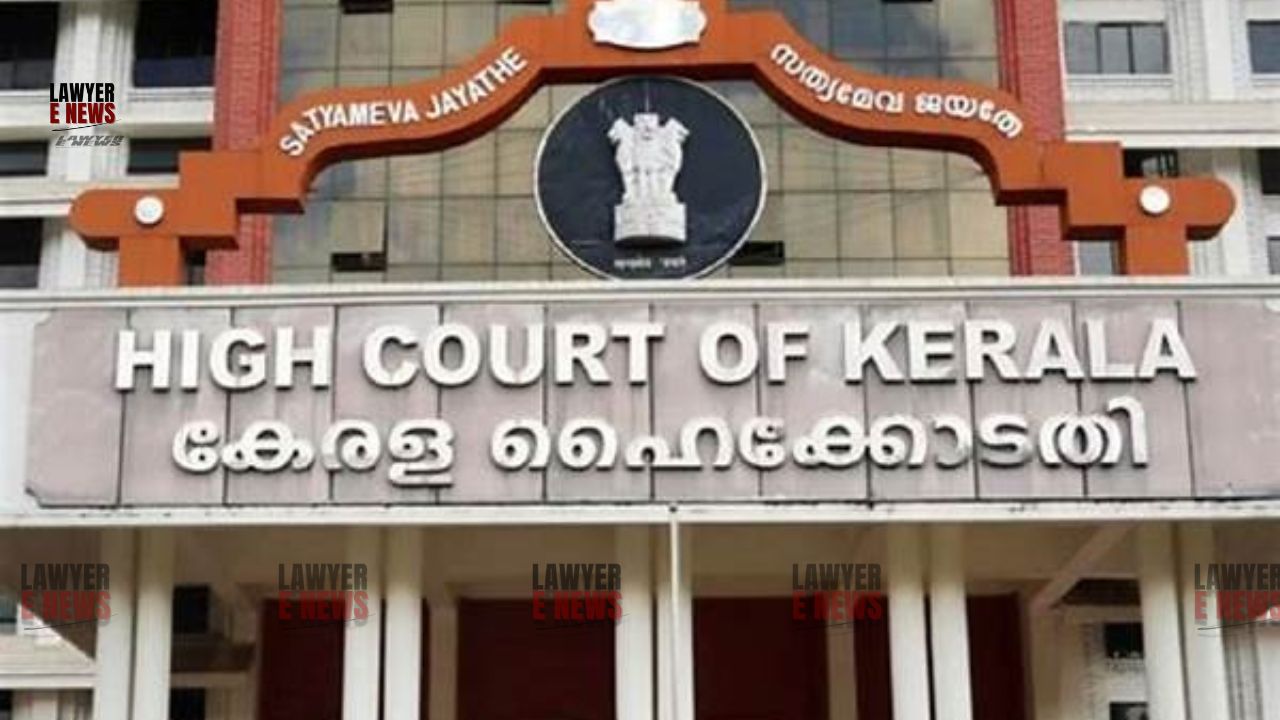
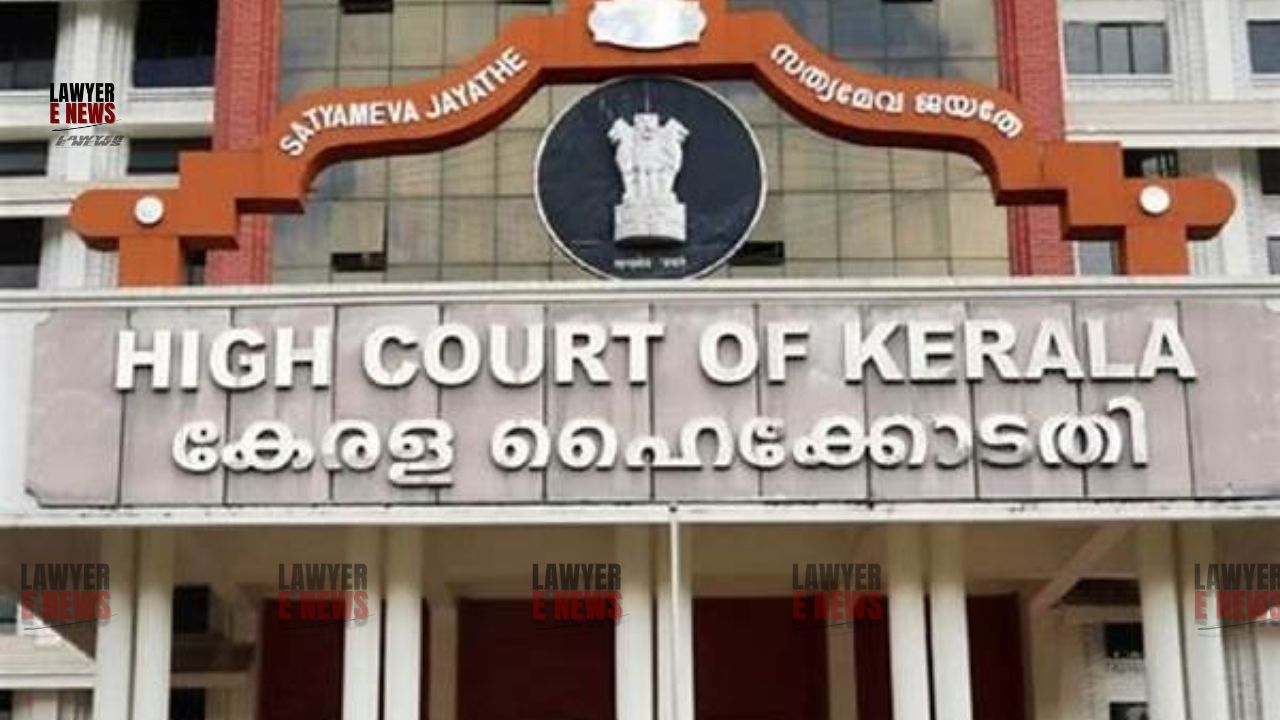
Delivering a reportable judgment on October 8, 2025, the Kerala High Court upheld the dismissal of a second motor accident compensation claim filed by a woman injured in a road accident in 1997, holding that the second claim was barred under Order 9 Rule 9 of the Code of Civil Procedure, as the first claim had been dismissed for default under Order IX Rule 8 CPC.
Justice Shoba Annamma Eapen, sitting in the civil appellate jurisdiction, ruled that once a claim petition is dismissed for default when the opposite party is present, a fresh petition on the same cause of action is not maintainable, and the only recourse available is to seek restoration under Rule 9. The Court further held that such a procedural bar is absolute and cannot be circumvented merely by re-filing the case.
“If the dismissal of the earlier petition was under Order IX Rule 8, then by virtue of Rule 9 of the same Order, a fresh petition on the same cause of action is clearly barred. The only remedy was to seek restoration of the original case.” [Para 12]
"Hearing Includes All Stages of Trial, Not Just Arguments": Dismissal for Non-appearance Valid Even If Case Posted for Evidence
Rejecting the appellant’s contention that the earlier dismissal could not be under Order IX Rule 8 because the case was posted for evidence and not final hearing, the Court clarified the legal meaning of “hearing” in civil procedure.
Quoting the precedent in Kanaran Nambiar v. Ramunni Nambiar (1961 KHC 53), the Court stated:
“‘Hearing’ as used in the Code of Civil Procedure, does not mean hearing of arguments alone. It includes all stages of trial including settling of issues, taking evidence, and any proceeding that leads to final adjudication of the suit.” [Para 14]
Hence, the proceedings on 18.08.2003, where the petitioner and her counsel were absent and no evidence was produced, rightly qualified as a ‘hearing’, and the dismissal passed on that day was validly under Order IX Rule 8 CPC.
Absence in First Claim Fatal to Second Attempt
The appellant, Usha Kumari, was injured on 22.11.1997 while travelling in a bus that collided with another vehicle. She initially filed a compensation claim under OP(MV) No.703 of 1999 before the Motor Accidents Claims Tribunal, Kottayam. However, that petition was dismissed on 18.08.2003 for non-appearance and failure to prosecute.
In 2006, she filed a second claim petition, OP(MV) No.1649 of 2006, based on the same accident and cause of action. That too was dismissed, not on procedural grounds but for failure to prove negligence. She then filed MACA No. 1490 of 2010 before the High Court, challenging the dismissal.
It was during the appeal hearing that the Insurance Company raised the preliminary objection: that the second claim petition itself was not maintainable, as the first had been dismissed for default under Rule 8, and thus a fresh petition was barred under Order IX Rule 9 CPC.
“Order IX Rule 8 Applies Where Defendant Appears But Plaintiff Does Not”: Court Finds No Ambiguity in Earlier Proceedings
A crucial question before the Court was whether the first dismissal in 2003 was under Rule 3 or Rule 8 of Order IX.
Counsel for the appellant argued it was under Rule 3, allowing a fresh petition to be filed. However, the High Court rejected that claim on a detailed review of the proceedings sheet of OP(MV) No.703/1999.
The Court noted:
Respondents 1 and 2 (driver and owner of the offending vehicle) were absent and set ex parte.
The third respondent, Oriental Insurance Company, had entered appearance and filed a written statement.
On 13.08.2003, the petitioner had marked one document, and the case was posted for further evidence on 18.08.2003.
On 18.08.2003, the petitioner and counsel were absent, no further documents were filed, and the petition was dismissed.
Justice Shoba Annamma Eapen concluded:
“The presence of the insurer on record and the absence of the petitioner on the date of hearing clearly attracts Rule 8 of Order IX. Once the defendant appears and the plaintiff does not, Rule 3 is not applicable.” [Para 12]
The Court also invoked Order XVII Rule 2, which permits courts to dispose of cases under Order IX when a party fails to appear on a day to which the hearing is adjourned, especially when evidence has already commenced.
Pure Question of Law Regarding Maintainability Can Be Raised Even at Appellate Stage
The appellant argued that the insurer never raised the issue of maintainability before the Tribunal, and hence could not do so at the appeal stage. The High Court rejected this contention, relying on the Supreme Court’s holding in Lubna K. v. Beevi, (2020 (1) KHC 460), which clarified:
“A pure question of law can be raised at any stage, including in appellate proceedings or before the Supreme Court, provided the factual foundation exists.” [Para 13]
Here, the fact of prior dismissal was undisputed and borne out by the records. The legal consequence of such dismissal, i.e., the procedural bar to a second petition, could be validly raised at any stage of the litigation.
Tribunals Have Jurisdiction to Dismiss for Default Where Claimant Is Not Interested in Prosecution
Addressing the broader concern of whether a Motor Accidents Claims Tribunal (MACT) can dismiss a claim for default, the Court relied on the Full Bench decision in Jacob Thomas @ Shaju v. C. Pandian, where it was held that Order IX CPC applies to MACT proceedings.
“Where the Tribunal is satisfied that the claimant is not interested in prosecuting the claim, it can invoke Order IX Rule 8 CPC and dismiss the case for default. The proper remedy is to file for restoration under Rule 9, not to file a fresh petition.” [Para 9]
The Court also referred to the Supreme Court’s judgment in Amruddin Ansari (Dead) through LRs v. Afajal Ali, 2025 (3) KHC SN 15, which reiterated that only a Rule 4 dismissal permits a fresh suit, not one under Rule 8.
No Relief Can Be Granted When Fresh Petition Itself Is Procedurally Incompetent
Having found that the second claim petition was not maintainable, the Court observed that the appeal arising from that claim must also fail, regardless of whether the Tribunal’s findings on negligence were right or wrong.
“Since it is found that the original petition as well as the appeal is not maintainable, the prayer for compensation also cannot be allowed.” [Para 15]
Court Commends Amicus Curiae for Valuable Assistance
The Court recorded special appreciation for Adv. A.R. Nimod, who was appointed Amicus Curiae in the case and rendered extensive assistance on the legal position concerning Order IX CPC and maintainability.
“The assistance rendered by Adv. A.R. Nimod, learned Amicus Curiae, is truly commendable and goes beyond appreciation.” [Para 16]
Appeal Dismissed, Claim Barred by Law
The Court ultimately dismissed MACA No.1490 of 2010, holding that both the second claim petition and the appeal arising from it were barred under Order IX Rule 9 CPC, and that no compensation could be awarded.
Date of Judgment: October 8, 2025