-
by sayum
12 November 2026 8:14 PM







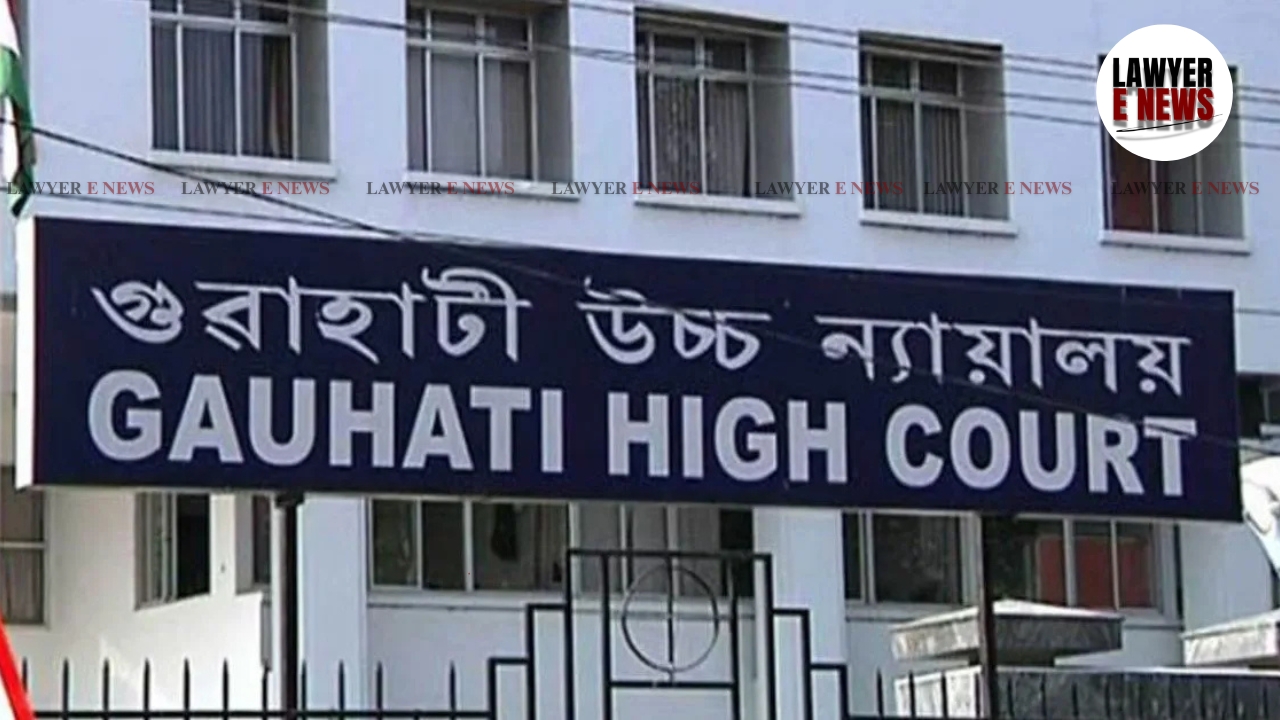
GUWAHATI: The Gauhati High Court has ruled that Electoral Photo Identity Cards (EPIC) and PAN cards cannot be accepted as proof of Indian citizenship under Section 9 of the Foreigners Act, 1946, observing that such documents are issued on self-application without formal enquiry. A division bench comprising Justice Kalyan Rai Surana and Justice Susmita Phukan Khaund delivered the judgment, affirming a Foreigners Tribunal order declaring a woman to be an illegal foreigner of the post-March 25, 1971 stream.
The petitioner assailed the Foreigners Tribunal (4th), Darrang opinion declaring her a foreigner, contending that her grandparents featured in the 1966 and 1970 voter lists and that her father was an elected municipal councillor who contested parliamentary and assembly elections. The Tribunal held that she failed to establish any cogent evidentiary linkage to her projected father, leading to the challenge under Article 226 of the Constitution of India.
Whether Electoral Photo Identity Cards, PAN cards, and candidate certificates are sufficient to discharge the statutory burden of proof under Section 9 of the Foreigners Act, 1946?
Whether an unexplained gap in voter lists between 1970 and 1997 defeats the requirement of continuous residence mandated under Section 6A(2) of the Citizenship Act, 1955?
Whether an unsubstantiated plea attributing evidentiary lapses to wrong legal advice warrants remanding a reference back to the Foreigners Tribunal?
The High Court began by examining the evidentiary worth of documents routinely relied upon by proceedees to substantiate their claims of citizenship. The bench observed that documents like identity cards and tax identification numbers do not independently establish nationality or familial pedigree.
PAN and EPIC do not confer citizenship without foundational records
The bench emphasized that documents issued on self-declaratory applications cannot satisfy the high threshold of proof mandated under immigration and citizenship laws.
"The PAN Card and EPIC exhibited by the petitioner as Ext.1, Ext.5, Ext.6 and Ext.9 respectively, is not a proof of citizenship. These are documents that are issued on self-application without any formal enquiry by the Income Tax Department and Election Commission of India. Therefore, unless, the records supplementing the PAN Card and EPIC are proved, the said exhibited documents cannot be accepted as a proof of citizenship of India."
The Court analyzed the lineage evidence presented by the petitioner, pointing out glaring inconsistencies in the family chronology and electoral rolls. While her grandparents allegedly appeared in the 1966 and 1970 voter lists, her father's name emerged for the first time only in the 1997 voter list at age fifty.
Unexplained decades-long gaps in electoral records defeat claims under Section 6A
The bench underscored that establishing citizenship under Section 6A(2) of the Citizenship Act, 1955 requires cogent evidence of unbroken residence in the State of Assam.
"Thus, the projected father of the petitioner was born in the year 1947 and therefore, he would have derived his right to exercise franchise at the age of 21 years in the year 1968. However, there is no evidence of continuous residence of the projected grandparents and father of the petitioner between the year 1970 and 1997, i.e. 27 years. However, as per the requirement of Section 6A(2), of the Citizenship Act, 1955, which is a special provision applicable for the State of Assam, the petitioner has to prove that her grandparents and father was continuously residing in the State of Assam."
Addressing the petitioner's argument that her father held public office and contested democratic elections, the bench observed that public standing does not dispense with the necessity of proving filial linkage.
Status as an elected representative does not substitute proof of biological linkage
The Court highlighted that possessing documents belonging to an Indian citizen is futile unless the claimant conclusively establishes biological descent from that person through admissible evidence.
"Thus, a mere fact that the projected father of the petitioner had offered his candidature in Lok Sabha Election and State Assembly Election and that he was an elected Ward Member of Guwahati Municipal Corporation, is not sufficient to prove that the petitioner has been able to establish her linkage with the said person."
The bench also rejected the petitioner’s claim that she failed to examine her parents or independent witnesses due to incompetent legal advice received from her engaged counsel before the Tribunal.
Blaming counsel without complaint to Bar Council held to be an afterthought
Scrutinizing the Tribunal's order sheets, the High Court discovered that multiple adjournments were granted, yet no effort was made to produce the parents, who were alive and required no court summons to testify.
"Thus, the statement made by the petitioner in paragraph 6 of the writ petition is a result of an after-thought and manufactured to create a ground to assail the impugned opinion, solely aimed to fill-up the lacuna that the impugned opinion has exposed. The petitioner has not moved the jurisdictional Bar Council alleging wrong advice, professional incompetence or misconduct by her learned counsel engaged to represent her before the Foreigners Tribunal."
The High Court dismissed the writ petition, confirmed the Tribunal's opinion declaring the petitioner an illegal foreigner of the post-1971 stream, and revoked her interim bail with immediate effect.
Date of Decision: November 5, 2026