-
by sayum
12 November 2026 10:35 AM







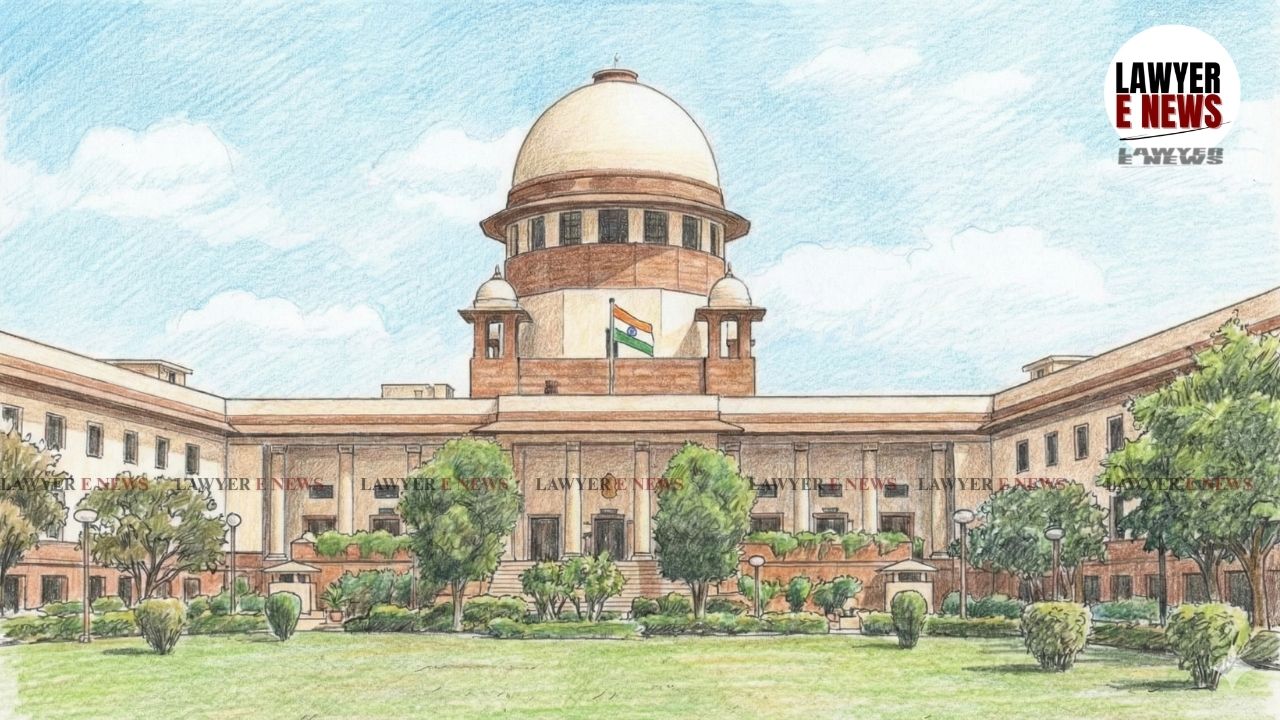
NEW DELHI: Clarifying that judicial interventions aimed at ensuring unhindered access to justice do not operate as an automatic stay on statutory prohibitory orders, a three-judge bench of the Supreme Court comprising Chief Justice of India, Justice Joymalya Bagchi, and Justice V. Mohana, on November 3, 2026, recalled an earlier direction that had ordered the removal of Section 163 Bharatiya Nagarik Suraksha Sanhita, 2023 (BNSS) notice boards from the court premises, while structuring thirty-three connected petitions arising from the October 2026 Delhi protests into eleven distinct categories.
The extensive batch of writ and contempt petitions arose out of widespread prohibitory orders and restrictions enforced across the National Capital Territory of Delhi in October 2026 surrounding a planned demonstration at Jantar Mantar. Litigants challenged the subsequent de-notification of Jantar Mantar as a designated protest site, the widespread invocation of Section 163 BNSS, preventive detentions, state surveillance, police conduct, and the constitutional validity of Section 172 BNSS.
Whether an interim direction ensuring unhindered ingress and egress for advocates and litigants operates as a judicial stay or dilution of statutory prohibitory orders issued under Section 163 of the BNSS.
Whether a high-volume batch of allied writ and contempt petitions challenging multifaceted executive restrictions on protests must be systematically grouped and segregated into distinct legal categories to prevent overlapping arguments.
Court Clarifies Ingress Direction Did Not Stay Prohibitory Regime
The bench addressed misinterpretations arising from paragraph 16(e) of its earlier order dated October 11, 2026, wherein authorities had been directed to take down a notice board installed in the Supreme Court premises that indicated the invocation of Section 163 BNSS in the area.
The Court observed that the initial removal order was strictly limited to preserving the physical movement of stakeholders and facilitating uninterrupted judicial functioning.
The bench stressed that access to justice cannot be frustrated, stating that the direction was issued solely to ensure that no Advocate, litigant, or person visiting an Advocate for professional consultation, was obstructed or deterred from approaching the courts.
Recall Ordered After Misuse Of Judicial Clarification Came To Light
Taking serious exception to reports that its limited procedural facilitation was being projected as a total lifting of Section 163 BNSS restrictions, the bench determined that corrective intervention was warranted.
The Court held that the order did not stay, suspend, or dilute any prohibitory order issued under Section 163 BNSS, noting that the substantive validity of those prohibitory orders remains directly under challenge in pending proceedings before the Court.
Consequently, the bench recalled paragraph 16(e) of the October 11 order, holding that the Competent Authority is not precluded from displaying the Section 163 BNSS notice afresh, provided that the free movement of Advocates, litigants, and court visitors remains strictly regulated and free from obstruction.
Institutional Framework Devised Across Eleven Heads For Adjudication
To adjudicate the complex litigations effectively, the Supreme Court accepted the harmonised reports submitted by the court-appointed Nodal Counsel, establishing eleven distinct categories to govern future proceedings.
The matters were classified under the Main Writ Petition and Contempt Petitions, Challenge to the de-notification of Jantar Mantar as a protest site, Petitions concerning detention or removal, and Petitions challenging restrictions on protests, which includes challenges to Section 163 BNSS orders.
Further categories established by the Court encompass Petitions concerning journalists, Petitions concerning women journalists and police personnel, Petitions concerning lawyers, Petitions seeking regulation of protests, Habeas Corpus pleas, constitutional challenges to Section 172 BNSS, and Petitions concerning surveillance.
Counsel Directed To Avoid Overlapping Arguments Under Staggered Listing
The bench laid down strict case management guidelines, directing that the Union of India and respondent authorities file discrete counter-affidavits corresponding to each established category rather than omnibus pleadings.
Emphasising the need for judicial efficiency, the bench directed Senior Counsel across groups to coordinate strictly through their respective Nodal Counsel to submit proposed time allocations and prevent repetitive oral arguments.
The Court scheduled the sequential hearing of these categories from mid-November through early December 2026, while also granting leave to amend select writ petitions and directing petitioners who raised allegations against specific protesting groups to formally implead those organisations.
The Supreme Court recalled paragraph 16(e) of its order dated October 11, 2026, permitted the re-display of Section 163 BNSS regulatory notices around court precincts subject to unimpeded passage for legal professionals and litigants, and scheduled staggered category-wise hearings starting from November 18, 2026.
Date of Decision: November 3, 2026