-
by sayum
12 November 2026 10:35 AM







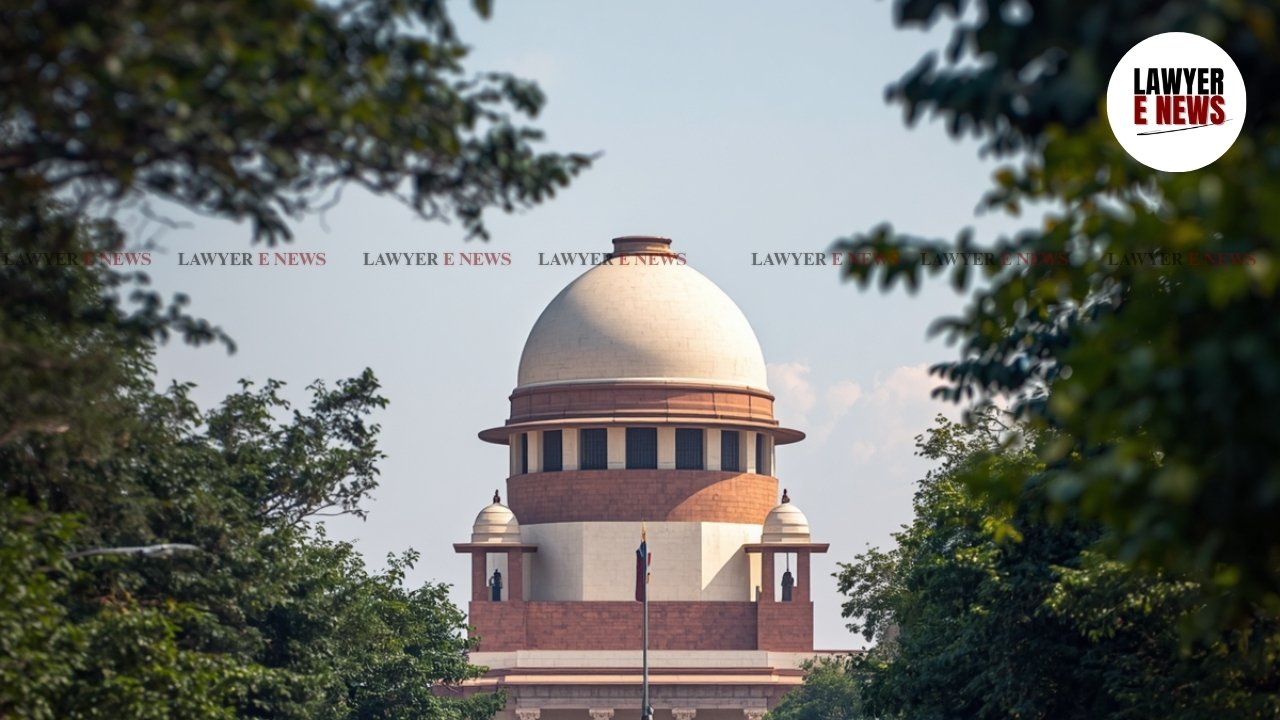
"Ordinarily, in cases of this type, having regard to the maximum punishment that the trial court would impose, ultimately, if the accused is held to be guilty, bail is to be granted. It is only when there are criminal antecedents or the facts are very gross that the court may decline to exercise its discretion in favour of the accused," Supreme Court.
NEW DELHI: Holding that regular bail in corruption cases ought to ordinarily be granted having regard to the prospective maximum punishment unless the accused has criminal antecedents or the allegations are exceptionally gross, the Supreme Court bench of Justice J.B. Pardiwala and Justice Manmohan on November 6, 2026, set aside a Patna High Court order that had cancelled the bail granted to a public servant under Section 7(b) of the Prevention of Corruption Act, 1988.
The appellant, serving as a Manager/Administrator at the government-run Sadar Hospital in Samastipur, was arrested on allegations of demanding a bribe of Rs. 4,000 to clear pending wages worth Rs. 36,421. After spending approximately fifteen days in judicial custody, he was granted regular bail by the Sessions Court. Dissatisfied with the release order, the de facto complainant approached the High Court of Judicature at Patna, which cancelled the bail nearly one year later on the ground that the Sessions Court had improperly weighed the paltry nature of the bribe amount.
Whether the High Court was justified in setting aside an order of bail and ordering an accused back into custody after nearly one year merely because the trial court observed that the alleged bribe amount was paltry.
Whether the quantum of the alleged bribe is a relevant factor for the exercise of discretion under Section 439 of the Code of Criminal Procedure, 1973 in prosecutions under the Prevention of Corruption Act, 1988.
Ordinarily bail is the rule in corruption offences absent antecedents or gross circumstances
The Supreme Court emphasized that discretionary relief under bail jurisprudence must account for the statutory sentencing framework applicable to the offence charged. The bench underscored that unless an accused poses a demonstrated flight risk, possesses criminal antecedents, or is implicated in extraordinarily gross facts, bail ought not to be withheld or revoked routinely.
Observing the foundational parameters of granting relief in corruption cases, the Court held that ordinarily, having regard to the maximum punishment that the trial court would impose upon conviction, bail must be granted to the accused. The bench clarified that the court may decline to exercise its discretion only when criminal antecedents emerge or the facts are demonstrably gross.
Erroneous remark on bribe quantum does not warrant cancellation of bail after one year
The apex court noted that the High Court interfered primarily because the Sessions Court, while granting bail, had observed that the bribe amount was paltry. While acknowledging the legal correctness of the High Court's position that the quantum of the bribe cannot dictate whether an accused receives bail, the bench held that such an error in reasoning alone did not justify disturbing an existing liberty after a prolonged period.
The Court pointed out that the High Court disturbed the order and cancelled the bail after a period of almost one year from the date of the appellant's release. The bench observed that the High Court could have simply corrected the legal position on the irrelevance of the bribe's quantum while permitting the accused to remain on bail.
Deemed suspension operates automatically after forty-eight hours of judicial custody
The Court expressed grave concern over the administrative conduct of the State authorities regarding the service status of the appellant following his arrest. The bench reiterated the established administrative principle that detention of a public servant in custody for more than forty-eight hours triggers deemed suspension by operation of law, requiring no separate formal order.
Taking adverse note of the appellant's reinstatement, the Court highlighted that the accused had remained in custody for fifteen days and was placed under deemed suspension, yet his suspension was subsequently revoked and he was restored to the exact same administrative post in the very same hospital. The Court termed this development shocking and directed the State of Bihar to look into the matter and take remedial measures in accordance with law at the earliest.
The Supreme Court allowed the appeal, quashed and set aside the judgment of the Patna High Court, and restored the original bail order passed by the Sessions Court, while directing the State government to immediately examine the propriety of reinstating the appellant to the identical hospital post.
Date of Decision: November 6, 2026