-
by sayum
25 August 2026 12:32 PM







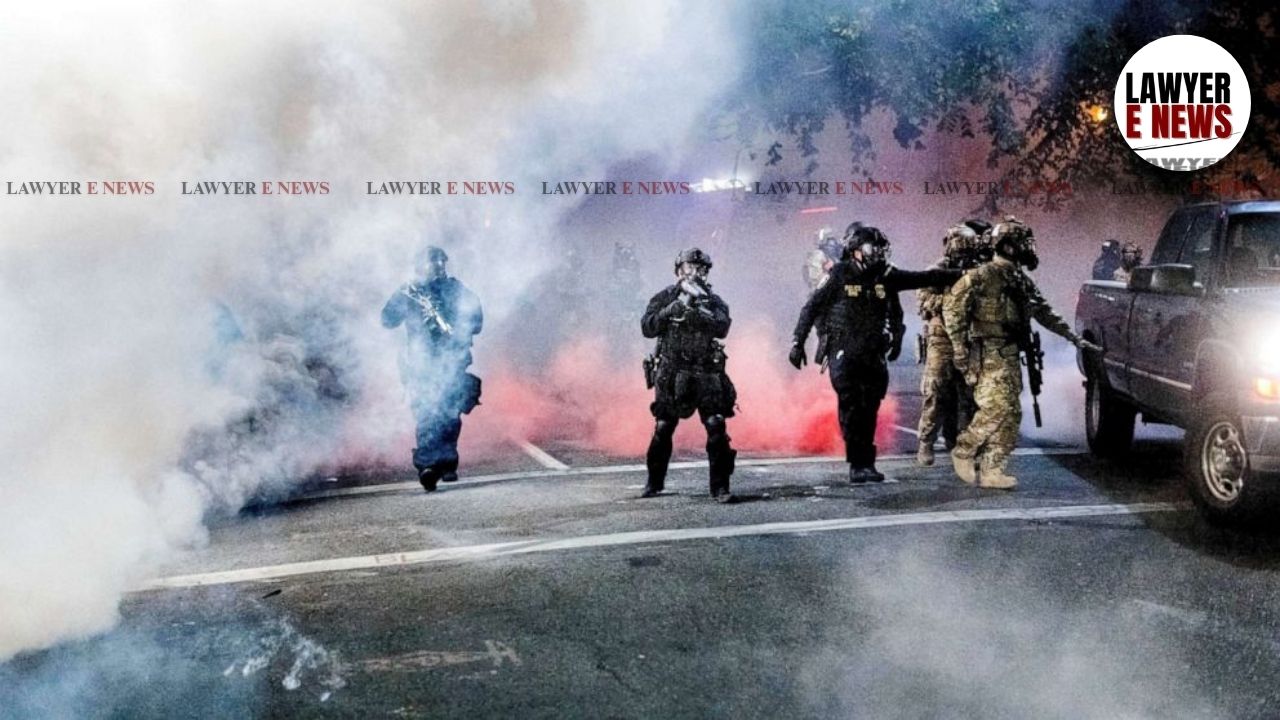
In a important development, U.S. District Judge Karin Immergut delivered a pivotal ruling in State of Oregon v. Chad Wolf et al., refusing to dismiss a lawsuit brought by the state of Oregon against Trump administration officials over the controversial deployment of federal agents during the 2020 racial justice protests in Portland. The court held that Oregon’s claims—alleging violation of its sovereignty and unlawful conduct by federal officers—merit judicial scrutiny, especially in light of constitutional principles of federalism and separation of powers.
“The State Has Alleged a Plausible Injury to Its Sovereign Interests”
In a sharply worded order, Judge Immergut emphasized that the federal government cannot operate autonomously within state borders without at least some level of cooperation or consent. The court found Oregon’s claims legally sufficient to survive the defendants’ motion to dismiss, noting:
"The state has alleged a plausible injury to its sovereign interests arising from the federal government’s conduct in Portland during July 2020."
This legal development could have far-reaching implications for how federal authority is exercised during times of domestic unrest, particularly regarding the use of federal officers on state soil.
Federal Agents in Portland Spark Legal Backlash
The case arises from the July 2020 protests in Portland, Oregon, which were part of a nationwide wave of demonstrations following the murder of George Floyd. In response to protest activity near federal property, the Trump administration deployed federal law enforcement officers from agencies such as the Department of Homeland Security (DHS) and U.S. Marshals Service.
Oregon’s lawsuit claims that the federal officers acted outside constitutional bounds by operating without coordination or consent from state or local authorities. The suit targets several former federal officials, including then-Acting DHS Secretary Chad Wolf, alleging that the deployment violated the Tenth Amendment and the Administrative Procedure Act (APA), among others.
Oregon argued that federal agents conducted unlawful arrests, used excessive force, and generally disregarded the sovereignty of the state, infringing on its ability to manage its own law enforcement response to the protests.
At the heart of the dispute are core constitutional questions:
The Trump administration had sought dismissal of the suit, claiming the federal government was acting within its lawful authority to protect federal property and personnel. However, Oregon contended that the federal officers exceeded the scope of that authority and failed to follow proper procedures.
Judge Immergut acknowledged that protecting federal property is a legitimate federal interest, but emphasized that "constitutional limits still apply, particularly when state sovereignty is at stake."
She further observed that Oregon had presented sufficient factual allegations that, if proven, could support findings of unlawful conduct and unconstitutional overreach.
A Green Light for Constitutional Accountability
The ruling does not determine the merits of Oregon’s claims but allows the case to move forward into discovery and potentially to trial. Judge Immergut’s order firmly rejected the argument that the federal government’s conduct was immune from judicial review simply because it related to national security or federal interests.
"Federalism does not permit the federal government to unilaterally police American cities without regard for state sovereignty," the judge wrote, underscoring the gravity of the constitutional claims.
This decision reinforces the principle that federal authority—even under the pretext of emergency response—must be exercised within the framework of the Constitution. The court’s willingness to entertain Oregon’s allegations signals a strong judicial commitment to safeguarding state autonomy and checking executive power.
A Case That May Define Federal-State Boundaries in Domestic Security
In refusing to dismiss Oregon’s lawsuit, the federal court has opened the door to what could become a landmark legal battle over the limits of federal authority in domestic law enforcement. The ruling sends a clear message: even in times of crisis, the constitutional balance of power between states and the federal government must be respected.
The case is now poised to proceed to the evidentiary phase, where internal communications, federal planning documents, and agency protocols may come under judicial scrutiny.
Case Title: State of Oregon v. Chad Wolf et al., U.S. District Court, District of Oregon