-
by sayum
29 August 2026 9:28 AM







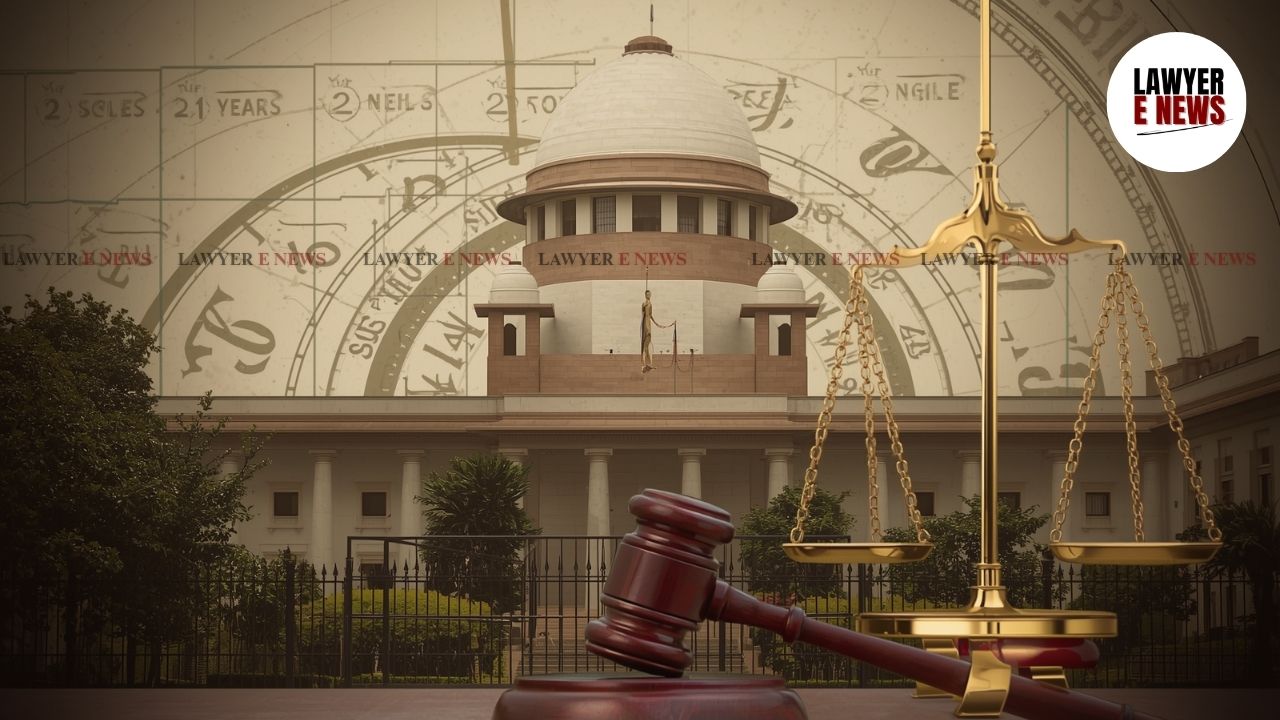
“Legal aid must be real, not a token — courts should notify convicts when appointing amicus”, In a significant ruling balancing fairness with judicial efficiency, the Supreme Court has set aside a Jharkhand High Court judgment delivered after more than two decades, holding that though courts may appoint an amicus curiae in absence of counsel, fairness demands that the convict be informed—especially in long-pending appeals. A Bench of Justice Dipankar Datta and Justice Satish Chandra Sharma ordered a fresh hearing, stressing that “expeditious disposal must never come at the cost of justice.”
A Murder Appeal Decided After 21 Years—Without the Appellant’s Knowledge
The case traces back to a 2000 murder conviction, where the appellant was sentenced to life imprisonment in 2002. He filed an appeal in 2003 and was released on bail shortly thereafter.
For over 20 years, the appeal remained unheard. When it was finally listed in November 2024, no one appeared for the appellant. The High Court appointed an amicus curiae, who argued the matter and succeeded in getting the conviction altered from murder under Section 302 IPC to culpable homicide under Section 304 Part II, reducing the sentence to five years.
However, the appellant was never informed that his counsel had stopped appearing or that an amicus had been appointed to represent him.
“Justice would have been better served had an intimation been sent to the appellant,” the Supreme Court observed.
“Legal Aid Must Be Meaningful, Not a Formality”
The Court acknowledged that the High Court acted with bona fide intent to dispose of a long-pending appeal. Yet, it flagged a crucial lapse.
“Assistance in the form of legal aid should be real and meaningful and not a token gesture,” the Bench emphasised.
While holding that there was no strict legal obligation to notify the appellant, the Court termed such notice a “desirable precaution,” particularly given the extraordinary delay of 21 years.
Amicus Raised Different Grounds—But No Fault Found
The appellant argued that the amicus curiae failed to press key grounds from the original appeal and instead argued a different legal point, thereby prejudicing his case.
The Court rejected this contention.
“In his wisdom, the learned amicus urged a ground and succeeded. We see nothing wrong in that approach,” the Bench held.
At the same time, it clarified that new grounds cannot be raised for the first time before the Supreme Court if they were not argued before the High Court.
“Convict on Bail Must Track His Own Appeal”
In a sharp observation, the Court turned the spotlight on the appellant’s own conduct.
“Appellant, while enlarged on bail, has himself to blame for not keeping track of his appeal,” the Bench remarked.
It noted a growing pattern where convicts released on bail neglect proceedings to prolong liberty, warning that such tendencies “must be dealt with firm hands.”
Guidelines Issued: Notice to Convict When Amicus Appointed
Taking note of systemic gaps, the Court laid down important procedural safeguards for future cases.
“Whenever an amicus is appointed due to absence of counsel, courts should consider issuing notice to the convict through the jurisdictional police station,” the Bench directed.
The notice should inform the convict to contact the amicus and provide instructions. If the convict prefers private counsel, both may be heard. If the convict remains untraceable or refuses notice, pasting at the address would suffice, allowing courts to proceed.
“This process would eliminate later pleas of unfairness and ensure meaningful representation,” the Court observed.
“Speed Must Not Sacrifice Fairness”
Quoting the three-judge bench decision in Anokhi Lal, the Court reiterated a foundational principle:
“In the pursuit of expeditious disposal, the cause of justice must never be sacrificed.”
Appeal Restored, Bail Reinstated
Setting aside the High Court’s judgment dated December 2, 2024, the Supreme Court restored the appeal for fresh hearing. It directed that the matter be heard preferably by the same Bench and decided expeditiously.
The appellant, who had been re-incarcerated after the High Court’s decision, was ordered to be released on bail, restoring the status quo ante.
“All questions on merits are kept open,” the Court clarified.
Date of Decision: 16/03/2026