-
by sayum
19 August 2026 9:34 AM







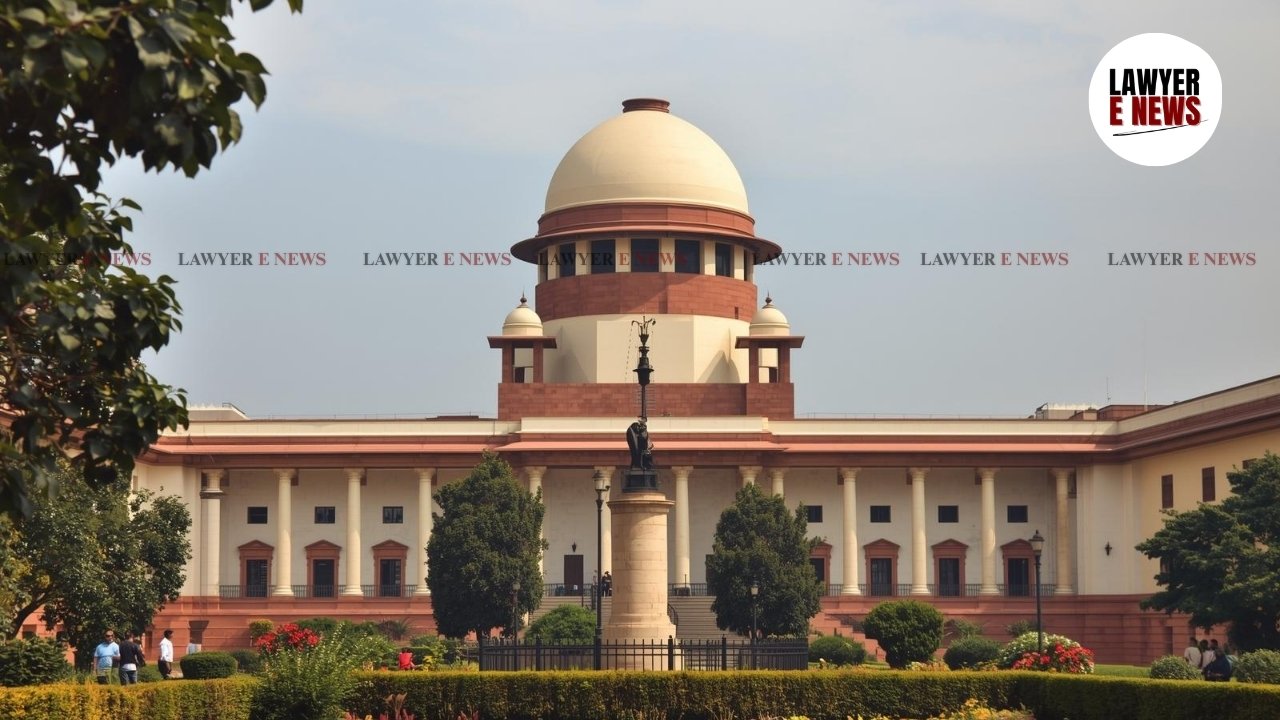
"It is settled in law that the jurisdiction of Executing Court is limited to give effect to the decree as passed and not to assume the role of a trial court so as to substitute its own view in place of that expressed under the decree," Supreme Court, in a significant ruling, held that an executing court possesses no jurisdiction to alter or modify the terms of a decree, even if enforcing the original terms appears practically difficult due to ground realities.
A bench comprising Justice Pankaj Mithal and Justice Prasanna B. Varale observed that the executing court must "strictly conform to the decree under execution" and cannot substitute its own view for the agreement expressly recorded in a compromise decree.
The dispute arose from a suit for specific performance regarding 51R of land in Mahabaleshwar, Maharashtra, which culminated in a 2017 compromise decree clearly dividing the property between the appellant and the respondent. During execution proceedings, the Executing Court modified the specific areas allotted to the parties, reasoning that existing constructions did not match the sanctioned map and a portion had already been sold to a third party. The Bombay High Court subsequently upheld these modifications, prompting the appellant to approach the Supreme Court.
The primary question before the apex court was whether an executing court, while exercising jurisdiction under Section 47 of the Code of Civil Procedure (CPC), has the power to go beyond the express terms of a compromise decree to vary the areas allotted to the parties.
Executing Court Cannot Go Beyond The Decree
Analyzing the scope of Section 47 of the CPC, the court emphasized that an executing court is strictly limited to deciding questions relating to the execution, discharge, or satisfaction of the decree. The bench reiterated the established legal doctrine that an executing court must take the decree according to its exact tenor and cannot entertain objections regarding its factual or legal correctness. The court emphatically stated that an executing court "has to execute the decree as it is without changing the same."
No Power To Substitute Trial Court's Views
Relying on the landmark judgments in Vasudev Dhanjibhai Modi v. Rajabhai Abdul Rehman and Sunder Dass v. Ram Prakash, the Supreme Court noted that the only recognized exception to this strict rule is when the decree itself is a nullity due to a lack of inherent jurisdiction. Since nullity was not pleaded in the present execution proceedings, the lower court had absolutely no authority to redraw the boundaries of the allotted land. The bench observed that the executing court simply cannot assume the role of a trial court to substitute its own views.
"Merely for the reasons that exchange of some portions of the land may not be practicable for the reason that constructions on it are not as per the sanctioned map or that part of it has been sold off, are all immaterial."
Practical Difficulties Do Not Justify Modification
Addressing the respondent's reliance on the precedent in Jai Narain Ram Lundia v. Kedar Nath Khetan, the court clarified that while an executing court can resolve disputes regarding the identity of property to ensure reciprocal obligations are met, it cannot use this power to rewrite the decree itself. In the present litigation, the compromise decree unequivocally described the specific portions falling to each party's share, meaning no genuine dispute regarding the identity of the land existed.
Parties Must Fulfil Reciprocal Obligations
The court noted that the executing court's justification for modifying the decree—namely that unauthorized constructions existed or third-party sales had occurred—did not empower it to allot entirely different parcels of land to the parties. Ruling that such practical impediments are legally immaterial in execution proceedings, the bench directed that the executing court "has to ensure that both the parties fulfil their obligations and exchange the land as per the decree."
Concluding that the Executing Court acted well beyond its statutory jurisdiction by altering the allotted land portions, the Supreme Court allowed the appeal. The apex court set aside the impugned orders of both the Executing Court and the High Court, directing that the compromise decree must be executed strictly in accordance with its original terms and tenor.
Date of Decision: 09 April 2026