-
by sayum
25 August 2026 12:32 PM







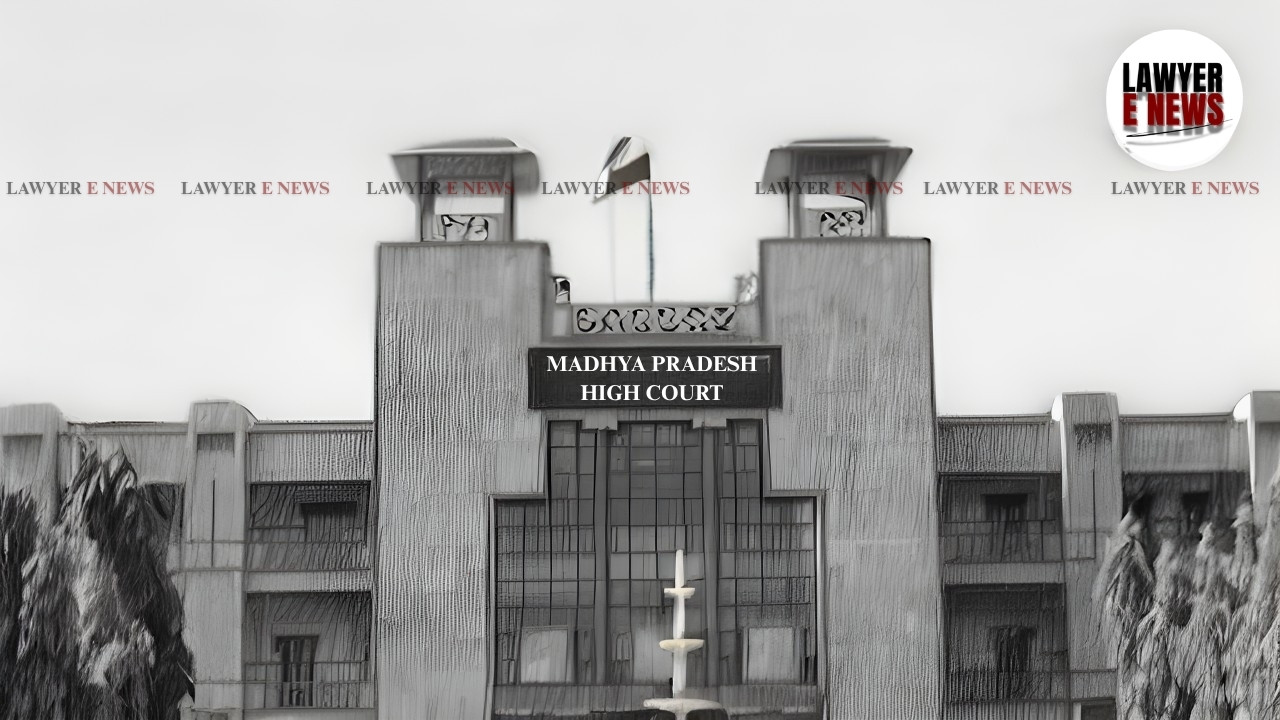
“If crossing is accessible or easy even for a three-years child, it implies a systemic failure of the Railway” - High Court of Madhya Pradesh, in a significant pronouncement delivered by Justice Himanshu Joshi, reversed a denial of compensation by the Railway Claims Tribunal and held that the deaths of two adult women and a three-year-old child at Maihar Railway Station constituted an “untoward incident” under Section 123(c) of the Railways Act, 1989. The Court ruled that even unauthorized crossing of tracks does not, by itself, defeat a claim for compensation under Section 124-A, unless the Railway proves that the case falls within the enumerated statutory exceptions. Observing the Railway’s failure to prevent easy access to tracks, the Court directed award of statutory compensation.
The appeals arose from a common judgment dated 23 December 2016 of the Railway Claims Tribunal, Bhopal. A group of 8–10 persons had travelled to Maihar for the tonsure ceremony of a child, Rajesh. On 17 April 2011, while returning, the claimants asserted that the victims had boarded a passenger train (Train No. 51672) which was overcrowded, and in the commotion, the three deceased fell and were run over by another passing train.
The Railway denied this version, arguing that no such train passed through Maihar at that time. Relying on the DRM report, the Railway contended that the deceased were illegally crossing railway tracks when they were hit by Train No. 19051.
The Tribunal upheld the Railway’s version and dismissed all claims, holding that the deaths were not an “untoward incident”, and that boarding of the train was not proved.
Legal Issues at Hand and Court Observation On That
The key questions before the High Court included whether:
the deaths, admittedly caused by a running train, could still qualify as an untoward incident despite unauthorized track crossing;
the Tribunal was correct in rejecting the claim solely due to discrepancies about train numbers and boarding;
the Railway had discharged its statutory duty to prevent public access to railway tracks.
The Court relied on the statutory framework of Section 124-A, which imposes strict liability on the Railway, subject only to exceptions such as suicide, self-inflicted injury, intoxication, natural cause, or criminal act.
In a crucial clarification, the Court observed:
“Even if the deceased persons were crossing the railway tracks unauthorizedly… compensation under Section 124-A… may still be maintainable; if it is established that the death occurred due to an ‘untoward incident’ and that the railway administration failed in its statutory duty to ensure safety.”
Details of the Judgment
Justice Joshi noted that although the Railway successfully proved that Train No. 51672 did not pass through Maihar, the fact of death due to Train No. 19051 at the same location was not in dispute. The Court held that the Tribunal erred in treating the train-number discrepancy as fatal to the claim.
The statement of Shyamlal Barman, the Loco Pilot, became critical. The Court quoted its essence:
“…deceased Rajesh (only 3 years old) came onto the railway tracks and while saving him, two female also came onto the track and all of three were run over…”
This narration convinced the Court that the incident occurred not due to any deliberate act, but due to a tragic attempt to save a child who “had no knowledge about the consequence of crossing tracks”.
The Court emphatically held that:
“Where passengers cross tracks due to absence of sufficient preventive measures… the administration cannot escape from liability on the ground that the victim crossed unauthorizedly.”
The Railway failed to prove presence of fencing, barricades, announcements, signage or security preventing access to tracks. The Court declared that:
“If crossing is accessible or easy even for a three years child, it implies a systemic failure of the railway to restrict access.”
Thus, it concluded that the deaths resulted from an “untoward incident”, and the Tribunal’s conclusion was unsustainable.
The judgment set aside the Tribunal’s order, directing that compensation be awarded as per prevailing rules.
The High Court allowed all three appeals, holding that the Railway Claims Tribunal committed a serious error in denying compensation. The Court reaffirmed the principle that unauthorized crossing of tracks does not bar compensation unless statutory exceptions squarely apply, and underscored the Railway’s duty to erect and maintain adequate safety systems to prevent such tragedies.
Date of Decision: 10 November 2025