
-
by sayum
28 August 2026 10:07 AM







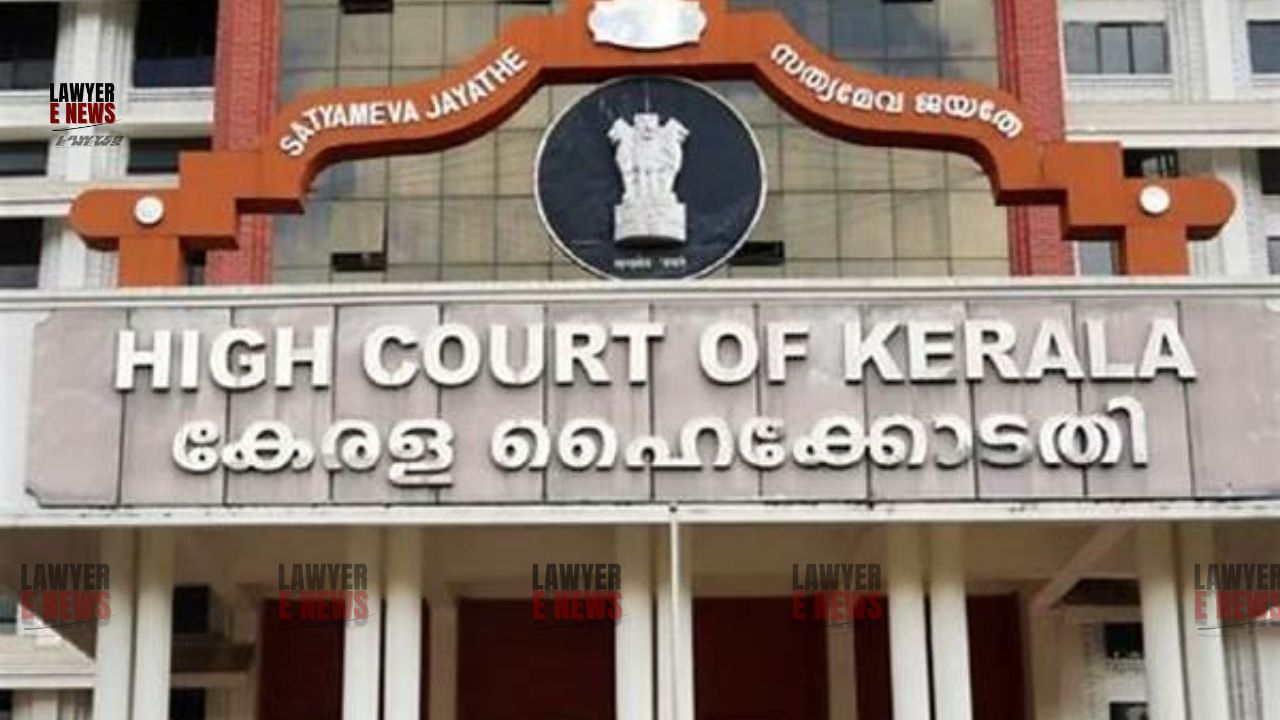
“Judicial Finality Cannot Be Undone—Court Cannot Direct Re-transfer of EPF Contributions Already Lawfully Shifted to District Co-operative Banks” - In a judgment delivered on October 7, 2025, the Kerala High Court upheld the exclusion of employees of District Co-operative Banks from the Employees’ Provident Fund (EPF) Pension Scheme, holding that only those employees specifically identified in the Supreme Court’s final order dated 24.08.2022 in State of Kerala v. Udayakumar (Civil Appeal No. 6575 of 2014) were entitled to continue under the EPF Pension Scheme, 1995. All others, the Court said, stand conclusively governed by the Kerala Co-operative Bank Employees’ Self-Financing Pension Scheme, 2005.
The judgment authored by Justice P.M. Manoj rejected petitions filed by retired employees of Idukki and Kottayam District Co-operative Banks, who sought continuance under the central EPF scheme and re-transfer of their contributions from the District Co-operative Banks back to the EPFO.
“Once Excluded, Cannot Return—Self-Financing Pension Scheme Superseded EPF Framework for Co-operative Banks”
The petitioners, all retirees, had made regular contributions under the EPF Act, 1952, and claimed pension under the EPF Pension Scheme, 1995. However, pursuant to G.O.(MS) No. 81/2009/LBR dated 30.06.2009, the State Government excluded State and District Co-operative Banks from the purview of the EPF Scheme. This followed the launch of the Kerala Co-operative Bank Employees’ Self-Financing Pension Scheme, notified under SRO No. 421/2005, effective from 01.04.2005.
The Court noted: “By virtue of the Government Order dated 24.09.2005 and the subsequent exclusion notification, the employees of State and District Co-operative Banks stood excluded from the Employees’ Provident Funds and Miscellaneous Provisions Act, 1952 with effect from 01.04.2005.” [Para 10]
The petitioners argued that their retirement occurred before the exclusion, and that their pension should continue under the EPF Scheme. They also relied on earlier Kerala High Court decisions in Diwakaran v. State of Kerala [2012 (1) KLT 633] and Kerala State Co-operative Employees Pension Board v. Udayakumar [2012 (3) KLT 820], where it was held that pension contributions under EPF could not be transferred to the new Pension Board without employee consent.
Supreme Court Has Already Drawn the Line: “Only 333 Employees Eligible Under EPF Pension”
Rejecting the petitioners' plea, the Court held that the issue stands conclusively settled by the Supreme Court’s judgment in State of Kerala v. Udayakumar, C.A. No. 6575/2014, delivered on 24.08.2022, which restricted EPF pension benefits to 333 employees and those additionally recognised.
Justice Manoj observed: “The Apex Court restricted the benefit of the earlier schemes to 333 employees and such other employees identified therein. If the petitioners herein are covered by the said order of the Apex Court, they shall be entitled to the benefit of opting for the earlier scheme.” [Para 11]
The High Court held that petitioners not included in that category are no longer entitled to EPF pension, and are governed solely by the Self-Financing Pension Scheme, 2005.
“Finality of Judicial Orders Cannot Be Undone by Re-litigation”: Court Applies Doctrine of Res Judicata
The Court warned against attempts to reopen settled issues, noting the legal position that concluded judgments cannot be revisited. Citing Neelima Srivastava v. State of U.P., [2021 KHC Online 6408], the Court said:
“It is impermissible for parties to reopen concluded judgments of the Court, as the same would not only be tantamount to abuse of process but would also have a far-reaching adverse impact on the administration of justice.” [Para 6]
The Court also noted that in WP(C) No. 37845 of 2017, it had already declined to direct Kottayam District Co-operative Bank to re-transfer contributions to EPFO, reiterating that such prayer cannot be granted when contributions have already been lawfully transferred.
No Scope for Directing Re-transfer of EPF Contributions
Importantly, the Court refused to direct that contributions already transferred to the District Co-operative Banks be sent back to the EPFO. It held that such an act is neither feasible nor lawful, especially after the Self-Financing Scheme had been implemented, and the EPF exclusion was duly notified.
Justice Manoj concluded: “In all other cases, since the then-existing schemes were superseded by the Self-Financing Pension Scheme, and the contributions have already been transferred to the respective Co-operative Banks, it would not be appropriate to direct those banks to re-transfer the amount to the EPF.” [Para 11]
Court Closes Petitions, Permits Relief Only for Those Falling Within Supreme Court’s Order
While dismissing the writ petitions, the Court carved out a limited exception, stating that if any of the petitioners were among the 333 employees (or additionally recognised group) as per the Supreme Court’s judgment, they may approach the competent authority, and necessary steps may be taken to restore their EPF pension contributions and benefits.
The petitions were accordingly closed, making it clear that no blanket relief could be granted.
Court Upholds Legal Finality, Prevents Re-litigation and Reversal of Lawful Contribution Transfers
The Kerala High Court has once again reaffirmed the sanctity of judicial finality, especially in matters where legislation, policy change, and judicial pronouncements intersect. The judgment is a decisive closure for most retired employees of co-operative banks seeking revival of their EPF pension claims, and it draws a firm line: those not among the 333 recognised by the Supreme Court must remain within the State’s self-financing pension regime.
Date of Decision: 07.10.2025