-
by sayum
15 August 2026 10:03 AM







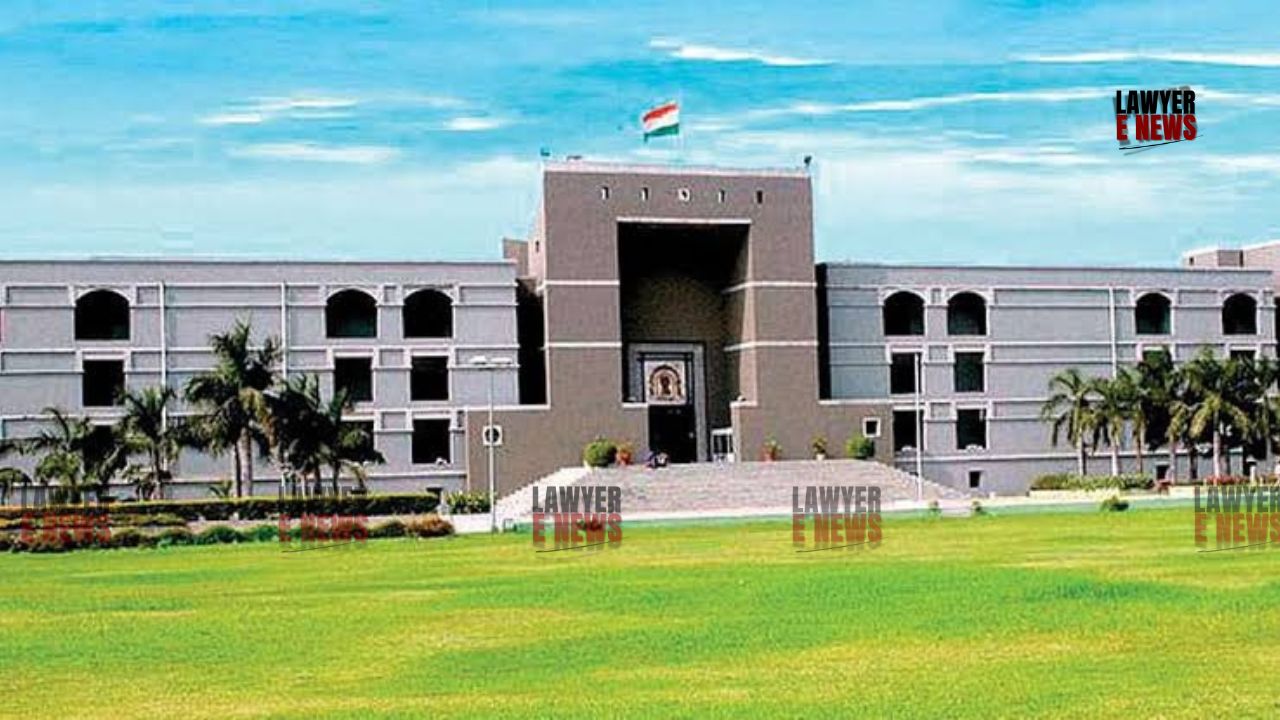
"To fix the fuse in a transformer is also the liability of the PGVCL... it cannot take defence that the deceased while fixing the fuse received current and due to self-inflicted injury, he died." Gujarat High Court, in a significant ruling, held that an electricity supply company cannot evade paying compensation for an electrocution death by citing the victim's negligence.
A single-judge bench of Justice J.C. Doshi observed that the transmission of electricity is an inherently dangerous activity, which squarely attracts the principle of "absolute liability". The court ruled that the primary liability to compensate a sufferer lies with the electricity company, regardless of fault or the victim's alleged self-negligence in interacting with company equipment.
The case arose from the death of Rambhai Ramsibhai, who was electrocuted in 2001 due to a technical fault in a Gujarat Electricity Board (GEB) transformer situated near a road. The victim's heirs filed a suit for compensation, which the trial court partly decreed, directing the Paschim Gujarat Vij Company Limited (PGVCL) to pay Rs. 3,41,400 with 7% interest. Aggrieved by this, PGVCL filed the present First Appeal, arguing that the deceased was negligent as he had illegally attempted to fix the transformer's fuse during a drizzle.
The primary question before the court was whether the fatal incident occurred due to the sole negligence of the deceased, thereby absolving the electricity company of liability. The court was also called upon to determine whether the principle of strict or absolute liability applies to power supply companies in cases of accidental electrocution, irrespective of the precautions taken by them.
Electricity Supply Is An Inherently Dangerous Activity
The court emphatically noted that electricity companies deal with a hazardous substance and must bear the consequences if their operations result in injury or death. Relying on the landmark Supreme Court judgment in M.C. Mehta v. Union of India, the bench reiterated that enterprises engaged in inherently dangerous activities are strictly and absolutely liable to compensate those affected. The court observed that maintaining insulated wires to prevent accidents is the fundamental duty of the utility provider.
"The basis of such liability is the foreseeable risk inherent in the very nature of such activity."
Strict Liability Ignores The Defendant's Precautions
Rejecting the electricity company's defence, the court elaborated on the distinction between fault-based liability and strict liability in the Law of Torts. The bench noted that while negligence comprehends that foreseeable harm could be avoided by reasonable precautions, strict liability operates differently. In cases of strict liability, the defendant is held liable regardless of whether they could have avoided the harm by taking precautions.
"Concept of strict liability or absolute liability differs from concept of fault liability... such is not consideration or relevant in cases of strict liability where the defendant is held liable regardless of whether he could have avoided the particular harm."
Utility Provider Cannot Shift Blame For Open Transformers
Addressing the appellant's specific argument that the victim suffered electrocution because he tried to fix the transformer fuse himself, the court held that maintaining the transformer is the exclusive responsibility of the company. The bench observed that transformers must be hermetically sealed, but in this instance, the equipment was kept open, leading to the fatal accident. The court refused to entertain the defence of "self-inflicted injury," noting the company's prior failure to secure the installation.
Statutory Duty To Protect Human Life
The court referred to a catena of Supreme Court and High Court judgments, including M.P. Electricity Board v. Shailkumar and H.S.E.B. v. Ram Nath, to underline that the onus is firmly on the licensee to take precautions during the installation and maintenance of electric lines. The bench emphasized that electricity transmitted through overhead wires has a potentiality of dangerous dimensions, making it the statutory obligation of the supplier to ensure that human life is not exposed to risk.
Concluding that PGVCL failed to discharge its fundamental obligations, the High Court held that the company could not claim the privilege of citing the victim's negligence to avoid liability. Consequently, the First Appeal was dismissed, and the trial court's judgment awarding compensation to the deceased's heirs was upheld. The court also ordered the immediate disbursement of any deposited compensation amount to the claimants.
Date of Decision: 10 July 2026