-
by sayum
28 August 2026 2:11 PM







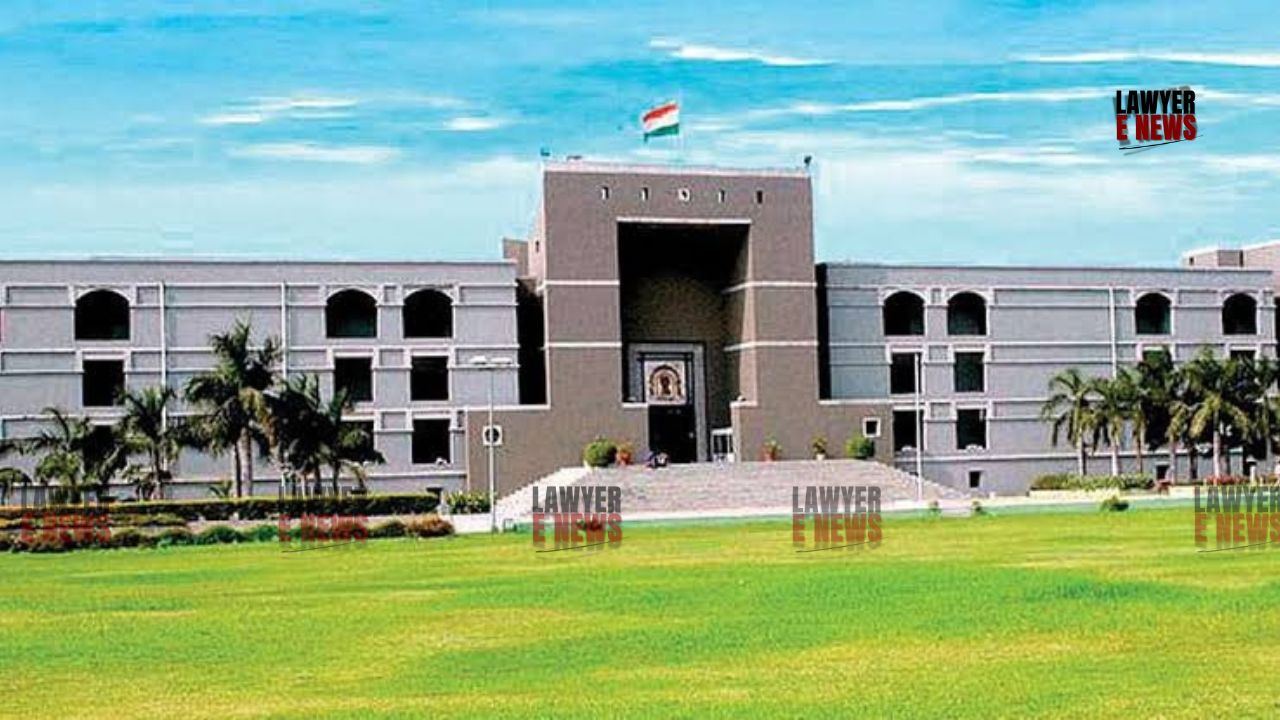
“Merely being called a ‘Supervisor’ or earning above the wage ceiling does not exclude an employee from being a ‘workman’. It’s the nature of work that matters.” –Gujarat High Court In a latest judgment Gujarat High Court upheld the Labour Court’s award denying reinstatement to a petitioner who had claimed wrongful termination after allegedly being coerced into resigning. However, while ultimately dismissing the writ petition under Article 227, Justice M.K. Thakker delivered crucial observations on what constitutes a ‘workman’ under Section 2(s) of the Industrial Disputes Act, 1947, and clarified the legal position on resignation and withdrawal.
“Being Called a Supervisor Doesn’t Make You One” – Court Rejects Labour Court’s Narrow View of Workman Status
The Labour Court had ruled that the petitioner was not a ‘workman’ since he was designated as a Supervisor and was drawing a salary above ₹10,000, thereby ousting him from the purview of Section 2(s). The High Court disagreed:
“Merely because the nomenclature of the petitioner’s post was Supervisor and he was receiving wages above the threshold would not automatically bring him outside the definition of a workman.”
Justice Thakker emphasised that it is the dominant nature of duties performed that determines the classification, not the title or salary.
Referring to oral evidence where the respondent’s own witness admitted that the petitioner repaired electrical machines, had no power to grant leave, issue memos, or initiate disciplinary action, the Court found:
“There is no evidence to support that the petitioner exercised supervisory powers. The Labour Court’s finding is perverse and unsupported by record.”
“Resignation Handwritten, Not Hand-Twisted” – Coercion Claim Rejected Due to Lack of Evidence
The petitioner claimed his resignation on 06.10.2015 was forced by a senior manager. However, the Court found the resignation was in his own handwriting and not typed, contradicting his coercion narrative.
“If the resignation was dictated under threat by the HOD, he ought to have examined the said officer. That was not done. No contemporaneous complaint was made either. The burden to prove coercion lies squarely on the petitioner – and he failed.”
The Court noted that only after the employer refused to reinstate him (on 15.12.2015), did the petitioner raise the coercion allegation in a subsequent letter dated 18.12.2015.
“This belated claim appears to be a fabricated and afterthought story to reverse a voluntary act,” the Court observed.
“No Notice Period Mentioned? Resignation Takes Immediate Effect” – Court Clarifies When Resignation Becomes Final
On the issue of resignation withdrawal, the petitioner argued he had sent a withdrawal letter on 02.12.2015, and a reminder on 14.12.2015, before receiving any formal acceptance. But the High Court drew a crucial distinction:
“The resignation did not specify a future effective date. The petitioner stopped reporting for duty immediately. This conduct indicates an intention to resign with immediate effect.”
Citing Rajasthan State Electricity Board v. Brij Mohan Parihar, (2000) 9 SCC 269, the Court reiterated:
“Where no specific future date is given, and the employee ceases to attend work, resignation becomes effective upon submission. No acceptance is necessary unless required by statute or rules.”
Thus, the withdrawal attempt, made after nearly 60 days, was held to be legally ineffective.
“Section 25(f) Not Attracted Where Exit is Voluntary” – Retrenchment Compensation Denied
The petitioner argued that since he was not paid retrenchment compensation or notice pay, his termination violated Section 25(f) of the Industrial Disputes Act.
The Court disagreed, stating:
“If resignation is found to be voluntary, it is not a case of retrenchment. Section 25(f) applies only when termination is at the instance of the employer, not when the employee exits of his own accord.”
“Labour Court Gave Cogent Reasons; Writ Court Will Not Interfere” – Article 227 Jurisdiction Narrowly Applied
On the broader issue of judicial review, Justice Thakker reiterated the limited scope of interference under Article 227, holding:
“The Labour Court considered oral and documentary evidence and delivered a reasoned award. There is no patent error of law or perversity warranting interference.”
Petition Dismissed, Rule Discharged
The High Court, while correcting the Labour Court’s finding on the definition of ‘workman’, ultimately upheld the conclusion that the petitioner voluntarily resigned, and thus had no claim for reinstatement or compensation.
“This petition is dismissed. Rule is discharged,” the judgment concluded.
Key Takeaways from the Judgment:
Designation ≠ Status: Whether an employee is a ‘workman’ under Section 2(s) depends on the nature of duties, not title or salary alone.
Burden of Proof on Coercion: Allegations of forced resignation must be backed by timely, specific, and corroborative evidence.
Withdrawal of Resignation: If resignation is unconditional and effective immediately, a late withdrawal attempt has no legal effect.
Section 25(f): Applies only to retrenchment, not voluntary resignations.
Article 227 Review: The High Court will not reappreciate evidence unless the lower court’s findings are perverse or illegal.