-
by sayum
28 August 2026 2:11 PM








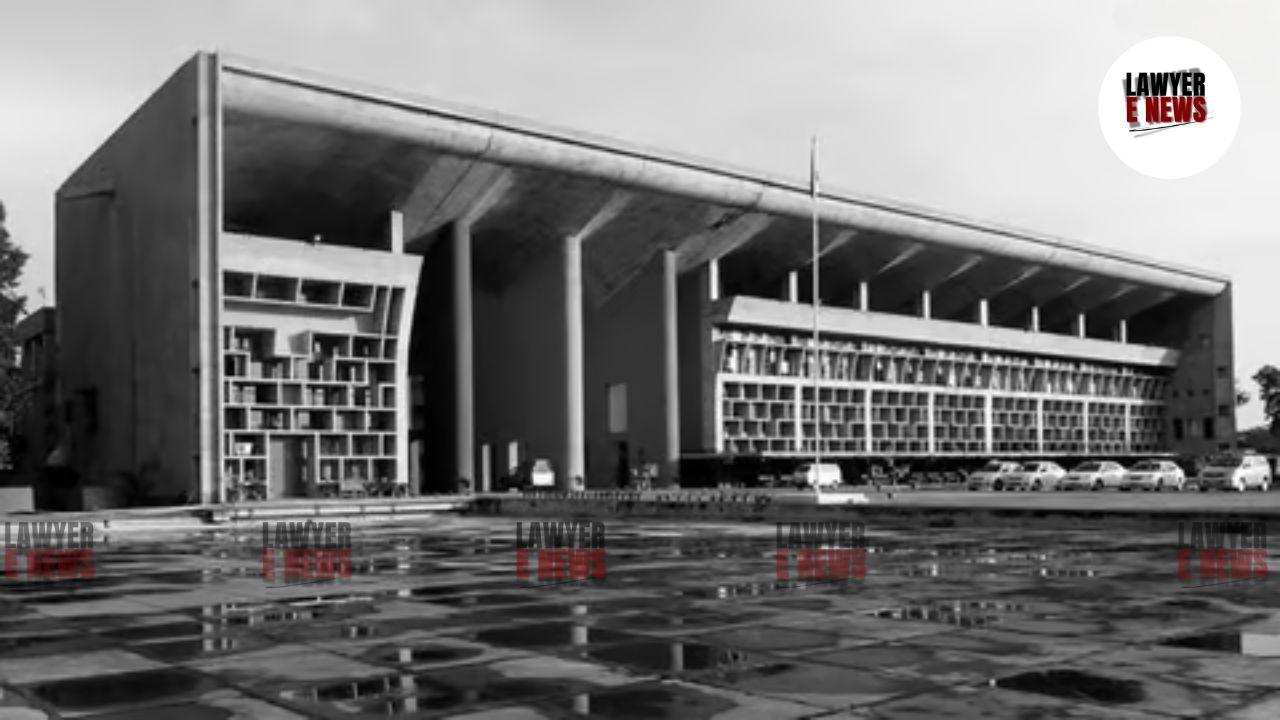
“The Right to Appeal Cannot Be Rendered Illusory Merely Due to Financial Inability to Deposit 20% Compensation” — Division Bench of the Punjab and Haryana High Court, comprising Justice Anoop Chitkara and Justice Sanjay Vashisth, delivered a crucial and reportable verdict declaring that the deposit of 20% of compensation under Section 148 of the Negotiable Instruments Act, 1881 is not a mandatory precondition either for suspension of sentence or for the hearing of appeal.
The Court declared emphatically that liberty under Article 21 of the Constitution cannot be sacrificed at the altar of financial inability. Referring to the language of Section 148 NI Act, the Bench held:
“Reading ‘may’ as ‘shall’ denudes the Appellate Court of a discretion that is inherently constitutional and transforms liberty into a privilege reserved for the solvent.”
This landmark judgment settles a persistent controversy surrounding the power of appellate courts to mandate the deposit of 20% of compensation amounts during appeals in cheque dishonour cases under Section 138 NI Act.
“Courts Must Not Weaponize Procedure Against the Indigent” – Section 148 NI Act Cannot Override Right to Bail Under BNSS
The Court traced the legislative history and object of the 2018 amendment that introduced Section 148 NI Act, which permits appellate courts to direct deposit of at least 20% of the fine or compensation amount during appeals against conviction under Section 138. However, the Bench drew a sharp line between permissive discretion and compulsory command.
Referring to Section 430 of the Bharatiya Nagarik Suraksha Sanhita, 2023, which corresponds to Section 389 CrPC, the judgment observed:
“Sections 430 BNSS and 148 NI Act do not overlap and are independent of each other… Section 148 cannot be interpreted to restrict or override the liberty-preserving mechanism under Section 430 BNSS.”
The Bench noted that while the intent of Section 148 was to protect complainants from unscrupulous drawer tactics that delay justice, this cannot come at the cost of fair procedure, equality before law, and due process.
*“Injustice Begins When Liberty Is Made Dependent on Solvency” – Bail Cannot Be Denied Merely Because One Cannot Afford to Pay”
On the legal question whether bail can be denied solely due to non-payment of the 20% deposit ordered under Section 148, the Court held:
“Non-compliance of a deposit condition, without more, cannot justify cancellation of bail. To hold otherwise would render liberty a commodity affordable only to the wealthy.”
The Bench emphasized that conditions imposed for suspension of sentence or bail must stand the test of fairness and proportionality and should not function as constructive incarceration for the poor. Citing the Supreme Court’s verdict in Guddan @ Roop Narayan v. State of Rajasthan (2023), the High Court reiterated that onerous financial conditions imposed in the name of bail defeat the very purpose of granting it.
“While bail has been granted to the appellant, the excessive conditions herein have, in fact, in practical manifestation, acted as a refusal to the grant of bail.”
“Appeals Cannot Be Held Hostage to Deposits” – Non-Compliance of Section 148 Does Not Bar Hearing of Appeal
Rejecting the idea that an appeal under Section 138 NI Act can be dismissed or not entertained due to non-payment of the deposit ordered under Section 148, the Court categorically held:
“There is no statutory mandate making deposit of 20% a precondition for admission or hearing of appeal. Such refusal would amount to constructive denial of right to appeal and breach of natural justice.”
The Court cited the decision in Vijay D. Salvi v. State of Maharashtra (2007), where the Supreme Court had set aside orders dismissing appeals on the ground of non-deposit, affirming that access to justice cannot be turned into a pay-per-use mechanism.
The Bench reasoned that if the legislature had intended the deposit to be mandatory for the right to appeal, it would have used “shall” and made express provision. The absence of such language proves the legislative intent was not to make deposit a precondition.
“Corporate Entities Escape, the Poor Suffer – Section 148 Creates Class Discrimination”
Highlighting the unequal burden created by the enforcement of Section 148 NI Act, the Court observed that the provision unfairly targets individuals while juristic persons like companies and LLPs remain unaffected, since they cannot be imprisoned and are not required to seek suspension of sentence.
“The provision disproportionately impacts poor individuals while exempting juristic persons. The law thereby creates an unconstitutional class-based discrimination.”
The judgment forcefully argued that Section 148 fails the proportionality test because it imposes conditions that are financially unbearable for economically weaker appellants, leading them to either forgo their liberty or their statutory right to appeal. Such a "coercive statutory mechanism" risks turning "access to appellate justice into a privilege for the affluent."
“Liberty More Expensive Than Justice – A Systemic Failure”
The Division Bench did not stop at interpretation. It launched a systemic critique of the way courts have been using Section 148 NI Act to impose blanket deposit requirements, often without applying judicial mind or recording reasons for the condition.
“Blanket or mechanical orders of deposit are unsustainable. The absence of a reasoned order vitiates the exercise of discretion.”
Citing Muskan Enterprises v. State of Punjab (2024), the Court emphasized that appellate courts must identify exceptional circumstances where the deposit condition can be waived or reduced, and must record reasons for such deviation from the general rule.
“Appellate Courts Must Prioritize Cheque Bounce Appeals to Prevent Coercive Custody”
Proposing a procedural reform, the Bench urged that courts must prioritize hearing and disposal of appeals arising out of cheque bounce cases, especially where the only barrier to liberty is an unaffordable financial condition.
“When the deposits are more expensive than liberty, appellate courts must prioritize disposal of appeals over the imposition of financial conditions.”
The judgment called for hearing such appeals preferably within 60 days, extendable by 30 days, in line with the timelines reflected in Section 148 NI Act itself.
“Failure of Legislative Purpose” – Section 148 Fails to Balance the Rights of All Stakeholders
Delivering a strong verdict on legislative failure, the Bench held:
“The legislative purpose behind Section 148 has failed on two counts — it exempts juristic persons, and it discourages impoverished convicts from exercising their right to appeal.”
The Bench added that when security cheques are taken by private lenders from illiterate or distressed borrowers, mechanical convictions followed by harsh deposit conditions lead to a “complete erosion of due process and fairness.”
The Court concluded with four distinct but interconnected holdings: “The deposit under Section 148 NI Act is not mandatory. The right to bail cannot be denied due to failure to pay. The right to appeal cannot be refused for non-deposit. Suspension of sentence must be based on fairness, not on the financial strength of the convict.”
The matters were remitted to the Single Bench to decide on merits in light of these authoritative principles.
The Registry was directed to circulate the judgment to all judicial officers across Punjab, Haryana, and the Union Territory of Chandigarh.
Date of Decision: 24 September 2025