-
by sayum
28 August 2026 6:47 AM







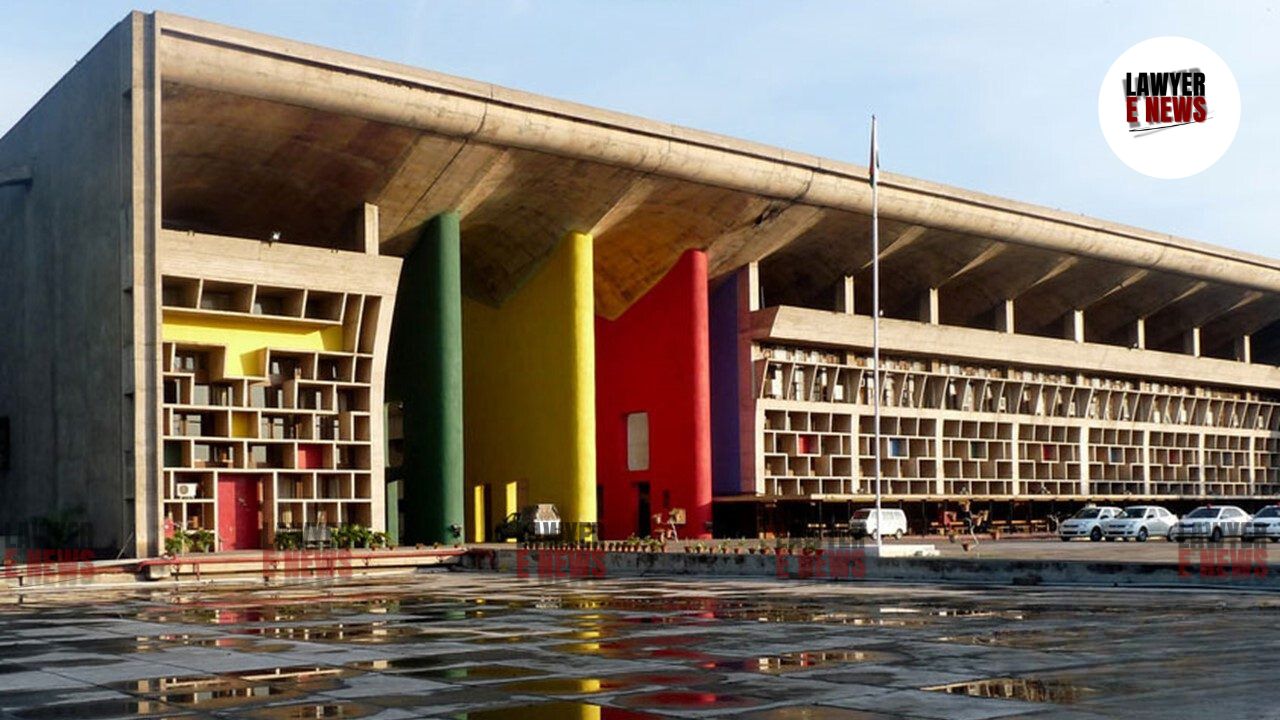
“Reinstatement cannot be granted after two decades of unexplained delay — the Labour Court must weigh delay as a significant factor in adjudication.” - Punjab and Haryana High Court held that reinstatement after an unexplained delay of nearly two decades is not justified, even if the termination was illegal for non-compliance with Section 25F of the Industrial Disputes Act, 1947. Justice Harsimran Singh Sethi, while allowing the petitions in part, set aside the Labour Court’s direction for reinstatement with back wages, substituting it with lump sum compensation based on length of service.
“Delay of more than a decade, left unexplained by the workman, has to be treated as fatal — reinstatement after 20 years cannot be granted without application of mind.”
In these writ petitions, the Punjab State Warehousing Corporation challenged awards passed by the Labour Court on 16.01.2019, whereby Class IV employees terminated between 1999–2001 were directed to be reinstated with 50% back wages and continuity of service.
The respondents had raised industrial disputes only around 2012 — nearly 13 years after their termination. The Labour Court, however, condoned the delay without substantive justification and passed awards in the employees’ favour.
The Corporation argued that the delay in raising the dispute was excessive and unexplained, rendering the claim untenable. It relied on the Supreme Court’s decision in Nedungadi Bank Ltd. v. K.P. Madhavankutty, (2000), to argue that such a reference was itself without jurisdiction. The workmen, in response, argued that ignorance of rights and their unskilled status warranted delay condonation.
“Even if the delay is not fatal, it must be given due weight during adjudication — reinstatement cannot be mechanical.”
The High Court acknowledged that there was an inordinate delay of more than 13 to 19 years in raising the industrial disputes. Justice Harsimran Singh Sethi noted:
“The delay in raising reference cannot be brushed aside casually. The Labour Court ought to have considered whether the employee had a subsisting right and whether reinstatement after 20 years was justifiable.”
The Court distinguished the facts from the Raghubir Singh case (2014), stating that while delay may not bar a reference, it must factor into the nature of relief to be granted. Relying on the decision in Kuldeep Singh v. Instrument Design Development Centre, the Court added:
“If sufficient materials are not put forth for the enormous delay, it would certainly be fatal… the delay in the present case is unexplained.”
The High Court criticized the Labour Court for mechanically granting reinstatement and back wages:
“Until and unless the employee has a right to hold the post, and such post continues to exist, reinstatement cannot be granted… especially after 20 years.”
Instead, the Court referred to Sukhbir Singh v. State of Haryana (2023), and awarded compensation in lieu of reinstatement, calculated at ₹50,000 per completed year of service.
“Where reinstatement is unjustified due to efflux of time, compensation becomes the equitable alternative.”
The Court awarded compensation ranging from ₹1,00,000 to ₹3,00,000 depending on each workman’s length of service. For instance:
In CWP No. 14617/2019, the workman received ₹1,50,000 for 3 years of service.
In CWP No. 15759/2019, ₹3,00,000 was granted for 6 years of service.
In other cases, ₹1,00,000 was awarded for 2 years of employment.
The Court directed the Corporation to release the compensation within 8 weeks, failing which interest at 8% per annum would accrue from the date of the judgment until actual payment.
Reiterating the principle that justice must balance legality with practical fairness, the Punjab and Haryana High Court set aside reinstatement orders passed after long unexplained delays and substituted them with realistic compensation. The ruling emphasizes that while statutory violations cannot be ignored, unexplained lethargy by employees in asserting their rights cannot entitle them to disproportionate relief decades later.
Date of Decision: 5th April 2025