-
by sayum
04 August 2026 1:39 PM







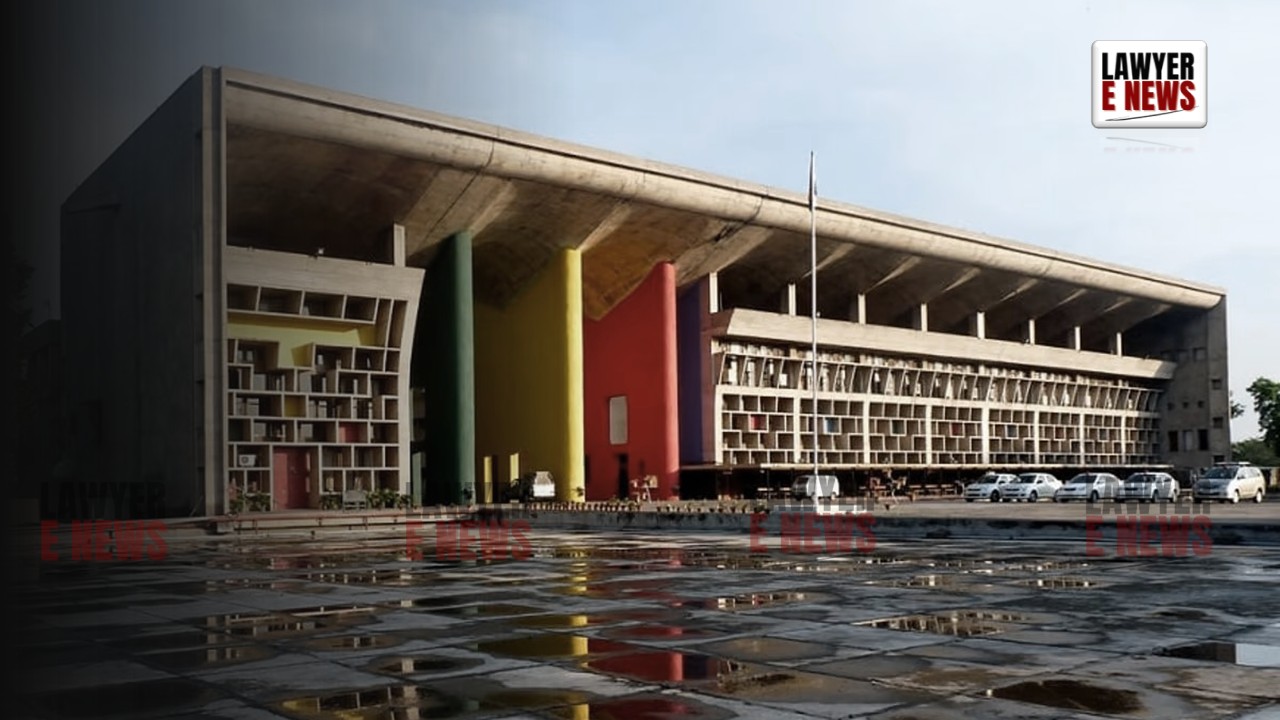
"A litigant who consciously stays away from proceedings cannot later invoke technicalities to undo justice" — In a judgment laying bare the rampant misuse of procedural provisions to stall justice, the Punjab and Haryana High Court dismissed a revision petition challenging the dismissal of an application under Order 9 Rule 13 CPC seeking to set aside a 2014 ex parte decree in a specific performance suit.
Justice Vikram Aggarwal upheld the concurrent findings of the trial and appellate courts which had rejected the petitioner’s plea that he was not properly served with the summons.
“Service Was Proper; Delay Unjustified”
The petitioner, Yashvir Saini, had moved the application under Order 9 Rule 13 CPC in 2018—four years after an ex parte decree had been passed in a suit for specific performance. He claimed he had no knowledge of the suit proceedings due to defective service, including incorrect address and improper Munadi (public announcement).
Rejecting the argument, the Court noted: “The address used matched that in earlier documents signed by the petitioner himself, including the 2003 sale deed and 2006 agreement. He himself used ‘642/20, Sainipura, Rohtak’—the very address now challenged as incorrect.”
Further, the Court found that the trial court had properly ordered Munadi after being satisfied that the defendant was evading service: “The report of 'Ruh Posh' was considered, and the Court rightly summoned the defendant through Munadi after due satisfaction that ordinary service had failed. There is no illegality in the procedure.”
Justice Aggarwal was also critical of the petitioner’s evasiveness in not disclosing the date on which he allegedly became aware of the decree:
“The defendant gave no date as to when he acquired knowledge of the decree and from whom. His conduct only confirms that the application under Order 9 Rule 13 was an afterthought aimed at stalling execution.”
“Litigation Misused to Choke Judicial Process”
The Court highlighted the prevalent abuse of Order 9 Rule 13 CPC in specific performance suits: “In suits for specific performance, a common modus operandi is adopted by defendants—they initially let the matter proceed ex parte and later use Order 9 Rule 13 to delay the inevitable. The present case is a textbook example.”
Justice Aggarwal added:
“Unscrupulous elements like the petitioner are major contributors to delay in the administration of justice. They exploit procedural loopholes with impunity.”
The Court distinguished the petitioner’s reliance on Sanjeev Kumar v. Vinod Kumar Mahajan (2018), which had held that service on an adult female family member is invalid under amended Order 15 Rule 5 CPC. It held that the judgment did not apply here, as the petitioner had himself appeared in the execution proceedings and was properly served through other means.
“20 Years Lost in Delay—Petitioner Cannot Be Rewarded”
Tracing the procedural timeline—from the 2006 agreement to the 2014 decree and the 2018 application—the Court lamented the nearly two-decade delay in concluding the litigation:
“Almost 20 years have gone by. The petitioner’s conduct reflects nothing but an abuse of the process of law.”
The revision petition was thus dismissed as being wholly devoid of merit.
Date of Decision: 7 May 2025