-
by sayum
28 August 2026 2:11 PM








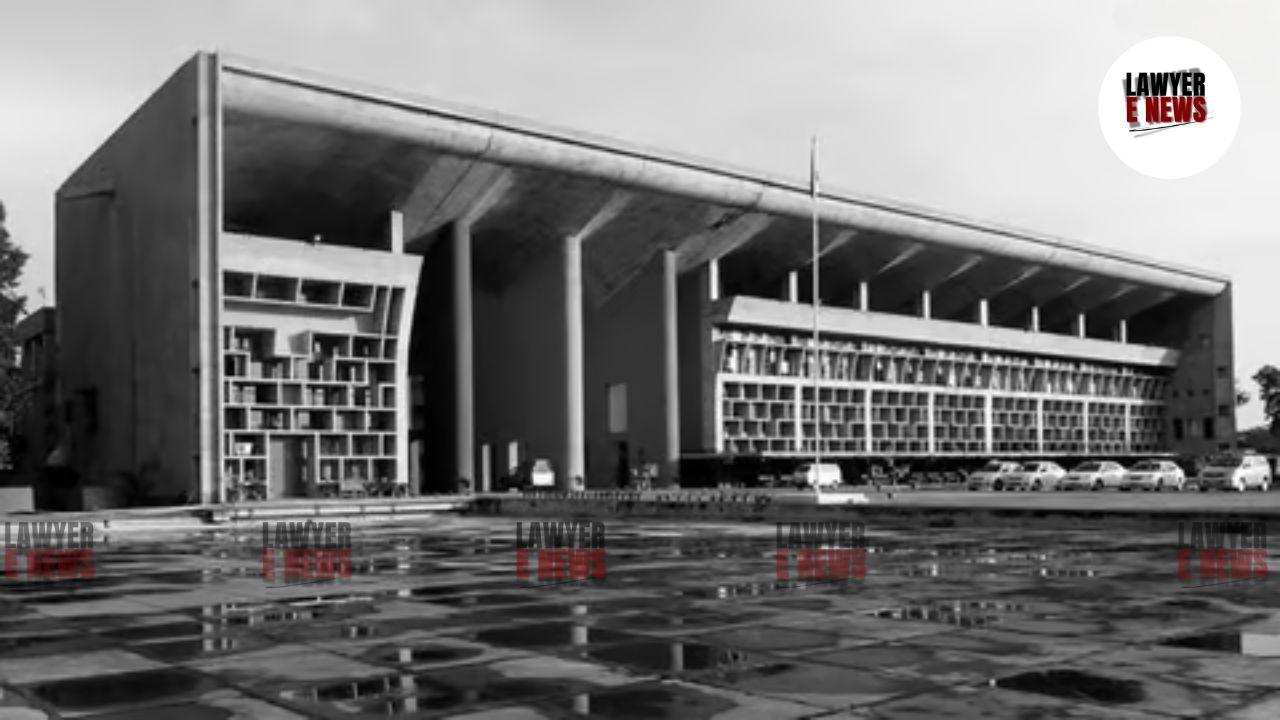
Notional Promotion Is Not a Recurring Cause of Action - In a judgment delivered on 29th September 2025, the Punjab and Haryana High Court decisively ruled that claims seeking notional promotion and pay parity based on alleged seniority over a junior promoted under a reserved category scheme are barred by limitation if not raised within three years of accrual of cause of action. The Bench of Justice Sudeepthi Sharma held that such claims cannot be disguised as pensionary or recurring causes of action to bypass statutory limitation periods.
The Court dismissed the appellant’s plea seeking notional promotion from 1988 and revised pay fixation from a date preceding his actual promotion in 2004, holding that the suit filed in 2018 was hopelessly delayed. The claim, the Court found, had become stale and unenforceable in law.
“Limitation is not a formality; law does not entertain stale claims in disguise of service equity”
Court says appellant’s case for stepping-up of pay with junior promoted in 1988 is “clearly time-barred”
The appellant, Raghbir Singh, had been promoted as Headmaster on 22.06.2004 and retired on 31.03.2006. His case was premised on the argument that his junior colleague, Prem Singh, who was promoted in 1988 under the Accelerated Promotion Scheme for reserved category candidates, unjustly superseded him in pay scale and promotion. Relying on government circulars issued in 2006 and 2009 and a clarification in 2013, the appellant claimed entitlement to notional promotion and pay revision from 1988 onwards, along with pensionary arrears and interest.
However, the High Court rejected this approach, finding that the right to seek promotion parity arose when the junior was first promoted in 1988, or at the very latest when the appellant himself was promoted in 2004. Filing the suit in 2018, the Court held, was well beyond the prescribed limitation period of three years under the Limitation Act.
“The cause of action in the present case accrued to the appellant before his retirement i.e. before 31.03.2006. Therefore, the civil suit filed by him was clearly time barred,” observed Justice Sharma.
“Pension Jurisprudence Cannot Rescue Time-Barred Promotion Claims”
Court distinguishes ‘recurring pension rights’ from ‘one-time notional promotion’ demands
Raghbir Singh’s counsel relied heavily on the Supreme Court’s judgment in Union of India v. Tarsem Singh, (2008) 8 SCC 648, where it was held that pension claims are recurring in nature and cannot be dismissed solely on the ground of limitation.
But the High Court made a clear doctrinal distinction between recurring pensionary benefits and demands for notional promotion with retrospective pay fixation, holding that the latter does not constitute a continuing or recurring cause of action.
“The judgments referred to… relate to issue of pensionary benefits wherein the Courts held that cause of pensionary benefit is a recurring cause. In the present case… he is seeking pay fixation at par with his junior… therefore, the facts are distinguishable,” the Court stated in para 11.
It further added that circulars and clarificatory notifications issued post-retirement cannot be construed as reviving a right already extinguished by law of limitation.
“Policy Clarifications Don’t Reopen Dormant Claims”
Suit based on 2006 circular was still barred due to inaction from 1988 to 2004
The appellant had tried to invoke Government of Haryana’s Circular dated 27.11.2006 and Notification dated 05.03.2009, which acknowledged pay disparity between general category seniors and their reserved category juniors and allowed for limited parity.
However, the Court clarified that such clarifications cannot re-trigger a time-barred claim unless the claimant had previously agitated or preserved his right.
Justice Sudeepthi Sharma firmly held: “The first cause of action accrued to the appellant on 04.08.1988 when Prem Singh was promoted… Filing a suit in 2018, after 14 years of his own promotion in 2004, is impermissible under the Limitation Act.”
The Court also emphasized that no explanation had been offered for the inordinate delay, nor had the appellant challenged the earlier promotion of his junior at any point prior to his own promotion or retirement.
Courts will not entertain service promotion disputes cloaked in belated equity
In conclusion, the Court refused to interfere with the judgments of the Civil Judge (Junior Division), Rohtak dated 23.07.2019, and the Additional District and Sessions Judge, Rohtak dated 05.08.2022, both of which had dismissed the suit for being barred by limitation.
Justice Sharma dismissed the second appeal, reiterating:
“I do not find any infirmity in judgment and decree… and the same are upheld. The present regular second appeal is dismissed.”
The ruling is a crucial reaffirmation of the settled position that claims for service-based promotions and stepping-up of pay must be brought within the period prescribed by the Limitation Act, and cannot be treated as continuing or pensionary rights.
Date of Decision: 29 September 2025